RiskRegister
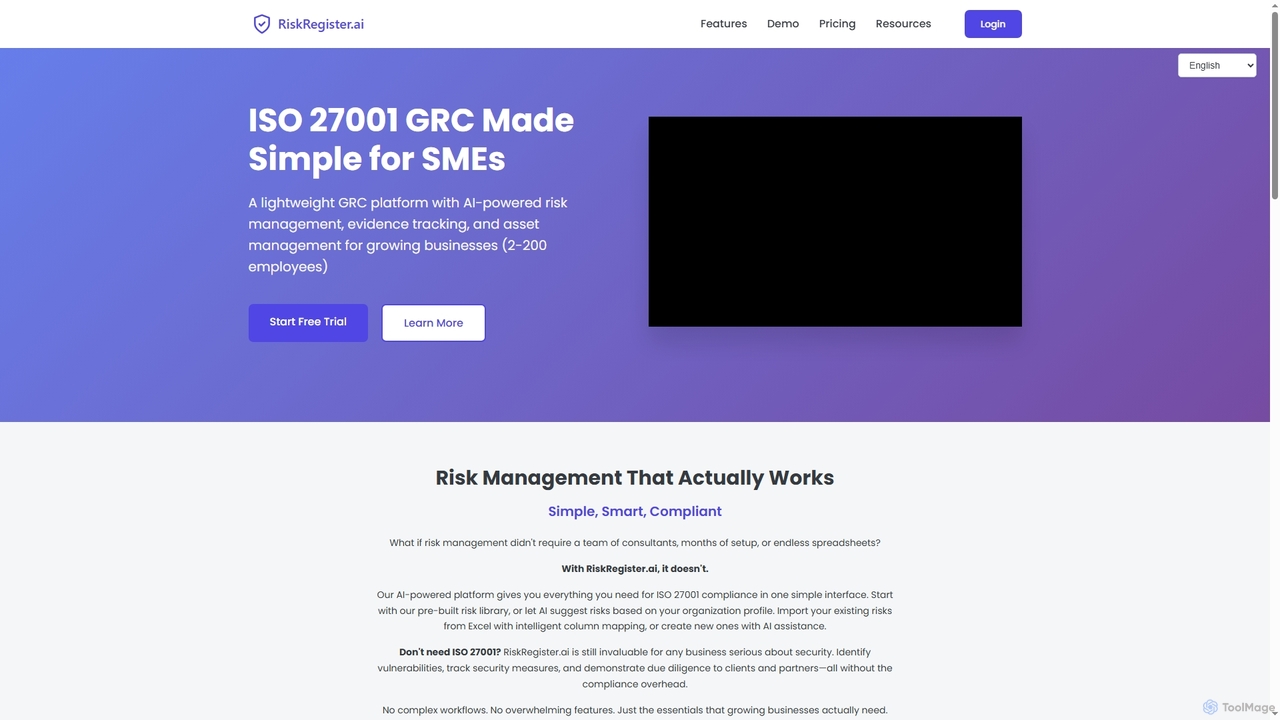
RiskRegister is an AI-powered GRC platform designed for SMEs to simplify ISO 27001 compliance and risk management. It …
RiskRegister is an AI-powered GRC platform designed for SMEs to simplify ISO 27001 compliance and risk management. It offers comprehensive features for risk assessment, treatment plans, compliance reporting, and secure collaboration, including AI-driven insights for gap analysis and risk enrichment.
About Risk Management
Risk Management AI tools are specialized platforms that leverage artificial intelligence to identify, assess, monitor, and mitigate various risks across an organization. These tools utilize advanced algorithms, machine learning, and data analytics to process vast datasets, uncover hidden patterns, and predict potential threats more effectively than traditional methods. They provide proactive insights, enabling businesses to make informed decisions, enhance resilience, and ensure operational continuity within the broader GRC (Governance, Risk, and Compliance) framework.
Core Features
- Automated Risk Identification: Proactively scans data sources for emerging risks and vulnerabilities.
- Predictive Risk Analytics: Forecasts potential risk events and their likely impact using historical data.
- Real-time Monitoring & Alerting: Continuously tracks key risk indicators and notifies stakeholders of deviations.
- Compliance & Regulatory Mapping: Links identified risks to relevant regulations and internal policies.
- Scenario Planning & Simulation: Models the impact of various risk scenarios on business operations.
Applicable Scenarios
These tools are vital for financial institutions, healthcare providers, manufacturing companies, and any organization facing complex regulatory landscapes or operational uncertainties. They assist risk managers, compliance officers, auditors, and executive leadership in maintaining a robust risk posture, from cybersecurity threats to supply chain disruptions.
How to Choose
When selecting an AI Risk Management solution, consider its risk coverage (e.g., financial, operational, cyber), integration capabilities with existing systems, the accuracy and explainability of its AI models, and its scalability to grow with your organization's needs. Evaluate the vendor's expertise and support for regulatory updates and evolving threat landscapes.

Risk ManagementUse Cases
Proactive Cybersecurity Threat Detection
Cybersecurity analysts use AI risk management tools to continuously monitor network traffic, system logs, and threat intelligence feeds. The AI identifies anomalous behaviors, potential vulnerabilities, and emerging attack patterns in real-time, significantly reducing the window of exposure and preventing costly data breaches before they escalate.
Financial Fraud Pattern Identification
Financial institutions deploy AI risk management platforms to analyze vast transaction data, customer behaviors, and historical fraud cases. The AI algorithms detect subtle, complex patterns indicative of fraud, such as money laundering or credit card scams, flagging suspicious activities for human review and minimizing financial losses while ensuring regulatory compliance.
Supply Chain Disruption Prediction
Operations managers in manufacturing or retail leverage AI tools to assess supply chain risks. By analyzing geopolitical events, weather patterns, supplier performance data, and logistics information, the AI predicts potential disruptions like material shortages or shipping delays, allowing companies to implement contingency plans and maintain production schedules.
Regulatory Compliance Change Impact Assessment
Compliance officers utilize AI risk management solutions to track evolving regulatory landscapes across multiple jurisdictions. The AI automatically identifies new or amended regulations, assesses their potential impact on existing business processes and controls, and helps prioritize necessary adjustments to maintain adherence and avoid penalties.
Operational Risk Identification in Manufacturing
Plant managers and safety officers in industrial settings use AI to monitor equipment performance, environmental conditions, and human factors. The AI identifies early warning signs of equipment failure, safety hazards, or process inefficiencies, enabling predictive maintenance and proactive interventions to prevent accidents and optimize operational uptime.
ESG Risk Reporting and Management
Corporate sustainability teams employ AI risk management tools to collect, analyze, and report on Environmental, Social, and Governance (ESG) risks. The AI processes data from various sources, including public sentiment, supply chain audits, and internal operations, to identify ESG-related vulnerabilities, ensure transparent reporting, and enhance corporate reputation.