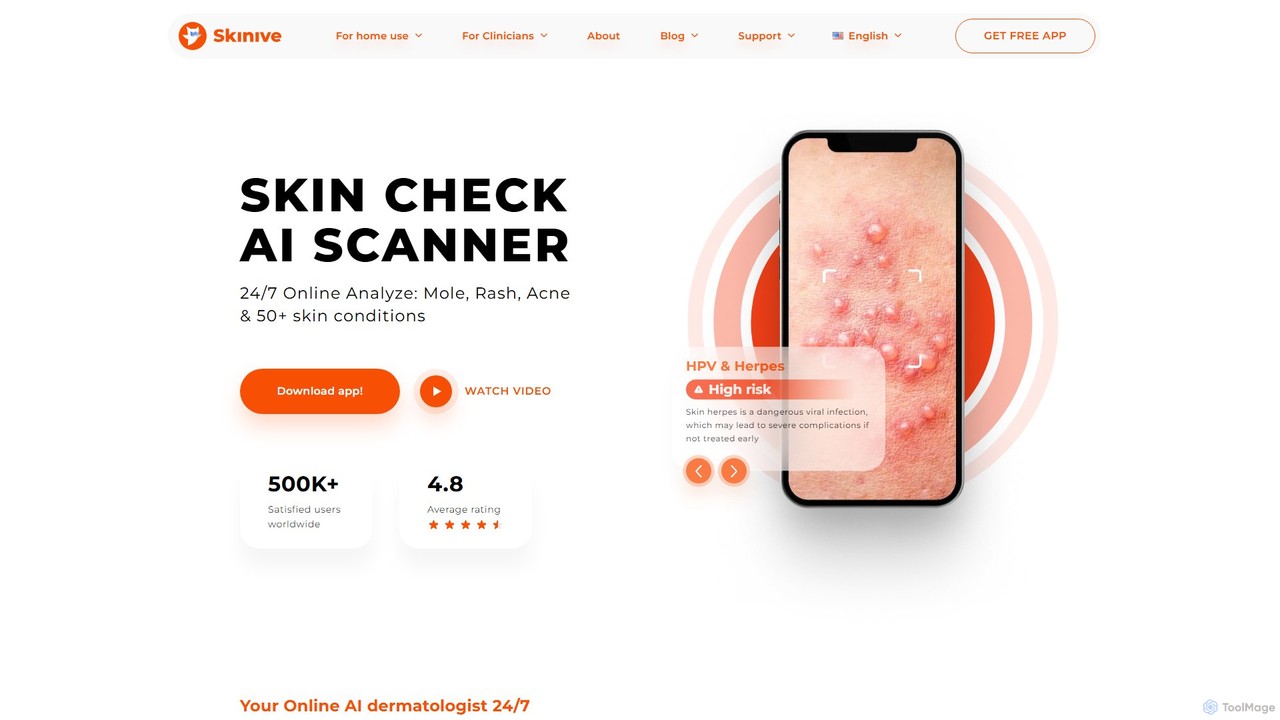
Skinive
Skinive is an AI-powered skin scanner app that provides instant analysis of over 50 skin conditions. By taking …
Skinive is an AI-powered skin scanner app that provides instant analysis of over 50 skin conditions. By taking a photo with your smartphone, you can get a risk assessment for moles, rashes, acne, and potential signs of skin cancer. It's a CE-marked medical device designed for both personal home use and to assist medical professionals, helping users monitor their skin health proactively and seek timely dermatological advice.
About Dermatology
Dermatology AI tools are a specialized category of artificial intelligence applications designed to assist in the diagnosis, analysis, and management of skin, hair, and nail conditions. Leveraging advanced machine learning and computer vision, these tools analyze dermatological images and data to provide insights, support clinical decisions, and enhance patient care. They aim to improve diagnostic accuracy, streamline workflows, and make dermatological expertise more accessible.
Core Features
- Image Analysis & Diagnosis Support: Automatically analyze skin lesions, rashes, and other dermatological images to identify potential conditions and suggest differential diagnoses.
- Risk Assessment: Evaluate factors like mole characteristics or skin changes to assess the risk of malignancy or other serious conditions.
- Treatment Recommendation: Based on diagnostic findings, suggest evidence-based treatment protocols or personalized care plans.
- Patient Monitoring: Track changes in skin conditions over time through sequential image analysis, aiding in long-term management.
- Educational & Training Modules: Provide interactive platforms for medical students and practitioners to learn about dermatological conditions and AI applications.
Use Cases
Dermatologists use these tools for faster and more accurate preliminary diagnoses of skin lesions, reducing the need for immediate biopsies in benign cases. General practitioners can leverage them for initial screening of suspicious moles, deciding when to refer to a specialist. Researchers apply AI to analyze large datasets of skin images for pattern recognition and drug discovery in dermatological conditions.
How to Choose
When selecting Dermatology AI tools, consider the accuracy and validation of their algorithms against clinical data, the range of conditions they can analyze, and their integration capabilities with existing electronic health records (EHR) systems. Evaluate user-friendliness for clinical staff, data privacy compliance (e.g., HIPAA, GDPR), and the level of regulatory approval (e.g., FDA, CE Mark) for diagnostic support features.
DermatologyUse Cases
Early Detection of Melanoma
Dermatologists use AI to analyze dermoscopic images of moles, identifying subtle features indicative of melanoma or other skin cancers, leading to earlier diagnosis and improved patient outcomes.
Automated Psoriasis Severity Assessment
AI tools can quantify the extent and severity of psoriasis plaques from clinical photographs, providing objective measurements for monitoring treatment efficacy and disease progression over time.
Personalized Acne Treatment Planning
Patients upload photos of their acne, and AI analyzes lesion types and severity to recommend tailored skincare routines, product ingredients, or suggest when a dermatologist consultation is necessary.
Remote Monitoring of Chronic Skin Conditions
For patients with conditions like eczema or chronic wounds, AI-powered apps allow them to regularly submit images, which are then analyzed by AI to detect changes and alert clinicians if intervention is needed, reducing in-person visits.
Assisting General Practitioners with Skin Lesion Triage
GPs, who may lack specialized dermatological training, use AI tools to quickly assess suspicious skin lesions, helping them decide whether to refer a patient to a dermatologist or reassure them, improving referral efficiency.
Drug Discovery and Research for Skin Diseases
Pharmaceutical researchers utilize AI to analyze vast datasets of skin disease images and genetic information, identifying novel biomarkers or potential drug targets for conditions like atopic dermatitis or rare genetic skin disorders.