EzeGym
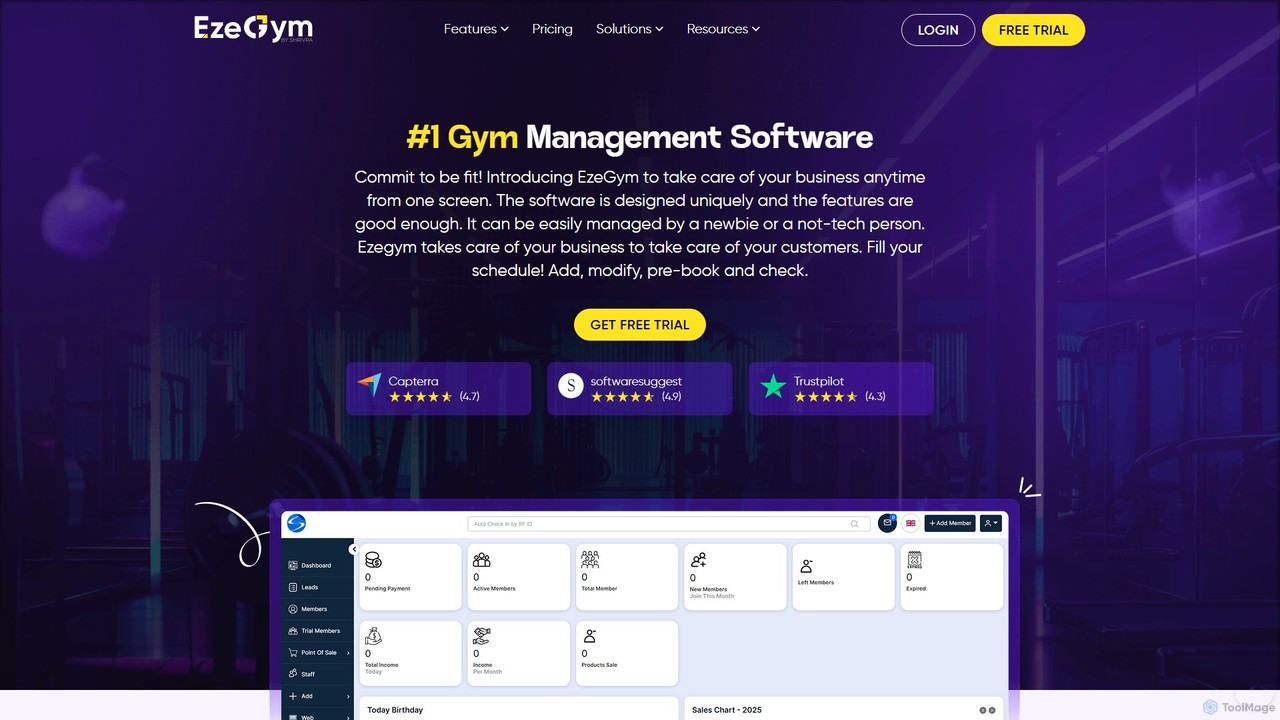
EzeGym is an all-in-one online management software for gyms, fitness centers, and wellness studios. It streamlines operations with …
EzeGym is an all-in-one online management software for gyms, fitness centers, and wellness studios. It streamlines operations with features for membership management, appointment scheduling, marketing automation, POS, and detailed reporting. The platform is designed to enhance client engagement and simplify business administration, allowing owners to focus on growth.
About Gym Management
AI Gym Management tools are specialized software platforms that use artificial intelligence to streamline and optimize fitness center operations. These tools leverage machine learning algorithms to analyze member data, predict behaviors, and automate personalized communication. They go beyond simple scheduling and billing by offering intelligent features that enhance member engagement, increase retention, and drive revenue growth. This enables gym owners and managers to make data-driven decisions and provide a superior, customized fitness experience.
Core Features
- Predictive Churn Analysis: Identifies members at risk of canceling their subscription based on attendance patterns and engagement levels.
- AI-Powered Personalization: Automatically generates customized workout plans, nutrition advice, and class recommendations for individual members.
- Automated Marketing & Communication: Deploys targeted email or SMS campaigns to nurture leads, re-engage inactive members, and promote services.
- Smart Scheduling: Optimizes class timetables and staff allocation based on historical attendance data and demand forecasts.
- Intelligent Reporting: Provides deep insights and future projections on revenue, membership growth, and operational efficiency.
Use Cases
These tools are ideal for a range of fitness businesses, from small independent studios and personal training centers to large multi-location gym chains. Gym managers use them to automate daily administrative tasks, while marketing teams leverage them to create effective retention and acquisition campaigns. Personal trainers can also use the AI features to scale their ability to provide personalized guidance to a larger number of clients.
How to Choose
When selecting an AI Gym Management tool, consider the specific needs of your facility. Evaluate the depth of its AI capabilities—does it offer true predictive analytics or just basic automation? Check for integration options with your existing hardware, such as access control systems and payment gateways. Also, consider the platform's scalability to grow with your business and ensure it complies with data privacy regulations like GDPR or CCPA.
Gym ManagementUse Cases
Predict and Reduce Member Churn
A gym manager notices a slight decline in overall member retention. Using an AI Gym Management tool, the system automatically analyzes attendance data, class booking frequency, and app interactions for all members. It flags 50 members as 'high-risk' for churn in the next 30 days. The manager then uses the platform's automated communication feature to send a targeted re-engagement campaign to this specific group, offering a complimentary personal training session or a discount on their next month's fee. This proactive approach helps recover 40% of at-risk members, significantly reducing overall churn.
Automate Personalized Workout Plan Generation
A personal trainer at a busy gym needs to create weekly workout plans for 30 clients. Instead of spending hours manually designing each plan, the trainer uses the AI platform. For each client, they input goals (e.g., weight loss, muscle gain), fitness level, available time, and any physical limitations. The AI algorithm instantly generates a unique, progressive 4-week workout plan for each client, complete with exercise instructions and video demonstrations. This allows the trainer to manage a larger client base effectively and focus their in-person time on coaching form and motivation.
Optimize Class Schedules with Demand Forecasting
A fitness studio owner wants to maximize attendance for their yoga and HIIT classes. Using their AI management software, they analyze historical booking data, peak hours, and member demographics. The AI model forecasts that adding a 7 AM yoga class on weekdays and a 10 AM HIIT class on Saturdays would attract the most participants. It also suggests reducing the number of mid-afternoon classes due to low demand. After implementing the AI-recommended schedule, the studio sees a 25% increase in average class attendance and a significant boost in revenue from group classes.
Automate Lead Nurturing and Sales Conversion
A gym's marketing team launches a digital ad campaign. When a potential member clicks the ad and visits the website, an AI-powered chatbot initiates a conversation. It answers common questions about membership prices, facilities, and class types 24/7. Based on the conversation, the chatbot identifies high-intent leads and automatically schedules a gym tour for them in the sales team's calendar. This process ensures immediate engagement with every lead and qualifies them before a human salesperson gets involved, increasing the tour booking rate by 35%.
Streamline Front Desk and Member Check-in
A large fitness club struggles with long queues at the front desk during peak hours. They implement an AI management system with facial recognition or QR code scanning for check-ins. Members can now enter the gym seamlessly without staff intervention. The system also automatically flags members with expired memberships or outstanding payments, allowing staff to address issues efficiently instead of manually checking every person. This reduces administrative workload by 50% for front desk staff and improves the overall member experience by eliminating wait times.
Generate Data-Driven Business Insights
A gym owner wants to make informed decisions for future investments. They use the AI management tool's reporting dashboard. The AI analyzes financial data, membership trends, and class popularity to generate comprehensive reports. It highlights that personal training sessions are the most profitable service and that demand for Pilates classes has grown by 40% in the last quarter. Based on these AI-driven insights, the owner decides to hire more personal trainers and invest in new Pilates equipment, confidently allocating resources to areas with the highest potential for return on investment.