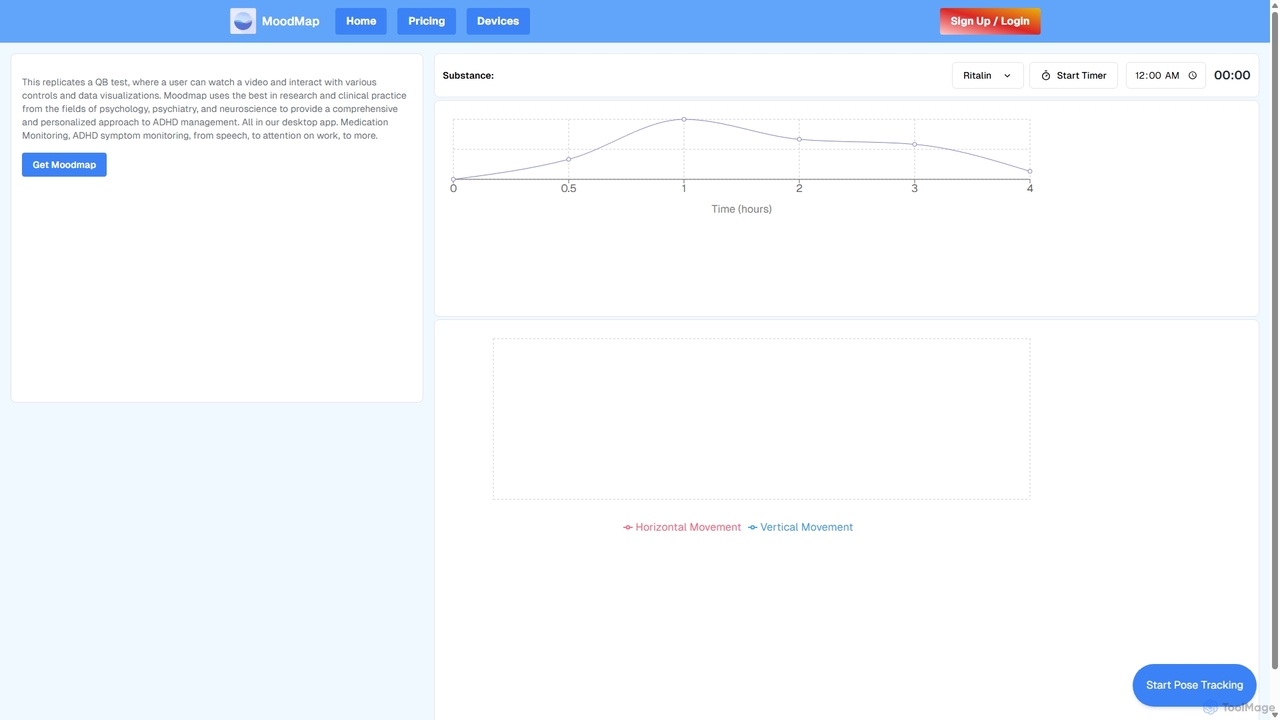
Moodmap
Moodmap is an advanced ADHD management tool that uses AI to provide a comprehensive and personalized approach to …
Moodmap is an advanced ADHD management tool that uses AI to provide a comprehensive and personalized approach to monitoring symptoms, attention, and medication efficacy. It integrates with various devices to offer objective, data-driven insights for individuals with ADHD, clinicians, and researchers.
Palmyst
Palmyst is an AI-driven platform that offers personalized insights into life's key areas through scientific palm analysis. Moving …
Palmyst is an AI-driven platform that offers personalized insights into life's key areas through scientific palm analysis. Moving beyond traditional fortune-telling, it uses structured palmistry and dermatoglyphics to decode personality traits, career suitability, relationship dynamics, and more. Users upload a palm photo to receive clear, actionable insights for self-awareness and personal growth.
About Mental Health
AI Mental Health tools are applications designed to provide accessible, personalized support for emotional well-being and psychological self-care. Leveraging technologies like Natural Language Processing (NLP) for conversational agents and machine learning for pattern analysis, these tools offer interactive exercises, mood tracking, and guided mindfulness sessions. Their primary value lies in offering immediate, confidential, and data-driven support for managing daily stress, anxiety, and improving overall mental resilience. They serve as a proactive resource within the broader Health & Fitness landscape, focusing specifically on cognitive and emotional health.
Core Features
- AI-Powered Chatbots: Engage users in supportive conversations and guide them through evidence-based techniques like Cognitive Behavioral Therapy (CBT).
- Mood and Emotion Tracking: Analyze user-inputted data to identify emotional patterns, triggers, and progress over time.
- Personalized Guided Sessions: Offer tailored meditation, mindfulness, and breathing exercises based on the user's current emotional state.
- Cognitive Skill Training: Provide gamified exercises and activities designed to enhance focus, reduce negative thought patterns, and build mental resilience.
- Stress Monitoring: Some tools integrate with wearables to analyze biometric data and provide alerts or interventions during stressful moments.
Use Cases
These tools are widely used by individuals seeking self-guided methods to manage everyday stress and anxiety. In corporate wellness programs, they provide employees with confidential and scalable mental health resources. They can also serve as a supplementary tool for individuals undergoing traditional therapy, helping them practice skills between sessions.
How to Choose
When selecting an AI Mental Health tool, prioritize those that are based on scientifically validated techniques (e.g., CBT, Mindfulness). Scrutinize the privacy policy to understand how your data is handled. Assess the level of personalization and the quality of the AI interaction. It is also crucial to recognize that these tools are for wellness support and are not a substitute for professional medical diagnosis or treatment for severe conditions.
Mental HealthUse Cases
Daily Mood Journaling and Pattern Analysis
An individual looking to better understand their emotional fluctuations uses an AI mental health app to log their mood, activities, and thoughts each day. The AI analyzes these entries over weeks, identifying correlations between certain activities (like poor sleep or high workload) and negative moods. The app then provides personalized insights, such as suggesting a mindfulness exercise on days following poor sleep, helping the user proactively manage their emotional well-being.
Practicing CBT with an AI Chatbot
A student experiencing social anxiety uses an AI chatbot to practice Cognitive Behavioral Therapy (CBT) techniques. When they feel anxious about an upcoming presentation, they describe their negative thoughts to the chatbot (e.g., "Everyone will think I'm incompetent"). The AI guides them through a cognitive restructuring exercise, helping them challenge the thought, examine the evidence, and reframe it into a more balanced perspective (e.g., "It's okay to be nervous, and I am well-prepared"). This provides a safe, non-judgmental space to practice skills 24/7.
Guided Meditation for Stress Reduction
An office worker feeling overwhelmed during a busy day uses an AI mental health app for a short break. Based on their self-reported stress level of 'high', the AI recommends a 10-minute guided breathing meditation specifically designed for immediate calming. The session's pacing and verbal cues are adapted by the AI to promote relaxation. After the session, the user reports feeling calmer and more focused, allowing them to return to their tasks with a clearer mind, all without leaving their desk.
Anonymous Emotional Support for Sensitive Topics
A user feeling isolated and hesitant to discuss personal struggles with friends or family turns to an AI companion app. They can anonymously share their feelings about a difficult situation, such as a relationship issue or grief. The AI provides empathetic, non-judgmental responses, validates their feelings, and offers gentle encouragement. This 24/7 availability of a confidential listener helps reduce feelings of loneliness and provides an immediate outlet for emotional expression when human support is not readily available.
Corporate Wellness Program Integration
A company subscribes to an AI mental health platform as part of its employee wellness benefits. An employee feeling stressed about deadlines uses the platform to access a library of resources on stress management. They complete a short, AI-guided module on time management and relaxation techniques. The platform is confidential, so the employee feels comfortable seeking help without involving HR or their manager. This proactive, scalable solution helps the company support employee well-being and prevent burnout across the organization.
Sleep Improvement through Guided Audio
A user struggling with mild insomnia uses an AI mental health app's sleep feature. Before bed, they select a 'sleep story' or a 'soundscape' session. The AI generates a calming narrative or a soothing audio environment (like gentle rain or ambient music). Some advanced tools can even adapt the audio in real-time based on feedback from a connected wearable, subtly changing the sound to encourage deeper relaxation. This helps the user disengage from racing thoughts and creates a conducive environment for falling asleep more easily.