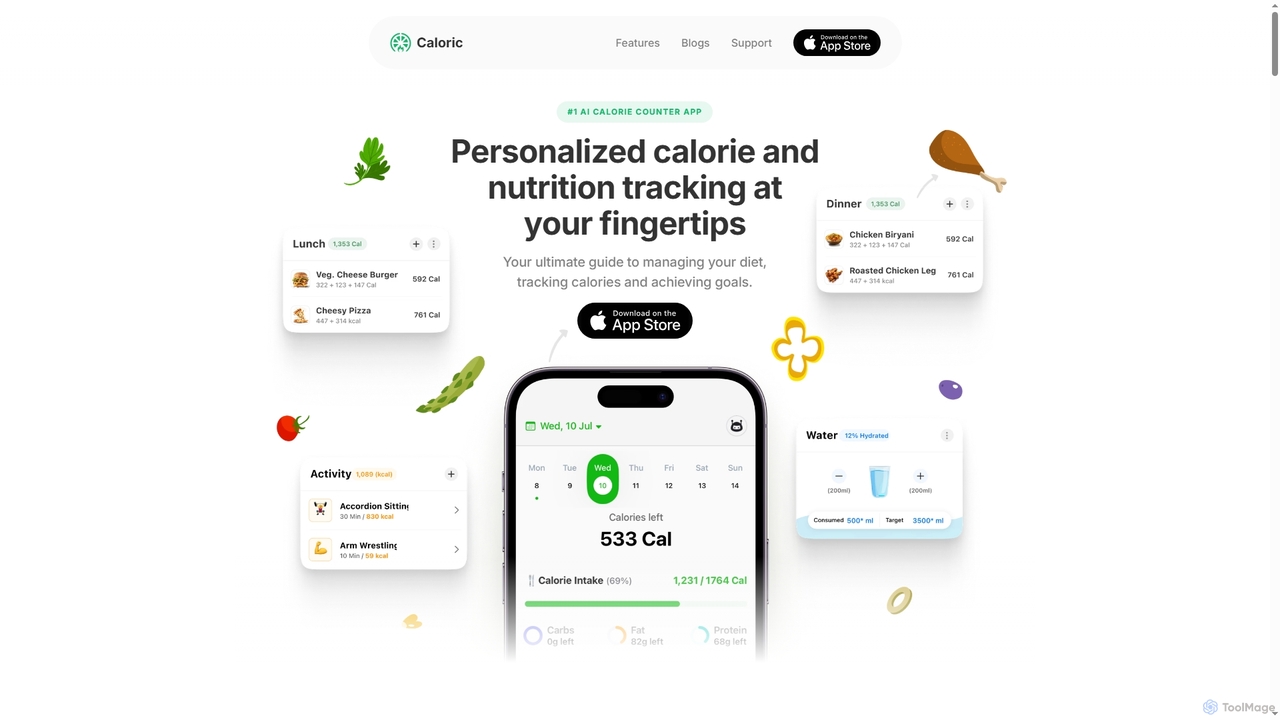
Caloric App
Caloric App is an AI-powered calorie counter and personalized nutrition tracking application designed to help users achieve their …
Caloric App is an AI-powered calorie counter and personalized nutrition tracking application designed to help users achieve their fitness goals. It offers instant meal logging via food scanning, QR code scanning, and voice commands, alongside detailed nutrient analysis and seamless integration with over 35 fitness apps and devices.
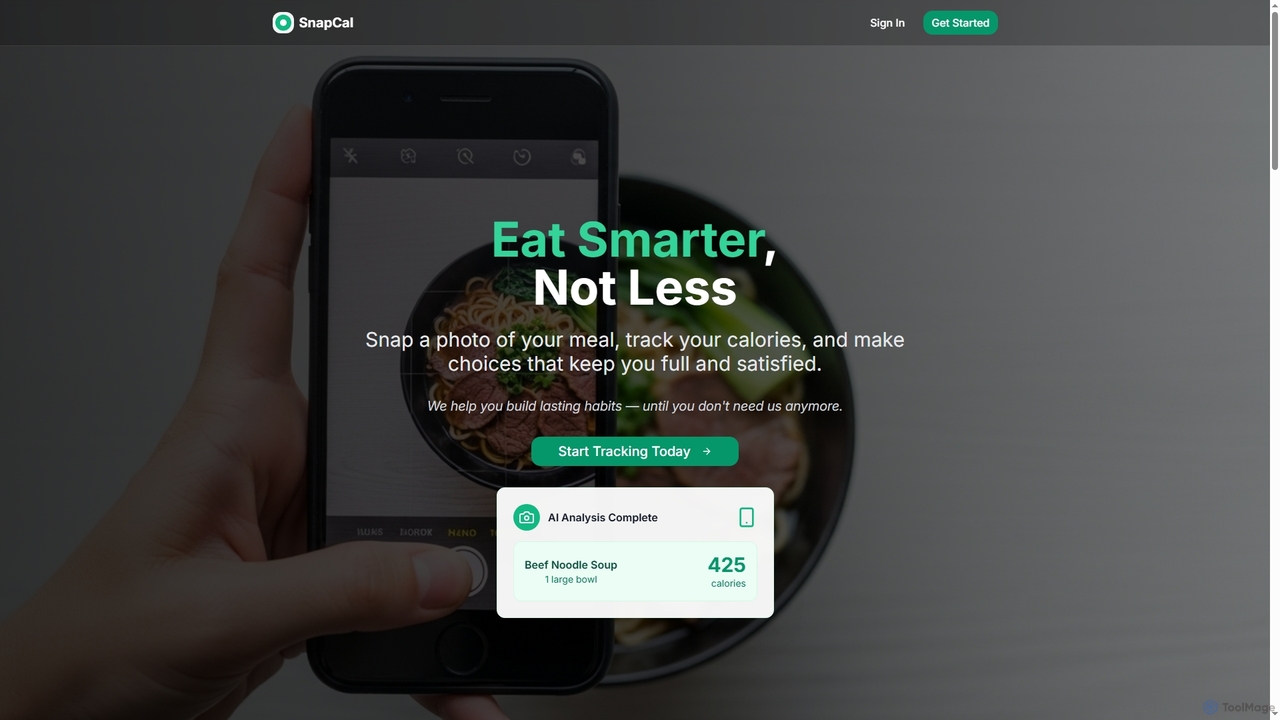
SnapCal
SnapCal is an AI-powered food tracker that helps you eat smarter, not less. By simply taking a photo …
SnapCal is an AI-powered food tracker that helps you eat smarter, not less. By simply taking a photo of your meal, its advanced AI instantly analyzes the food, calculates calories, and provides insights to help you build lasting healthy eating habits. It simplifies calorie tracking, making it effortless to understand your diet and make informed food choices.
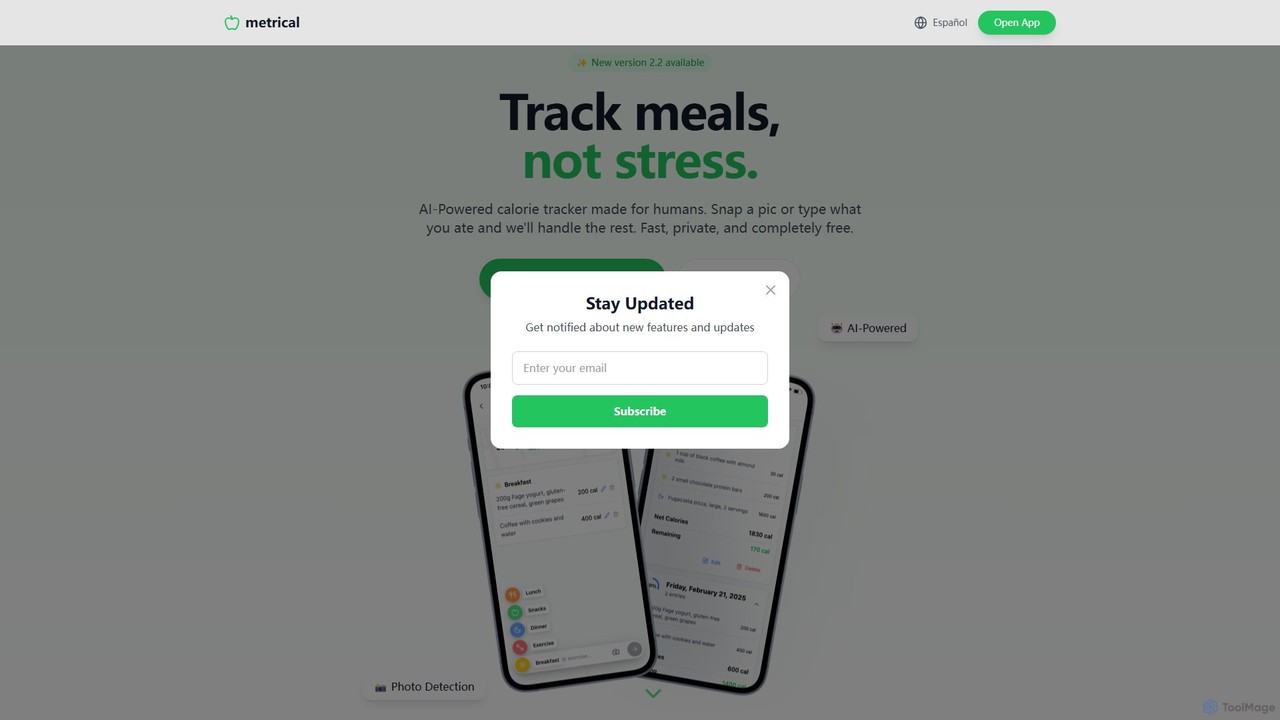
metrical
Metrical is an AI-powered calorie tracker that simplifies health monitoring. Just snap a photo of your meal or …
Metrical is an AI-powered calorie tracker that simplifies health monitoring. Just snap a photo of your meal or describe it in text, and the AI instantly estimates calories and macronutrients. It's designed for speed and privacy, requiring no account and storing all data locally on your device. This completely free tool offers detailed statistics, shareable reports, and smart food tagging, making calorie tracking effortless and stress-free.
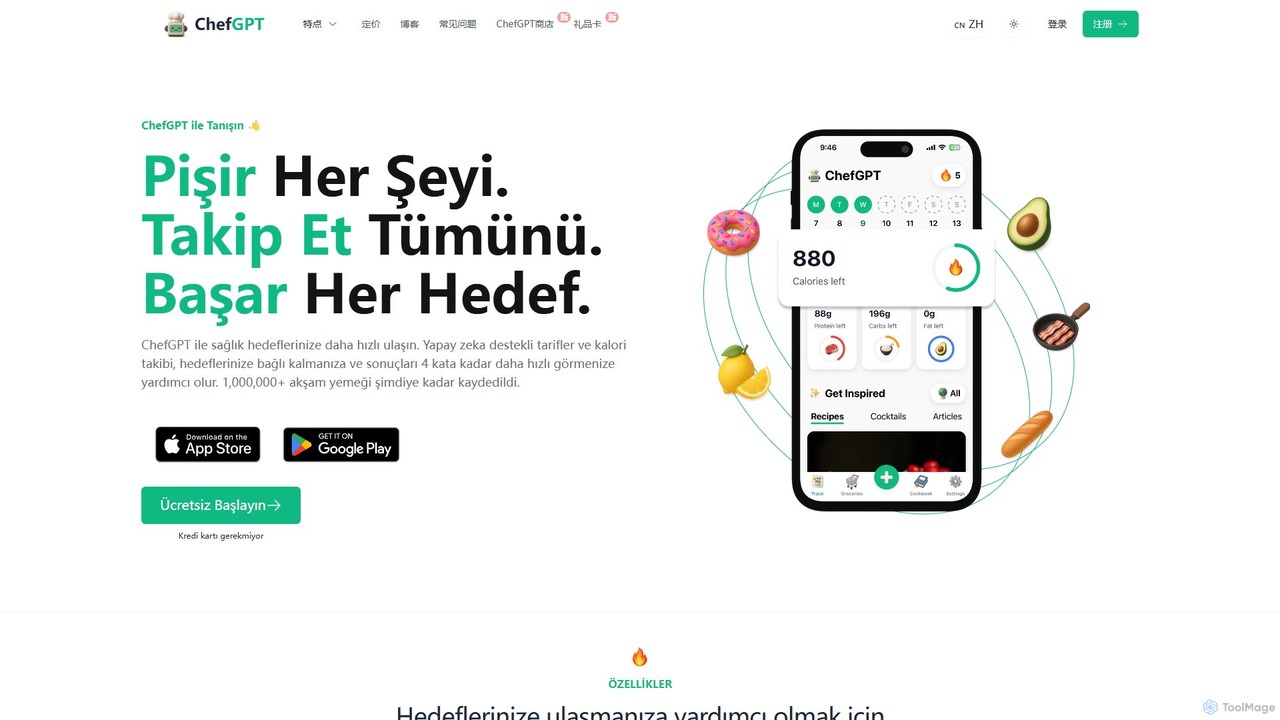
ChefGPT
ChefGPT is an AI-powered personal chef that generates custom recipes based on your ingredients, dietary needs, and cooking …
ChefGPT is an AI-powered personal chef that generates custom recipes based on your ingredients, dietary needs, and cooking tools. It simplifies meal planning, tracks nutrition with a photo, and helps you reduce food waste. Discover endless culinary inspiration and achieve your health goals faster.
About Nutrition Tracking
Nutrition Tracking tools are AI-powered applications designed to monitor and analyze an individual's dietary intake. These tools leverage advanced algorithms and extensive food databases to log meals, calculate nutritional values, and provide personalized insights. They empower users to manage their diet effectively, achieve specific health goals like weight management or muscle gain, and make informed food choices for overall well-being.
Core Features
- Automated Food Logging: AI-driven recognition of food items via text, voice, or image, simplifying meal entry.
- Detailed Nutrient Analysis: Breakdown of macronutrients (carbs, protein, fats) and micronutrients (vitamins, minerals) per meal and daily.
- Personalized Dietary Recommendations: Suggestions for meals, portion sizes, and food swaps based on individual health goals, dietary restrictions, and activity levels.
- Progress Tracking & Visualization: Charts and reports to monitor dietary habits, weight changes, and goal achievement over time.
- Meal Planning & Recipe Integration: Tools to create balanced meal plans, generate grocery lists, and access healthy recipes.
Use Cases
These tools are invaluable for individuals seeking to improve their health, manage specific conditions, or optimize athletic performance. They assist in understanding dietary patterns, identifying nutritional gaps, and adhering to specific eating plans, making healthy living more accessible and data-driven.
How to Choose
When selecting a Nutrition Tracking tool, consider the accuracy and breadth of its food database, the level of personalization offered for dietary recommendations, and its ease of use for logging meals. Evaluate integration capabilities with other health apps or wearables, data privacy policies, and whether it supports specific dietary needs like vegan, keto, or allergen tracking.
Nutrition TrackingUse Cases
Personalized Weight Management
Individuals aiming for weight loss or gain can utilize AI nutrition tracking to meticulously log their food intake, monitor calorie and macronutrient consumption, and receive tailored meal suggestions. The AI analyzes eating patterns against their goals, providing actionable insights to adjust diet and achieve sustainable results, often reducing the need for manual calculations.
Managing Specific Dietary Restrictions & Allergies
Users with celiac disease, lactose intolerance, or severe allergies benefit from AI tools that can quickly identify potential allergens or restricted ingredients in food items. By scanning labels or logging meals, the tool provides immediate feedback, helping users avoid adverse reactions and adhere strictly to their necessary dietary protocols with greater confidence.
Optimizing Athletic Performance & Recovery
Athletes and fitness enthusiasts can leverage nutrition tracking to fine-tune their diet for peak performance, muscle growth, and efficient recovery. The AI helps monitor protein intake for muscle repair, carbohydrate timing for energy, and hydration levels, ensuring their nutritional strategy aligns perfectly with training demands and competition schedules.
Monitoring & Managing Chronic Health Conditions
For individuals managing conditions like diabetes, hypertension, or kidney disease, AI nutrition trackers offer a critical tool for dietary adherence. Diabetics can track carbohydrate intake to manage blood sugar, while those with hypertension can monitor sodium levels. The tools provide data-driven insights to help users make informed food choices that support their medical treatment plans.
Improving General Dietary Habits & Nutrient Intake
Anyone looking to simply eat healthier and understand their nutrient intake can use these tools. The AI analyzes daily food logs to highlight nutrient deficiencies or excesses, suggesting balanced meal options and healthier food swaps. This helps users develop sustainable healthy eating habits and ensures a well-rounded intake of essential vitamins and minerals.
Facilitating Family Meal Planning for Health
Parents and households can use AI nutrition tracking to plan balanced meals for the entire family, ensuring everyone receives adequate nutrition. The tools can suggest recipes that meet diverse dietary needs, track individual intake, and even generate grocery lists, simplifying the complex task of feeding a healthy family while accommodating different preferences or restrictions.