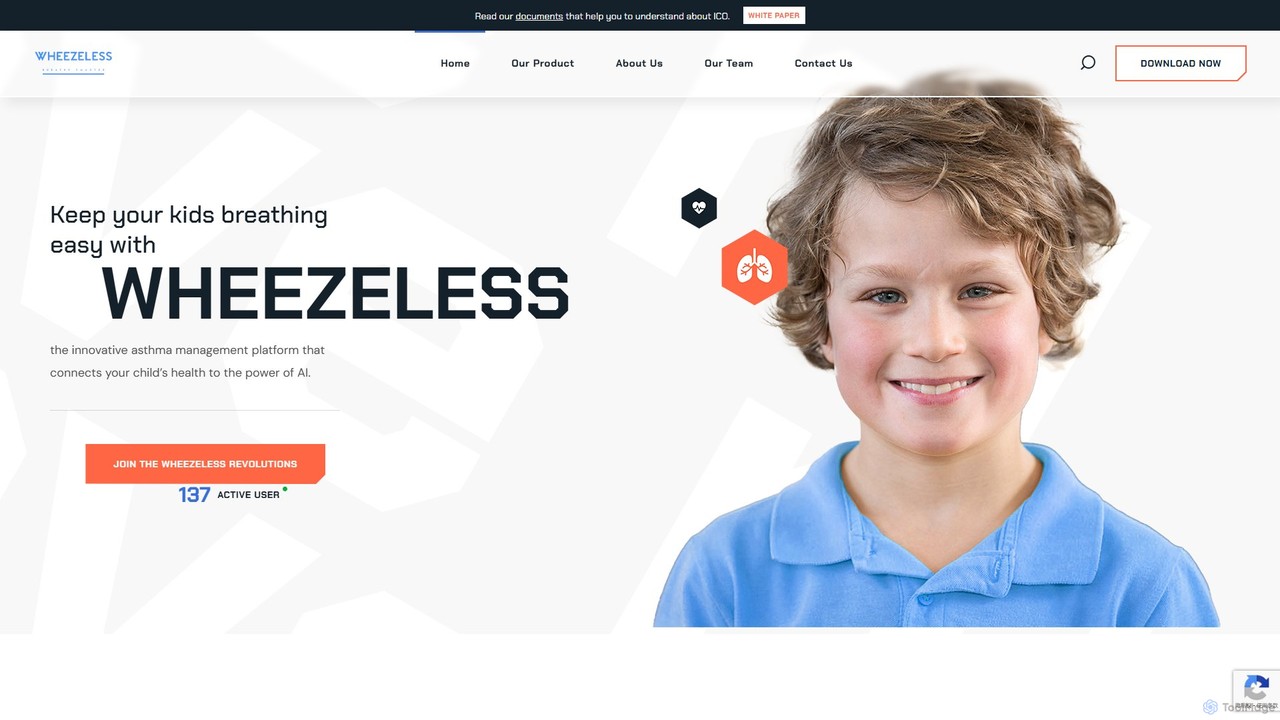
Wheezeless
Wheezeless is an AI-powered asthma management platform for children. It connects to smart devices to monitor breathing patterns …
Wheezeless is an AI-powered asthma management platform for children. It connects to smart devices to monitor breathing patterns and environmental triggers, providing real-time alerts and predictive insights to help families prevent asthma attacks and manage their child's respiratory health proactively.
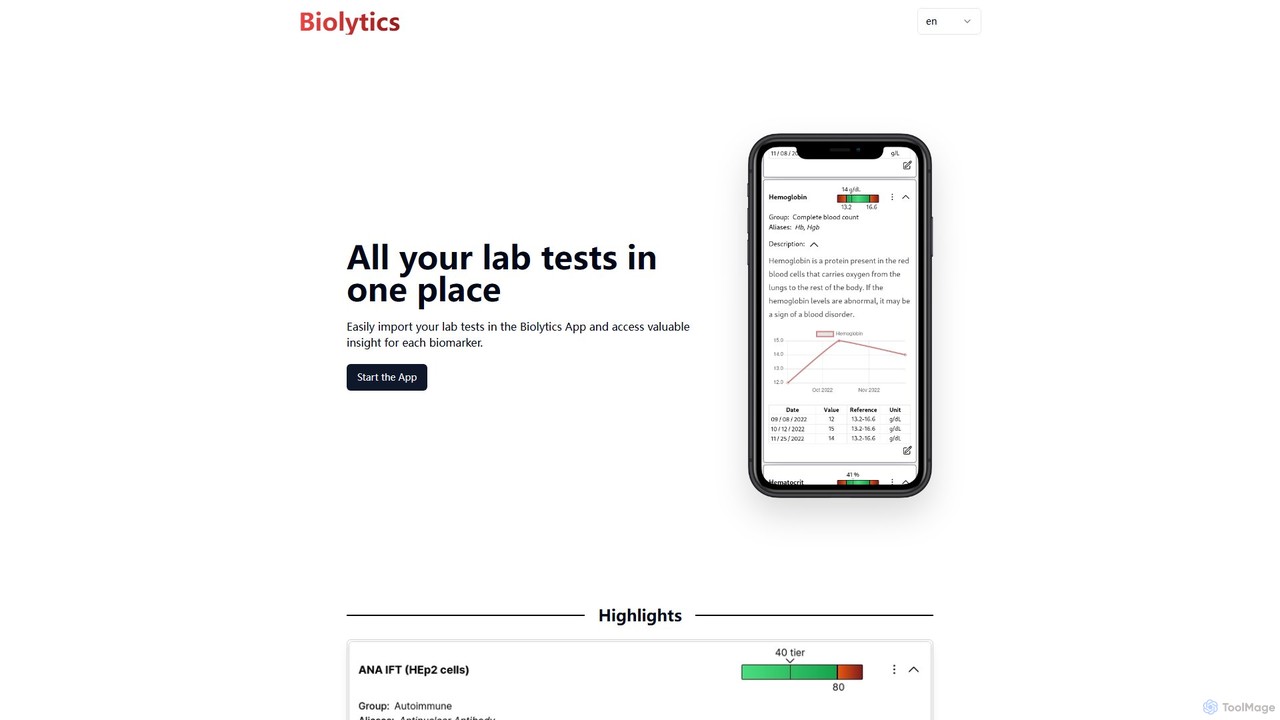
Biolytics
Biolytics is an AI-powered mobile app that digitizes and centralizes your lab test results. Easily import data from …
Biolytics is an AI-powered mobile app that digitizes and centralizes your lab test results. Easily import data from paper reports via OCR or QR codes, track biomarker trends with intuitive graphs, and gain a deeper understanding of your health with clear descriptions. Your data is stored securely on your device, ensuring complete privacy.

Medgic
Medgic is an AI-powered mobile application that allows users to scan, analyze, and get preliminary information about skin …
Medgic is an AI-powered mobile application that allows users to scan, analyze, and get preliminary information about skin conditions. By taking a photo, the app's advanced AI provides a quick assessment and educational suggestions. It is designed for general reference and learning, not as a medical diagnostic tool.
About Medical
Medical AI tools are advanced artificial intelligence applications specifically designed to assist and enhance various aspects of healthcare, from diagnosis and treatment to research and administration. Leveraging machine learning, natural language processing, and computer vision, these tools analyze vast amounts of medical data to provide insights, automate tasks, and support clinical decision-making. They play a crucial role in improving patient outcomes, accelerating medical discoveries, and optimizing healthcare operations within the broader health technology landscape.
Core Features
- Diagnostic Assistance: AI algorithms analyze medical images (X-rays, MRIs, CT scans) and patient data to detect anomalies and assist clinicians in early and accurate disease diagnosis.
- Drug Discovery & Development: AI accelerates the identification of potential drug candidates, predicts molecular interactions, and optimizes clinical trial design, significantly reducing R&D timelines.
- Personalized Treatment Plans: Based on individual patient genomics, medical history, and real-time data, AI generates tailored treatment recommendations for conditions like cancer or chronic diseases.
- Predictive Analytics: AI models forecast disease outbreaks, patient deterioration, or hospital readmission risks, enabling proactive interventions and resource allocation.
- Medical Record Analysis: Natural Language Processing (NLP) extracts structured information from unstructured clinical notes, facilitating research, billing, and administrative tasks.
Applicable Scenarios
Medical AI tools are indispensable in clinical settings, pharmaceutical research, and public health. They are used by radiologists for faster image interpretation, by oncologists for precision medicine, and by researchers to uncover new therapeutic targets. Hospitals deploy them for operational efficiency and patient risk management, while pharmaceutical companies leverage them for accelerated drug development and clinical trial optimization.
How to Choose
Selecting a Medical AI tool requires careful consideration of several factors. Prioritize solutions with proven accuracy and validation through clinical trials. Ensure strict compliance with healthcare regulations (e.g., HIPAA, GDPR) and robust data security measures. Evaluate integration capabilities with existing Electronic Health Record (EHR) systems and the tool's explainability, allowing clinicians to understand AI-driven recommendations. Finally, assess the vendor's expertise, support, and scalability to meet evolving healthcare needs.
MedicalUse Cases
AI-Assisted Medical Image Diagnosis
Radiologists utilize AI tools to analyze complex medical images such as X-rays, MRIs, and CT scans. The AI can highlight subtle anomalies, identify potential tumors, or detect early signs of diseases like pneumonia or diabetic retinopathy, significantly reducing diagnostic time and improving accuracy by providing a second, objective opinion.
Accelerating Pharmaceutical Drug Discovery
Pharmaceutical researchers employ AI platforms to sift through vast chemical databases, predict molecular properties, and simulate drug-target interactions. This capability allows for rapid identification of promising drug candidates, optimization of compound structures, and a more efficient preclinical development phase, drastically cutting down the time and cost of bringing new medicines to market.
Generating Personalized Cancer Treatment Plans
Oncologists leverage AI to create highly personalized treatment strategies for cancer patients. By analyzing a patient's unique genomic profile, tumor characteristics, medical history, and response to previous therapies, AI can recommend optimal drug combinations, radiation dosages, or surgical approaches, leading to more effective and less toxic treatments.
Enhancing Clinical Decision Support for Doctors
Physicians use AI-powered clinical decision support systems to access up-to-date medical knowledge and patient-specific insights at the point of care. These tools can cross-reference symptoms, lab results, and patient history with extensive medical literature, suggesting differential diagnoses, appropriate tests, and evidence-based treatment guidelines, thereby improving diagnostic precision and reducing medical errors.
Predictive Analytics for Patient Risk Management
Hospital administrators and care teams deploy AI models to predict patient outcomes, such as the likelihood of readmission, sepsis development, or adverse events. By continuously monitoring real-time patient data, AI can alert staff to high-risk individuals, enabling proactive interventions, optimizing resource allocation, and ultimately improving patient safety and hospital efficiency.
Automating Medical Record Data Extraction
Healthcare providers and researchers use AI with Natural Language Processing (NLP) to automatically extract structured data from unstructured clinical notes, discharge summaries, and pathology reports. This automation streamlines tasks like coding for billing, populating research databases, and identifying patient cohorts for clinical studies, saving countless hours of manual data entry and improving data quality.