FoodSkin AI
FoodSkin AI is an iOS app that uses AI to scan meal photos, identify likely ingredients and potential …
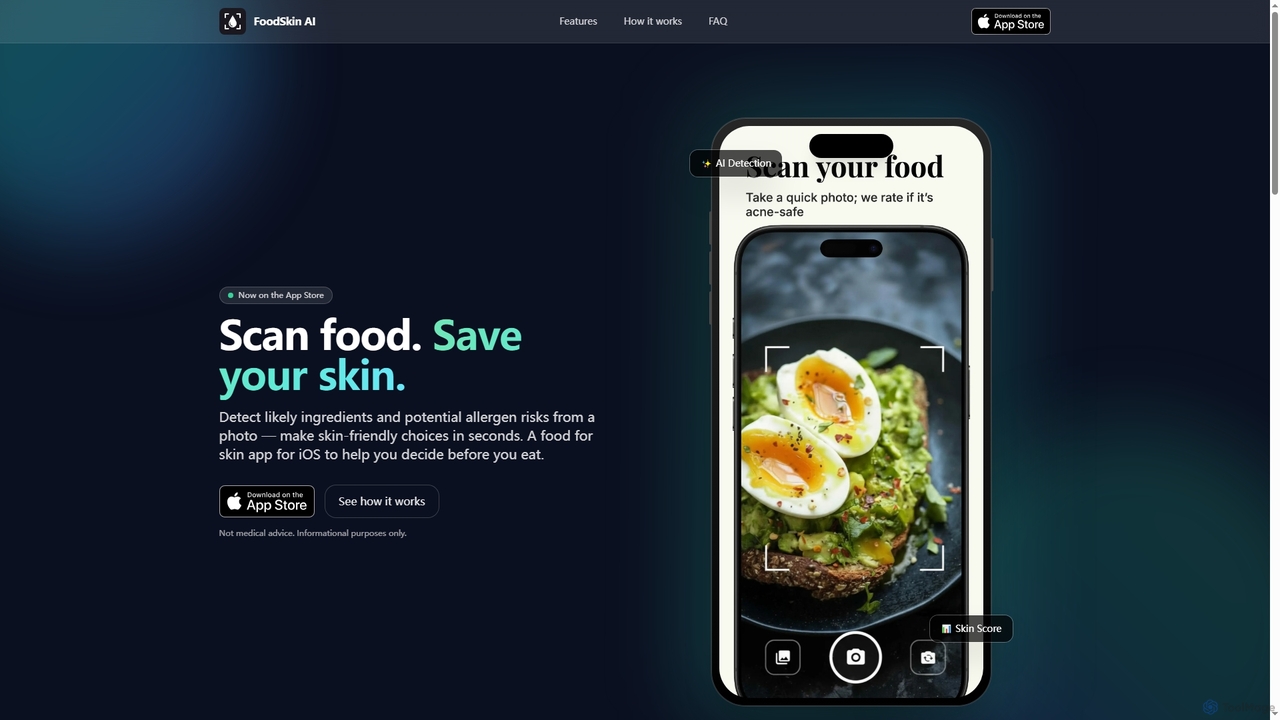
FoodSkin AI is an iOS app that uses AI to scan meal photos, identify likely ingredients and potential allergens, and provide a skin-friendliness score. It helps users make informed dietary choices in seconds to support skin health, especially for those prone to acne.
About Skin Care
AI Skin Care tools are applications that leverage artificial intelligence, primarily computer vision and machine learning, to analyze skin conditions from images. These tools assess photos to identify concerns such as acne, wrinkles, dark spots, and skin texture. They provide users with data-driven insights and personalized recommendations for products and routines, bridging the gap between professional dermatological analysis and daily self-care. This technology empowers users to understand their unique skin needs and track their progress over time.
Core Features
- Image-Based Skin Analysis: Uses computer vision to detect and quantify skin concerns like pores, fine lines, hydration levels, and pigmentation from a user's photo.
- Personalized Recommendations: Generates customized skincare routines and suggests specific products based on the analysis results, skin type, and user-stated goals.
- Ingredient Analysis: Scans product ingredient lists to identify potential irritants, allergens, or beneficial compounds tailored to the user's skin profile.
- Progress Tracking: Allows users to compare photos over time to visually and quantitatively monitor the effectiveness of their skincare regimen.
- Concern Identification: Helps identify potential skin issues by comparing user images against a large database of dermatological conditions, often suggesting when to consult a professional.
Use Cases
These tools are widely used by individuals seeking to build an effective, personalized skincare routine without guesswork. They are also valuable for people managing specific conditions like acne or rosacea, enabling them to track flare-ups and treatment efficacy. Beauty brands and retailers may also use this technology to provide enhanced, data-driven product recommendations to customers.
How to Choose
When selecting an AI Skin Care tool, consider the accuracy and scope of its analysis; it should be able to identify a wide range of concerns relevant to you. Evaluate the tool's privacy policy regarding how your photos and personal data are handled. Also, assess the size and impartiality of its product recommendation database and check for features like progress tracking to ensure it meets your long-term needs.
Skin CareUse Cases
Generate a Personalized Daily Skincare Routine
A user wanting to improve their skin health but feeling overwhelmed by product choices uses an AI Skin Care tool. They take a selfie, and the app's computer vision algorithm analyzes their skin for hydration, oiliness, wrinkles, and acne. Based on this analysis and the user's goal to reduce redness, the AI generates a complete morning and evening routine. It suggests a specific gentle cleanser, a hydrating serum with niacinamide, and a non-comedogenic moisturizer, explaining why each product is suitable for their skin type and concerns.
Track Acne Treatment Progress Over Time
A teenager undergoing acne treatment uses an AI tool to monitor their progress. Each week, they take a photo of their face in consistent lighting. The AI algorithm identifies and counts the number of active blemishes, blackheads, and post-inflammatory hyperpigmentation spots. It then generates a visual chart showing the trends over several months. This quantitative data helps the user and their dermatologist objectively assess whether the current treatment is effective or if adjustments are needed, providing more reliable feedback than subjective observation alone.
Check Product Ingredient Compatibility
A person with sensitive skin is shopping for a new sunscreen. Before purchasing, they use an AI skin care app to scan the product's ingredient list with their phone's camera. The AI cross-references the ingredients against the user's pre-set profile, which lists known irritants like specific fragrances and chemical filters. The app instantly flags two potentially problematic ingredients and suggests alternative sunscreens from its database that are formulated for sensitive skin, helping the user make a safer, more informed purchase decision on the spot.
Simulate Anti-Aging Effects Before Treatment
A user is considering investing in a high-end anti-aging serum or a professional treatment but is unsure about the potential results. They use an AI skin care tool with a simulation feature. After uploading a clear photo, they select a concern like 'crow's feet' or 'forehead lines'. The AI digitally modifies the image to realistically simulate the potential reduction in the appearance of these wrinkles after several weeks of consistent use. This visualization helps manage expectations and provides a more tangible idea of the product's or treatment's benefits, aiding in the decision-making process.
Identify and Understand a New Skin Concern
A user notices an unusual patch of dry, red skin on their cheek but is unsure of the cause. They use an AI skin analysis tool to take a close-up photo. The AI compares the image's features (texture, color, border) against its extensive database of dermatological images. While it cannot provide a medical diagnosis, it identifies the pattern as consistent with mild eczema or contact dermatitis. It provides information on these conditions and strongly recommends consulting a dermatologist for a proper diagnosis, empowering the user with preliminary information to guide their conversation with a healthcare professional.
Find Affordable Alternatives to Luxury Products
A beauty enthusiast loves a high-end vitamin C serum but finds its price unsustainable. They use an AI skin care tool that includes a 'dupe finder' feature. They input the name of the luxury serum. The AI analyzes its key active ingredients, concentration, and formulation type (e.g., water-based, anhydrous). It then searches its extensive product database to find several more affordable serums with a similar ingredient profile and user-reported efficacy. The results are presented with price comparisons and ingredient breakdowns, allowing the user to find a cost-effective alternative without sacrificing quality.