Suki
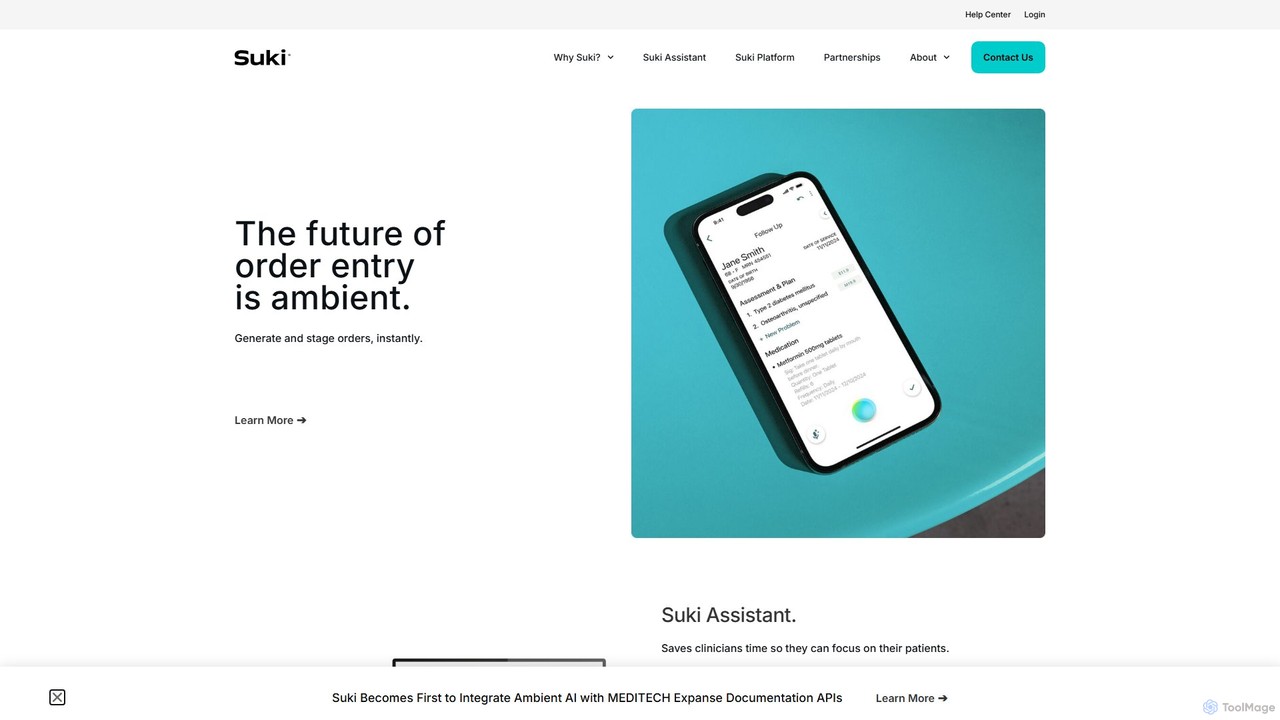
Suki is an enterprise-grade, AI-powered, voice-enabled digital assistant for clinicians. It automates administrative tasks like clinical documentation, coding, …
Suki is an enterprise-grade, AI-powered, voice-enabled digital assistant for clinicians. It automates administrative tasks like clinical documentation, coding, and order entry by using ambient AI. Suki integrates deeply with major EHRs to reduce clinician burnout, save time, and allow healthcare professionals to focus on patient care.
mpilo
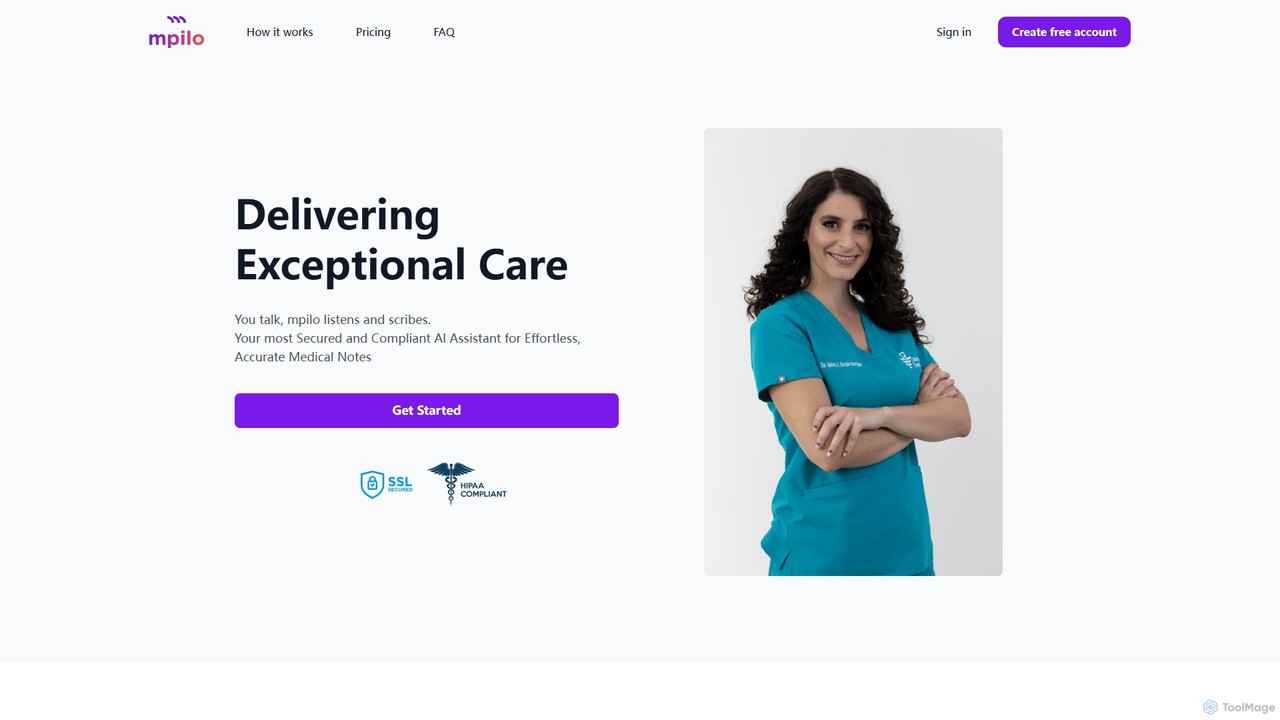
mpilo is an AI-powered medical assistant for healthcare professionals. It listens to patient consultations and automatically generates accurate, …
mpilo is an AI-powered medical assistant for healthcare professionals. It listens to patient consultations and automatically generates accurate, HIPAA-compliant clinical notes like SOAP notes. By automating documentation, mpilo reduces administrative workload, minimizes burnout, and allows clinicians to focus more on patient care. It's secure and adaptable to various medical specialties, learning your unique documentation style for seamless workflow integration.
About Clinical Assistant
Clinical Assistant tools are AI-powered solutions designed to support healthcare professionals in various clinical workflows. These tools leverage advanced artificial intelligence, including natural language processing and machine learning, to analyze complex medical data. Their primary purpose is to enhance diagnostic accuracy, streamline administrative tasks, and improve overall patient care by providing real-time insights and intelligent automation. They aim to reduce the burden on clinicians, allowing them to focus more on direct patient interaction and critical decision-making.
Core Features
- Diagnostic Support: AI analyzes patient symptoms, lab results, and imaging to suggest potential diagnoses and relevant medical literature.
- Treatment Planning Assistance: Provides evidence-based recommendations for personalized treatment plans, including drug dosages and therapy options.
- Administrative Automation: Automates routine tasks such as clinical documentation, scheduling, and patient record updates, reducing manual workload.
- Patient Monitoring & Alerts: Continuously monitors patient vital signs and data, identifying anomalies and alerting staff to potential critical events.
- Drug Interaction Checking: Flags potential adverse drug interactions or incorrect dosages by cross-referencing patient history and medication lists.
Applicable Scenarios
Clinical Assistant tools are invaluable for physicians seeking to refine diagnoses, nurses aiming to reduce documentation time, and pharmacists needing to verify medication safety. They are used in hospitals for emergency room triage, in clinics for chronic disease management, and in specialized practices for complex case reviews, significantly enhancing the efficiency and precision of medical operations.
How to Choose
When selecting a Clinical Assistant tool, prioritize accuracy and reliability, ensuring the AI models are validated with extensive medical data. Evaluate its integration capabilities with existing Electronic Health Record (EHR) systems and hospital information systems (HIS) for seamless workflow. Data security and compliance with regulations like HIPAA or GDPR are paramount. Additionally, consider the user interface's intuitiveness and the vendor's support for ongoing model updates and customization.
Clinical AssistantUse Cases
Enhancing Diagnostic Accuracy for Physicians
A physician uses an AI Clinical Assistant to analyze a patient's complex symptoms, lab results, and medical history. The AI quickly cross-references this data with vast medical literature and similar anonymized patient cases, suggesting a ranked list of differential diagnoses and highlighting key indicators. This process helps the doctor consider less common conditions, confirm initial suspicions, and ultimately arrive at a more precise and timely diagnosis, potentially reducing diagnostic errors by up to 20%.
Automating Clinical Documentation for Nurses
A nurse uses an AI Clinical Assistant that integrates with the EHR system to automate patient documentation. During rounds, the nurse verbally records observations and patient responses into a voice-to-text interface. The AI processes this natural language, extracts relevant medical terms and data points, and automatically populates the correct fields in the patient's electronic health record. This significantly reduces the time spent on manual data entry, allowing nurses to dedicate more time to direct patient care and improving documentation accuracy by minimizing transcription errors.
Personalizing Treatment Plans for Chronic Conditions
For patients with chronic conditions like diabetes or heart disease, an AI Clinical Assistant helps tailor treatment plans. The AI analyzes the patient's genetic profile, lifestyle data, medication history, and real-time biometric readings from wearables. It then suggests personalized adjustments to medication dosages, dietary recommendations, and exercise regimens, aligning with the latest clinical guidelines. This proactive approach ensures that treatment evolves with the patient's condition, leading to better health outcomes and fewer complications over time.
Real-time Patient Monitoring and Early Warning Systems
In an intensive care unit (ICU), an AI Clinical Assistant continuously monitors multiple patient parameters, including vital signs, lab results, and medication administration. The AI identifies subtle trends or deviations that might indicate an impending critical event, such as sepsis or cardiac arrest, often before human staff can detect them. It then triggers immediate alerts to the medical team, providing crucial extra time for intervention. This proactive monitoring significantly enhances patient safety and can improve survival rates by enabling earlier and more targeted responses.
Optimizing Drug Interaction and Dosage Verification
A pharmacist uses an AI Clinical Assistant to verify medication safety for a patient with multiple prescriptions and comorbidities. The AI rapidly cross-references all prescribed drugs against the patient's full medical history, current lab values, and known drug-drug or drug-condition interactions. It flags potential adverse reactions, contraindications, or incorrect dosages based on age, weight, and kidney function. This ensures that patients receive the safest and most effective medication regimen, significantly reducing the risk of medication errors and improving patient outcomes.
Streamlining Clinical Workflow and Resource Allocation
Hospital administrators and department heads utilize AI Clinical Assistants to optimize operational efficiency. The AI analyzes patient flow data, staff availability, equipment utilization, and historical demand patterns to predict peak times and suggest optimal scheduling for appointments, surgical procedures, and bed assignments. This helps in reducing patient wait times, preventing staff burnout by balancing workloads, and ensuring critical resources are available when needed. The result is a more efficient healthcare system, capable of handling higher patient volumes with improved service quality.