DecodeMyForm
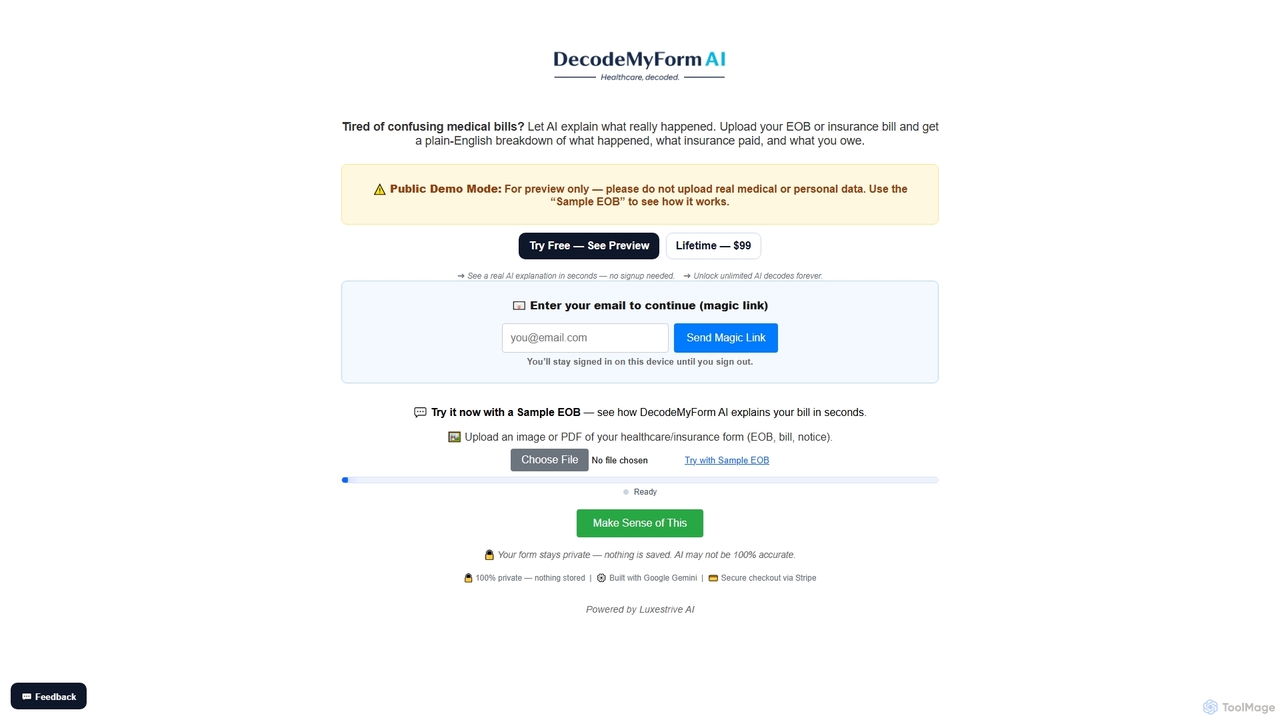
DecodeMyForm is an AI-powered tool designed to simplify complex medical bills and insurance Explanation of Benefits (EOBs). Users …
DecodeMyForm is an AI-powered tool designed to simplify complex medical bills and insurance Explanation of Benefits (EOBs). Users can upload their healthcare forms to receive clear, plain-English explanations of charges, insurance payments, and their personal financial responsibility, making healthcare billing understandable.
Curear
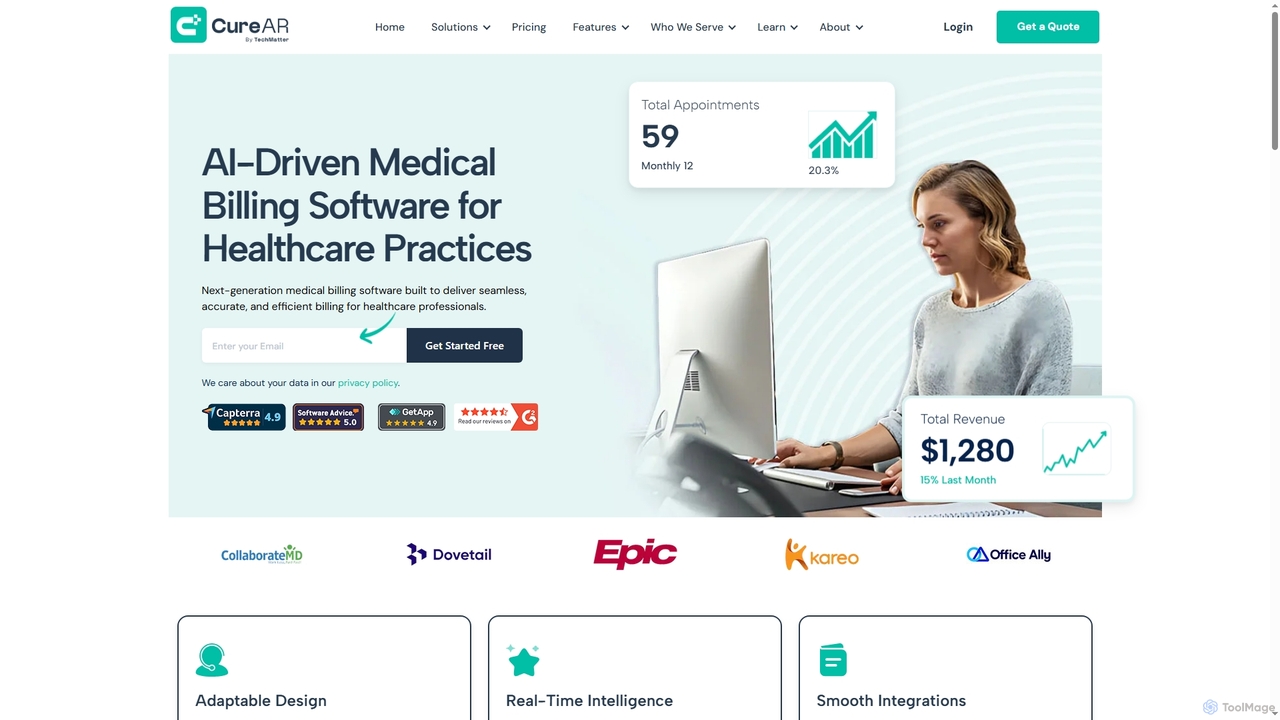
Curear is an AI-driven medical billing and revenue cycle management (RCM) software for healthcare providers. It automates the …
Curear is an AI-driven medical billing and revenue cycle management (RCM) software for healthcare providers. It automates the entire billing cycle, from claim submission and error checking to payment posting and compliance management. The platform offers real-time analytics, seamless EHR integration, and an AI chatbot to reduce denials, accelerate reimbursements, and improve financial outcomes for practices of all sizes.
About Medical Billing
AI Medical Billing tools are specialized software designed to automate and optimize the creation, submission, and management of healthcare claims. These platforms utilize machine learning and natural language processing (NLP) to accurately extract patient data, assign correct medical codes (such as ICD-10 and CPT), and detect potential errors before submission. By automating these complex tasks, they help healthcare providers reduce claim denials, accelerate the revenue cycle, and ensure compliance with industry regulations. This focused application of AI is a critical component for improving the financial health of healthcare organizations.
Core Features
- Automated Medical Coding: Uses NLP to analyze clinical notes and automatically suggest accurate billing codes, reducing manual effort and errors.
- Claim Scrubbing: Proactively identifies and flags potential errors, inconsistencies, or missing information in claims before they are submitted to payers.
- Denial Management: Analyzes denied claims to identify root causes, prioritizes appeals, and provides insights to prevent future denials.
- Real-time Eligibility Verification: Automatically verifies a patient's insurance coverage and benefits in real-time to prevent billing issues.
- Revenue Cycle Analytics: Provides dashboards and reports that offer deep insights into financial performance, billing trends, and key performance indicators (KPIs).
Applicable Scenarios
These tools are essential for various healthcare settings, from small private practices to large hospital networks and specialized medical billing companies. For instance, a hospital's billing department uses them to process thousands of claims daily with high accuracy. A private clinic might leverage them to reduce administrative overhead and improve cash flow by minimizing claim rejections.
Selection Criteria
When choosing an AI Medical Billing tool, consider its integration capabilities with your existing Electronic Health Record (EHR) system. Evaluate the accuracy of its AI-powered coding and its compliance with regulations like HIPAA. Also, assess the robustness of its analytics and denial management features, as well as a pricing model that scales with your organization's claim volume.
Medical BillingUse Cases
Automating Claim Coding for a Hospital
A medical coder in a large hospital's billing department uses an AI tool to process patient charts. Instead of manually reading through lengthy clinical notes to find billable services, the coder uploads the document to the AI platform. The system's NLP engine analyzes the text, identifies diagnoses and procedures, and suggests the corresponding ICD-10 and CPT codes with a high confidence score. This reduces the time spent per chart by up to 70% and significantly improves coding accuracy, leading to fewer denials and faster reimbursements.
Proactive Claim Scrubbing for a Private Clinic
An office manager at a private dermatology clinic uses an AI billing tool to minimize claim rejections. Before submitting a batch of claims to insurance payers, the manager runs them through the tool's 'claim scrubber' feature. The AI scans each claim for common errors such as mismatched diagnosis and procedure codes, missing patient information, or invalid insurance IDs. It flags potential issues and suggests corrections, allowing the manager to fix them proactively. This practice increases the clinic's first-pass acceptance rate from 85% to over 98%.
Analyzing and Managing Claim Denials
A revenue cycle manager for a healthcare system uses an AI billing platform's analytics dashboard to tackle claim denials. The system automatically categorizes denials by reason, payer, and department, revealing trends that were previously difficult to spot. For example, the manager discovers that a specific payer frequently denies claims for a particular procedure due to 'lack of medical necessity'. Armed with this data, they can provide targeted training to the clinical staff on improving documentation for that procedure, effectively reducing future denials by 30% and recovering revenue faster.
Real-time Insurance Eligibility Checks
A front-desk staff member at a dental office uses an AI billing tool to verify patient insurance before their appointment. As they schedule a new patient, they enter the patient's details into the system. The tool instantly connects to the insurance payer's database and confirms coverage, co-pays, and deductibles in real-time. This prevents issues at the time of service, such as discovering a patient has an inactive policy. It improves patient satisfaction by providing financial clarity upfront and ensures the clinic avoids uncollectible revenue from ineligible patients.
Optimizing Revenue Cycle with Predictive Analytics
A financial analyst at a medical group uses an AI billing platform to forecast revenue and identify bottlenecks. The system's predictive analytics model analyzes historical payment data, payer behavior, and denial trends to predict future cash flow with high accuracy. It also highlights which types of claims are most likely to be denied or delayed. This allows the finance team to allocate resources more effectively, focus on resolving high-risk claims, and make data-driven decisions to optimize the entire revenue cycle management process.
Streamlining Patient Payment Collections
A billing specialist at an independent practice uses an AI-powered system to manage patient balances. After insurance pays its portion, the tool automatically calculates the patient's responsibility, including co-pays and deductibles. It then initiates an automated communication workflow, sending clear, itemized statements via the patient's preferred method (email or text). The system can also offer flexible payment plans and send gentle reminders, which improves the collection rate of patient balances by over 25% and reduces the administrative time spent on manual follow-ups.