Healthcare Best in category 1 results Regulatory AI Tool

Popular AI tools in the Regulatory field of Healthcare include Enzyme, etc., helping you quickly improve efficiency.

Enzyme

Enzyme

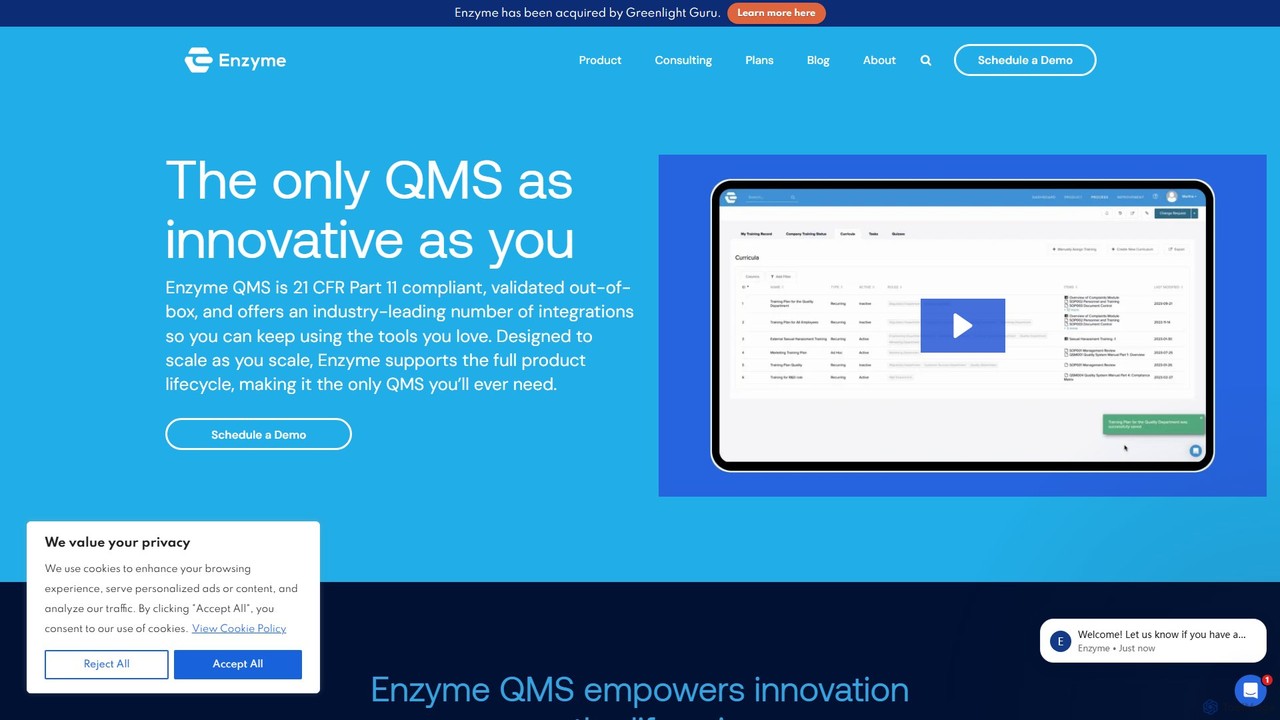
Enzyme is a comprehensive electronic Quality Management System (eQMS) designed for innovative companies, especially in regulated industries like …

3.8K

About Regulatory

AI Regulatory tools for healthcare are specialized platforms designed to automate and streamline compliance with complex medical and pharmaceutical regulations. These tools leverage Natural Language Processing (NLP) and machine learning to analyze vast amounts of regulatory documents, monitor changes from global health authorities, and generate submission-ready reports. Their primary value lies in reducing compliance risks, accelerating product approval timelines, and ensuring consistent adherence to standards from bodies like the FDA and EMA. This technology transforms the traditionally manual and error-prone process of regulatory affairs into a more efficient, data-driven operation.

Core Features

  • Regulatory Intelligence Monitoring: Automatically tracks and analyzes updates from global regulatory bodies to provide real-time alerts and impact assessments.
  • Automated Document Generation: Creates structured, compliant documents such as Clinical Study Reports (CSRs) or sections of the Common Technical Document (CTD).
  • Compliance Gap Analysis: Scans internal procedures and documentation to identify discrepancies against specific regulatory requirements (e.g., ISO 13485, FDA 21 CFR Part 11).
  • Submission Dossier Management: Assists in compiling, formatting, and validating complex submission packages for new drugs or medical devices.

Use Cases

These tools are essential for life sciences organizations, including pharmaceutical companies, biotech firms, medical device manufacturers, and Clinical Research Organizations (CROs). They are applied throughout the product lifecycle, from pre-clinical development and clinical trials to post-market surveillance and quality management system maintenance.

How to Choose

When selecting an AI Regulatory tool, consider its specific regulatory coverage (e.g., FDA, EMA, PMDA). Evaluate its validation capabilities for GxP environments and the robustness of its audit trails. Assess its integration potential with your existing Quality Management Systems (QMS) or Electronic Document Management Systems (EDMS). Finally, examine the transparency and accuracy of the underlying AI models.

RegulatoryUse Cases

1

Automating Clinical Study Report (CSR) Generation

For Clinical Research Managers at pharmaceutical companies, drafting a Clinical Study Report (CSR) is a time-intensive process requiring adherence to strict ICH E3 guidelines. An AI Regulatory tool automates this by analyzing clinical trial data, tables, and listings. It can auto-populate standard sections, extract key efficacy and safety findings, and ensure consistent terminology throughout the document. This significantly reduces manual writing and review cycles, potentially cutting weeks off the CSR preparation timeline and accelerating the submission process.

2

Streamlining New Drug Application (NDA) Submissions

Regulatory Affairs Specialists are responsible for compiling vast dossiers for New Drug Applications (NDAs), often in the electronic Common Technical Document (eCTD) format. AI Regulatory tools streamline this by acting as an intelligent checklist and assembly platform. They can automatically format documents, cross-reference sections, validate hyperlinks, and flag missing or inconsistent information across the entire dossier. This reduces the risk of technical rejection by health authorities like the FDA, saving valuable time and resources in the submission cycle.

3

Monitoring Global Regulatory Changes in Real-Time

For a Compliance Officer at a medical device firm operating globally, staying updated with regulatory changes from dozens of authorities is a monumental task. AI-powered regulatory intelligence platforms continuously scan websites of agencies like the FDA, EMA, and national competent authorities. They use NLP to identify relevant updates, classify them by topic (e.g., labeling, cybersecurity), and provide summarized impact analyses. This proactive approach replaces manual searching, ensuring the company can adapt to new requirements swiftly and avoid non-compliance.

4

AI-Powered Quality Management System (QMS) Audits

A Quality Assurance Manager prepares for regulatory audits by ensuring the company's Quality Management System (QMS) is compliant. An AI Regulatory tool can perform a 'pre-audit' by systematically analyzing all QMS documents, such as Standard Operating Procedures (SOPs) and Corrective and Preventive Actions (CAPAs). The AI cross-references these documents against regulations like ISO 13485 or FDA QSR, identifying inconsistencies, outdated procedures, or incomplete records. This allows the team to address potential findings before the official auditors arrive, increasing the likelihood of a successful audit.

5

Accelerating Medical Device Labeling Compliance

For technical writers in med-tech, ensuring that Instructions for Use (IFU) and product labels meet the specific requirements of multiple markets is a complex task. AI Regulatory tools can analyze draft labels and IFUs against a database of regional requirements (e.g., EU MDR symbol requirements, FDA UDI rules). The tool can flag missing warnings, incorrect symbols, or non-compliant phrasing, providing specific suggestions for correction. This automates a critical quality check, reduces the risk of costly recalls due to labeling errors, and speeds up market entry for new or updated devices.

6

Managing Pharmacovigilance Case Reporting

Pharmacovigilance professionals process a high volume of adverse event reports from various sources. AI tools can automate the intake of these reports, using NLP to extract critical information like patient details, drug names, and event descriptions. The AI then classifies the case seriousness and codes events using standard terminologies like MedDRA. This automation ensures faster, more consistent case processing and helps companies meet strict regulatory timelines for reporting serious adverse events to health authorities, improving patient safety monitoring.

RegulatoryFrequently Asked Questions