
Dishi
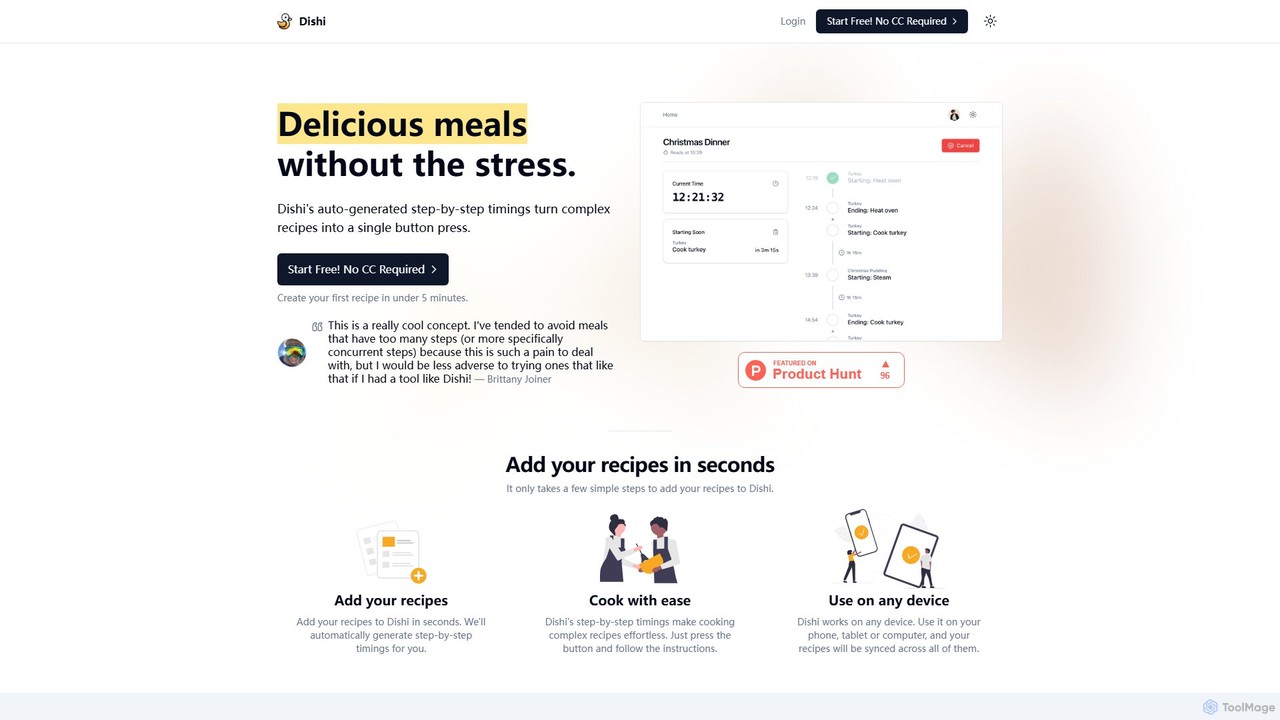
Dishi is an AI-powered meal prep timer that simplifies cooking complex recipes. It automatically generates synchronized, step-by-step instructions, …
Dishi is an AI-powered meal prep timer that simplifies cooking complex recipes. It automatically generates synchronized, step-by-step instructions, ensuring multiple dishes are ready simultaneously. Just add your recipes, and Dishi creates a simple, guided cooking plan, eliminating the stress of managing concurrent tasks. Perfect for home cooks of all skill levels, it makes preparing elaborate meals effortless and enjoyable.
About Kitchen
AI Kitchen tools are applications and devices that use artificial intelligence to streamline meal planning, recipe discovery, and the cooking process. They leverage machine learning algorithms to analyze available ingredients, dietary preferences, and user habits to offer personalized culinary assistance. This technology helps users save time, reduce food waste by suggesting recipes for leftovers, and explore new dishes with confidence. Many tools can also integrate with smart kitchen appliances for a more automated cooking experience.
Core Features
- Recipe Generation: Creates new recipes based on a list of ingredients, dietary needs, or cuisine type.
- Personalized Meal Planning: Develops weekly or monthly meal plans tailored to nutritional goals, allergies, and taste preferences.
- Smart Appliance Integration: Connects with and controls smart ovens, refrigerators, and other devices to automate cooking steps.
- Pantry Management: Tracks food inventory, suggests shopping lists, and monitors expiration dates to minimize waste.
- Step-by-Step Cooking Guidance: Provides interactive, often voice-guided, instructions to assist cooks of all skill levels.
Use Cases
These tools are ideal for busy families seeking to simplify meal preparation, individuals with specific dietary requirements (like gluten-free or keto), and home cooks looking to expand their culinary skills. They are also valuable for anyone aiming to manage their food budget more effectively and reduce their environmental footprint by minimizing food waste.
How to Choose
When selecting an AI Kitchen tool, consider its compatibility with your existing smart appliances. Evaluate the depth of its recipe database and the flexibility of its dietary customization options. Also, assess the user interface for ease of use and check the pricing model, whether it's a one-time purchase or a recurring subscription.
KitchenUse Cases
AI Meal Planning for Busy Families
A working parent uses an AI kitchen app to plan a week of healthy meals for their family of four. They input dietary preferences, such as 'low-carb' and 'no nuts', along with a weekly budget. The AI generates a complete meal plan with breakfast, lunch, and dinner, automatically creating a consolidated shopping list organized by supermarket aisle. This process reduces weekly planning time from two hours to about 15 minutes and helps the family stick to their budget by avoiding impulse buys.
Generating Recipes from Leftover Ingredients
To reduce food waste, a user opens their AI kitchen app and inputs the ingredients they have on hand: three eggs, half a bell pepper, some leftover cooked chicken, and an onion. The AI instantly suggests several recipe options, such as a 'Chicken and Pepper Omelette' or 'Quick Chicken Stir-fry'. The user selects the stir-fry, and the app provides a simple, step-by-step recipe, helping them create a delicious meal from items that might have otherwise been thrown away.
Guided Cooking for Novice Chefs
A college student learning to cook uses an AI kitchen tool with voice guidance. They choose a recipe for lasagna. The app guides them through each step, from boiling the pasta to layering the ingredients. It sets timers automatically and provides video clips for complex techniques like making a béchamel sauce. This interactive guidance helps the student build confidence and successfully cook a complex dish they wouldn't have attempted otherwise, turning a potentially stressful experience into a fun learning process.
Automating Cooking with Smart Appliances
A tech-savvy home cook selects a 'Roast Chicken' recipe from their AI kitchen platform. The platform communicates directly with their smart oven. It automatically preheats the oven to the correct temperature (400°F/200°C). Once the user places the chicken inside, the app monitors the cooking progress, adjusts the temperature as needed, and sends a notification to their phone when the meal is perfectly cooked. This integration eliminates guesswork and ensures consistent, high-quality results with minimal manual intervention.
Managing Dietary Restrictions and Allergies
A user planning a dinner party has a guest with a severe gluten allergy and another who is vegetarian. They use an AI kitchen tool to find recipes that cater to both needs. They input the restrictions, and the AI filters thousands of recipes to suggest suitable options like 'Black Bean and Quinoa Stuffed Bell Peppers'. The tool also highlights potential cross-contamination risks and suggests safe ingredient substitutions, ensuring a safe and enjoyable meal for all guests without hours of manual recipe searching.
Optimizing Grocery Shopping and Pantry Management
A family uses an AI kitchen tool that syncs their meal plan with a digital pantry. As they use ingredients, they scan the barcodes to update the inventory. Before their weekly shopping trip, the app automatically generates a shopping list containing only the items needed for the upcoming week's recipes, minus what's already in their pantry. This prevents buying duplicate items, reduces food waste from expired products, and streamlines the entire shopping process, saving both time and money.