Shram
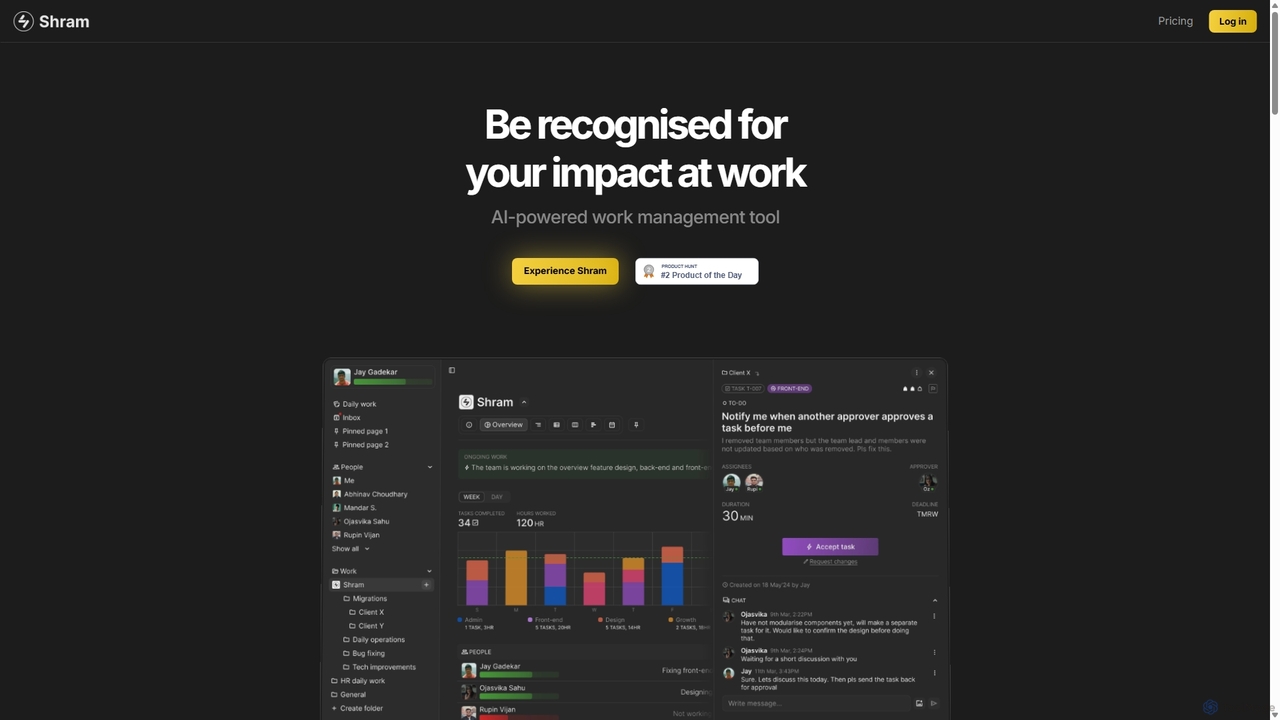
Shram is a delightful AI-powered work management platform that enhances team productivity through gamification. It intelligently assigns tasks, …
Shram is a delightful AI-powered work management platform that enhances team productivity through gamification. It intelligently assigns tasks, tracks performance, and provides actionable insights, making work more engaging and joyful for decentralized teams.
About Performance Management
Performance Management tools are AI-powered platforms designed to optimize individual and team productivity and development within an organization. Leveraging advanced analytics and machine learning, these tools automate the tracking, evaluation, and enhancement of employee performance against set objectives. They provide actionable insights, facilitate continuous feedback, and streamline processes like goal setting, performance reviews, and talent development, ultimately fostering a high-performing work culture as a vital component of modern HR & Team management.
Core Features
- Goal Setting & Tracking: AI-assisted objective setting (e.g., OKRs, KPIs) and real-time progress monitoring.
- Continuous Feedback & Coaching: Automated prompts for feedback, sentiment analysis of communications, and personalized coaching recommendations.
- Performance Reviews Automation: Streamlined scheduling, data collection, and generation of comprehensive performance reports.
- Skill Gap Analysis: Identifying individual and team skill deficiencies and suggesting relevant training or development paths.
- Predictive Analytics: Forecasting future performance trends, identifying potential attrition risks, and recommending proactive interventions.
Applicable Scenarios
These tools are invaluable for HR departments, team leaders, and C-suite executives aiming to cultivate a data-driven approach to talent management. They are particularly useful in organizations with distributed teams, complex project structures, or those undergoing rapid growth, where traditional manual performance reviews become cumbersome and inefficient. From annual reviews to daily check-ins, AI performance management tools ensure consistent, objective evaluation and development.
How to Choose
When selecting an AI performance management tool, consider its integration capabilities with existing HRIS and payroll systems, the flexibility of its goal-setting frameworks (e.g., OKR vs. KPI), and the depth of its analytics and reporting features. Evaluate the user interface for ease of adoption by both managers and employees, and assess the vendor's commitment to data security and compliance with privacy regulations. Finally, compare pricing models based on your organization's size and specific feature requirements.

Performance ManagementUse Cases
Automating Quarterly Performance Reviews
HR managers in large enterprises use AI performance management tools to automate the entire quarterly review cycle. The system collects data from various sources (project management tools, communication platforms), generates initial performance summaries, and flags areas for discussion, significantly reducing administrative overhead and ensuring timely, objective feedback for thousands of employees.
Enhancing Employee Development Plans
Team leaders leverage AI to identify individual skill gaps and recommend personalized learning paths. Based on performance data and career aspirations, the tool suggests relevant courses, mentors, or projects, helping employees grow professionally and aligning their development with organizational needs, fostering continuous upskilling.
Real-time Goal Progress Monitoring
Project managers utilize AI performance management to track team and individual OKRs or KPIs in real-time. The tool integrates with work management platforms, automatically updates progress, and sends alerts when goals are off track, enabling proactive interventions and ensuring projects stay aligned with strategic objectives.
Facilitating Continuous Feedback Culture
Organizations implement AI tools to encourage and streamline continuous feedback. Employees and managers can easily request or provide feedback through the platform, which then uses natural language processing to identify themes and sentiment, providing a richer, more frequent feedback loop than traditional annual reviews.
Identifying High-Potential Employees
HR analytics teams use predictive capabilities of AI performance management systems to identify high-potential employees based on historical performance, skill development, and engagement metrics. This data-driven approach helps in strategic talent planning, succession management, and targeted leadership development programs.
Optimizing Sales Team Productivity
Sales managers deploy AI performance management to analyze individual sales rep performance, identify bottlenecks in the sales cycle, and provide targeted coaching. The tool tracks metrics like conversion rates, call volumes, and deal sizes, offering insights into effective strategies and areas for improvement, thereby boosting overall team productivity.