Wisfr
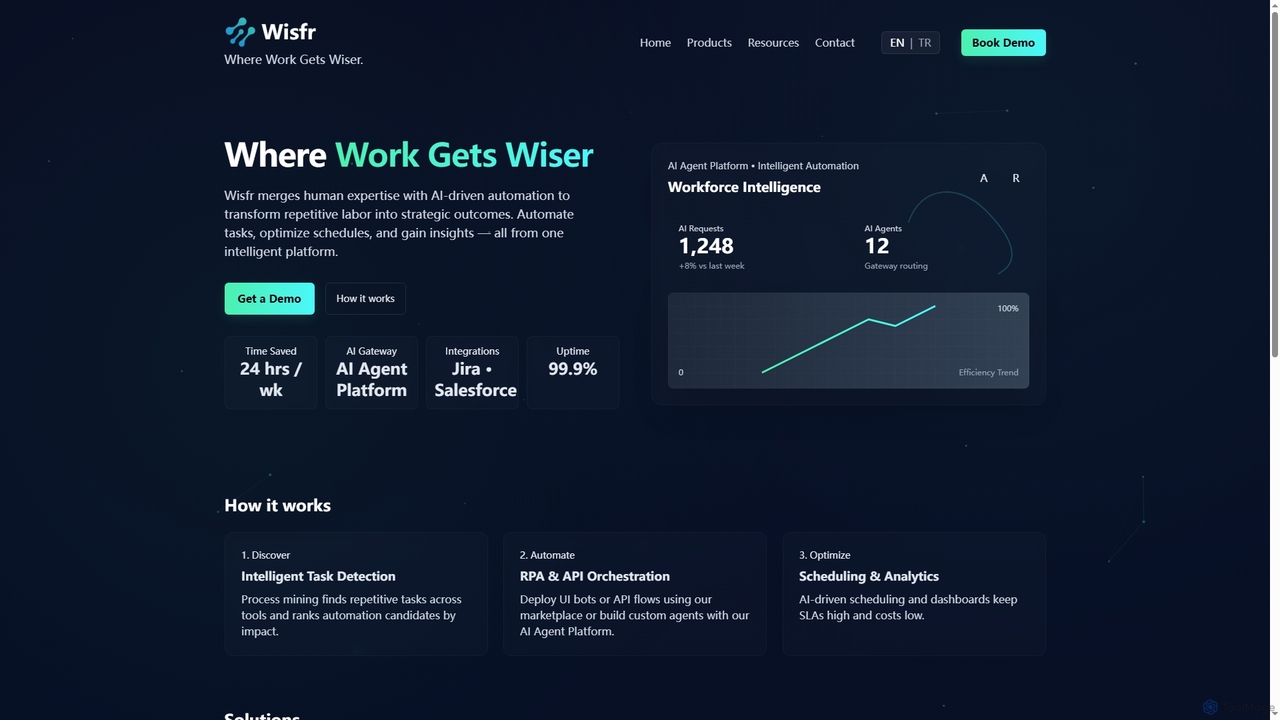
Wisfr is an AI Agent Platform that merges human expertise with AI-driven automation to transform repetitive tasks into …
Wisfr is an AI Agent Platform that merges human expertise with AI-driven automation to transform repetitive tasks into strategic outcomes. It helps businesses automate workflows, optimize schedules, and gain actionable insights from a single intelligent platform.
About Hr Automation
HR Automation tools are AI-powered solutions designed to streamline and automate repetitive tasks across various human resources functions. Leveraging technologies like machine learning and natural language processing, these platforms enhance efficiency, accuracy, and compliance in HR operations. They empower HR teams to focus on strategic initiatives, improve employee experience, and optimize talent management processes.
Core Features
- Automated Recruitment & Onboarding: Streamlines candidate sourcing, screening, interview scheduling, and new hire paperwork.
- Intelligent Payroll & Benefits Administration: Automates salary calculations, tax deductions, benefits enrollment, and compliance checks.
- AI-driven Performance Management: Facilitates goal setting, feedback collection, performance reviews, and talent development tracking.
- Employee Self-Service Portals: Provides employees with automated access to HR information, leave requests, and personal data updates.
- HR Data Analytics & Reporting: Generates insights from HR data to inform decision-making on workforce planning and retention.
Applicable Scenarios
Large enterprises with high employee turnover or complex payroll structures use HR automation to manage vast amounts of data and ensure compliance across multiple regions. Startups and SMEs leverage these tools to build scalable HR foundations without extensive manual overhead, focusing on rapid growth. HR departments facing talent shortages utilize automation for efficient candidate screening and engagement.
How to Choose
When selecting HR automation tools, consider the specific HR functions you aim to automate (e.g., recruitment, payroll, performance). Evaluate integration capabilities with existing HRIS or ERP systems for seamless data flow. Assess scalability to accommodate future growth and ensure robust data security and compliance with local regulations. Finally, review user-friendliness for both HR staff and employees.
Hr AutomationUse Cases
Automating Candidate Screening and Interview Scheduling
Recruitment teams use HR automation platforms to automatically screen thousands of resumes based on predefined criteria, identifying top candidates efficiently. AI-powered scheduling tools then coordinate interviews with candidates and hiring managers, sending automated reminders and managing calendar conflicts, significantly reducing administrative burden and accelerating the hiring process.
Automating Candidate Screening and Interview Scheduling
Recruitment teams in fast-growing tech companies use HR automation platforms to automatically screen hundreds of resumes for keyword matches and essential qualifications. The system then uses AI to schedule initial interviews based on recruiter and candidate availability, sending automated reminders. This significantly reduces manual administrative work, allowing recruiters to focus on engaging with qualified candidates and improving time-to-hire by up to 30%.
Streamlining Onboarding Workflows for New Hires
HR departments deploy automation to create personalized onboarding journeys for new employees. This includes automatically sending welcome emails, distributing necessary forms, setting up IT accounts, assigning training modules, and scheduling introductory meetings. This ensures a smooth, consistent, and compliant onboarding experience, making new hires feel valued from day one.
Streamlining New Employee Onboarding Processes
For companies with frequent new hires, HR automation tools create personalized onboarding workflows. New employees receive automated welcome emails, access to digital paperwork (contracts, tax forms), and training modules. The system tracks completion, notifies relevant departments (IT for equipment, managers for introductions), ensuring a smooth, compliant, and engaging start for every new team member, reducing manual follow-ups by HR by 50%.
Enhancing Employee Self-Service with AI Chatbots
Employees can access AI-powered chatbots via an HR portal to get instant answers to common questions regarding company policies, benefits, leave requests, or payroll. The chatbot can also guide them through self-service processes like updating personal information or submitting expense reports, reducing the volume of direct inquiries to the HR team.
Automating Payroll Processing and Compliance
Finance and HR departments in multinational corporations utilize HR automation to manage complex payroll across different countries with varying tax laws and regulations. The system automatically calculates salaries, bonuses, deductions, and taxes, generating payslips and ensuring timely, accurate payments. It also flags potential compliance issues, reducing errors and ensuring adherence to local labor laws, saving countless hours of manual reconciliation.
Automating Payroll Processing and Compliance
Finance and HR teams utilize automation software to accurately calculate salaries, bonuses, deductions, and taxes for all employees. The system automatically generates payslips, files tax reports, and ensures compliance with local labor laws and regulations, minimizing errors and saving countless hours of manual data entry and verification each pay cycle.
Enhancing Employee Performance Review Cycles
Organizations implement HR automation to standardize and simplify annual or quarterly performance review cycles. Managers and employees use the platform to set goals, track progress, provide continuous feedback, and complete self-assessments. The system automates reminders, aggregates data, and generates reports, making the review process more objective, transparent, and less time-consuming for all parties involved, fostering a culture of continuous development.
Optimizing Performance Review Cycles
Managers and HR professionals leverage automation to manage the entire performance review process. This involves automatically sending out performance review forms, tracking goal progress, collecting 360-degree feedback from peers and subordinates, and scheduling review meetings. The system compiles data into comprehensive reports, providing insights for employee development and talent management.
Managing Employee Leave Requests and Approvals
For any organization, managing employee leave (vacation, sick leave, parental leave) can be time-consuming. HR automation tools allow employees to submit leave requests through a self-service portal. The system automatically checks against company policies, team calendars, and manager availability, routing requests for approval. Once approved, it updates calendars and payroll, reducing administrative burden and ensuring fair, consistent application of leave policies.
Managing Employee Offboarding and Exit Procedures
When an employee leaves, HR automation tools ensure a smooth and compliant offboarding process. This includes automatically initiating IT account deactivation, coordinating asset returns, processing final payroll, generating exit interview surveys, and updating internal records. This minimizes risks, ensures data security, and maintains a positive employer brand.
Generating HR Analytics and Workforce Insights
HR leaders leverage automation platforms to collect and analyze vast amounts of employee data, including attrition rates, hiring costs, diversity metrics, and performance trends. The tools generate interactive dashboards and reports, providing actionable insights into workforce health, talent gaps, and potential retention risks. This enables data-driven decision-making for strategic workforce planning and improving overall organizational effectiveness.