Facetune
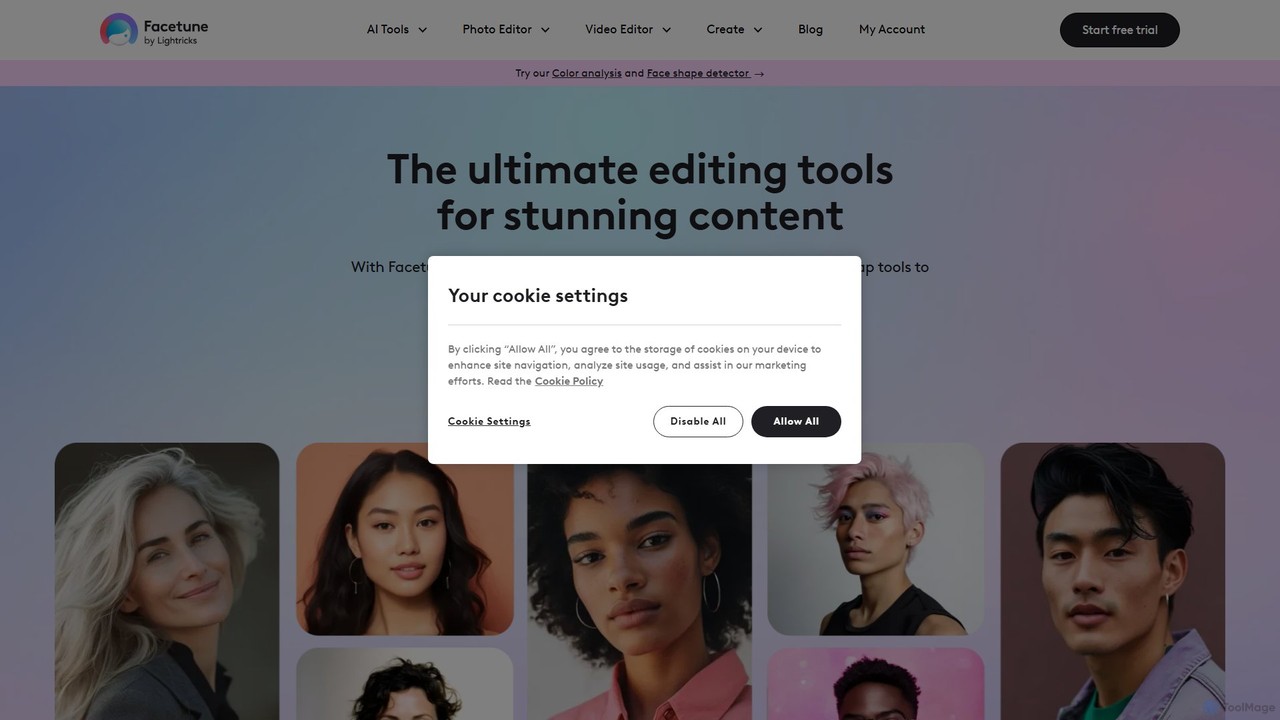
Facetune is a premier AI-powered photo and selfie editor app. It offers a vast suite of tools for …
Facetune is a premier AI-powered photo and selfie editor app. It offers a vast suite of tools for retouching, face and body reshaping, virtual makeup and hairstyle try-ons, and AI-generated content like professional headshots and creative avatars. It's designed for both casual users and social media creators to effortlessly enhance their photos.
About Generative
Generative Image tools are a class of AI applications that create entirely new, original images from textual descriptions or other inputs. These tools leverage advanced models like diffusion or GANs to translate human language into unique visual content. They are widely used to accelerate creative workflows, produce unique marketing assets, and explore artistic concepts without needing traditional design skills. This technology enables the rapid generation of everything from photorealistic scenes to abstract art.
Core Features
- Text-to-Image Generation: Creates detailed images based on written prompts.
- Image-to-Image Transformation: Modifies an existing image's style or content using a new prompt.
- Inpainting and Outpainting: Intelligently fills in missing parts of an image or extends its boundaries.
- Style Customization: Offers control over artistic styles, camera angles, lighting, and other visual parameters.
- High-Resolution Upscaling: Enhances the detail and resolution of generated images for professional use.
Use Cases
These tools are valuable for digital marketers creating ad visuals, game developers designing concept art, content creators producing blog illustrations, and product designers making mockups. They serve any role that requires a high volume of unique visual content quickly.
How to Choose
When selecting a tool, consider the quality and realism of the output, the diversity of available styles, the generation speed, and the user interface's ease of use. Also, evaluate the pricing model (e.g., credits vs. subscription) and the licensing terms for commercial use of the generated images.
GenerativeUse Cases
Create Unique Marketing Campaign Visuals
A social media manager for a startup needs fresh, eye-catching images daily. Instead of relying on stock photos, they use a generative image tool. By inputting prompts like 'a minimalist photo of a coffee cup on a sunlit desk, top-down view, pastel colors,' they can generate dozens of unique, on-brand images in minutes. This process reduces costs associated with photography and ensures a consistent, custom visual identity for the brand's online presence.
Rapid Concept Art for Game Development
An indie game developer is in the early stages of designing a new fantasy world. To quickly visualize characters and environments, they use a generative AI tool. They input detailed descriptions like 'elven warrior with glowing silver armor in a dark, enchanted forest.' The tool produces multiple artistic interpretations, allowing the developer to iterate on ideas and establish a visual direction much faster than traditional sketching, accelerating the pre-production phase significantly.
Generate E-commerce Product Lifestyle Shots
An online store owner sells handmade jewelry but lacks the budget for professional photoshoots. They upload a clean product photo to an image-to-image generative tool. Then, they use prompts like 'product on a velvet display stand in a luxury boutique' or 'product worn by a model on a beach at sunset.' The AI generates realistic lifestyle contexts for the product, enhancing the online store's appeal and helping customers visualize the item in real-world settings.
Design Custom Illustrations for Blog Posts
A content writer wants to make their articles more engaging with custom header images instead of generic stock photos. For an article about productivity, they use a generative tool with a prompt like 'abstract illustration of a focused mind, gears and lightbulbs, minimalist style, blue and orange.' The tool provides a unique, relevant illustration that reinforces the article's theme, improving reader engagement and making the content more shareable.
Visualize Architectural and Interior Designs
An interior designer needs to show a client how a proposed living room layout will look. They create a basic 3D model or sketch and use it as an input for a generative AI tool. With prompts like 'modern Scandinavian living room, oak wood floors, large windows with natural light, photorealistic rendering,' the tool transforms the simple sketch into a high-fidelity visualization. This helps clients make decisions faster and provides a clear vision of the final result.
Prototype UI Elements and App Icons
A UI/UX designer is building a prototype for a new mobile app and needs a set of consistent icons. They use a generative tool with a prompt like 'set of 10 minimalist icons for a weather app, line art style, on a dark background.' The AI generates a cohesive set of icons for concepts like 'sun,' 'clouds,' and 'rain.' This allows for rapid prototyping and testing of the user interface without spending hours designing each element from scratch.