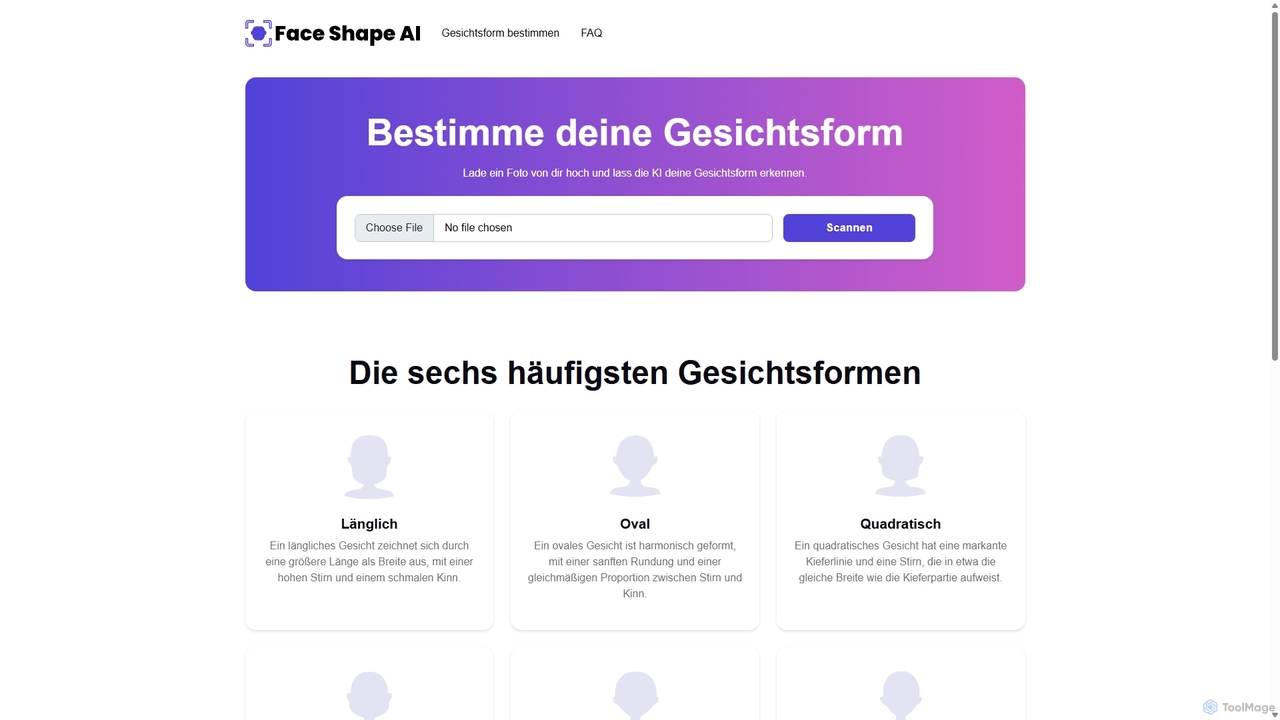
Face Shape Detector
An AI-powered tool that analyzes your photo to instantly determine your face shape. Simply upload a picture to …
An AI-powered tool that analyzes your photo to instantly determine your face shape. Simply upload a picture to discover if you have an oval, round, square, heart, diamond, or long face. This free, privacy-focused tool helps you choose the best hairstyles, glasses, and makeup styles.
About Facial Recognition
Facial Recognition tools are AI-powered systems that identify or verify individuals by analyzing unique facial features from images or video. These tools leverage advanced computer vision and deep learning algorithms to map facial landmarks, creating digital representations for comparison. They are widely applied in security, access control, and personalized user experiences, offering enhanced authentication and streamlined identity management.
Core Features
- Identity Verification: Authenticate users by comparing live facial scans with stored biometric data.
- Person Identification: Identify unknown individuals from a database of known faces in real-time or from recorded media.
- Emotion Detection: Analyze facial expressions to infer human emotions, useful in customer service or psychological research.
- Age and Gender Estimation: Predict a person's age range and gender based on facial characteristics.
- Liveness Detection: Distinguish between a live person and a spoofing attempt (e.g., photo, video replay) to prevent fraud.
Use Cases
Facial Recognition technology is crucial across various sectors. For instance, law enforcement uses it to identify suspects from surveillance footage, while airports deploy it for expedited passenger boarding. Businesses integrate it into access control systems for secure entry, replacing traditional keycards.
How to Choose
When selecting Facial Recognition tools, consider accuracy rates, especially under varying conditions (lighting, angles). Evaluate the system's ability to perform liveness detection to prevent spoofing. Assess integration capabilities with existing security or identity management platforms, and review data privacy compliance (e.g., GDPR, CCPA) to ensure ethical and legal usage.
Facial RecognitionUse Cases
Secure Access Control for Facilities
Corporate security teams implement facial recognition systems at building entrances to grant authorized personnel seamless and secure access. Employees simply present their face to a camera, which verifies their identity against a pre-registered database, eliminating the need for physical badges or manual checks. This enhances security, reduces entry bottlenecks, and provides an auditable log of entries and exits.
Expedited Airport Boarding and Immigration
Airlines and immigration authorities utilize facial recognition to streamline passenger processing. Travelers can opt-in to have their face scanned at check-in, security checkpoints, and boarding gates. The system quickly matches their live image to their passport or flight manifest, significantly reducing wait times and improving efficiency, while maintaining high security standards.
Customer Identity Verification for Online Services
Financial institutions and e-commerce platforms deploy facial recognition for robust customer identity verification during account creation or high-value transactions. Users upload a selfie and a photo of their ID, which the system cross-references. Advanced liveness detection ensures the user is a real person, combating fraud and meeting Know Your Customer (KYC) regulations.
Personalized Retail Experiences
Retailers can use facial recognition (with explicit consent) to identify returning VIP customers as they enter a store. This allows sales associates to greet them by name, access their purchase history, and offer personalized recommendations. The technology enhances customer loyalty and provides a more tailored shopping experience, driving sales and satisfaction.
Time and Attendance Tracking for Employees
Businesses use facial recognition systems to accurately track employee attendance without physical contact. Employees clock in and out by simply looking at a camera, which records their entry/exit times. This eliminates "buddy punching," improves payroll accuracy, and offers a hygienic alternative to fingerprint scanners or shared keypads, especially in large workforces.
Finding Missing Persons in Public Spaces
Law enforcement agencies can deploy facial recognition technology in public areas or use it to analyze surveillance footage to aid in finding missing persons. By comparing images of missing individuals against live feeds or recorded video, the system can rapidly identify potential matches, providing critical leads and significantly accelerating search efforts in time-sensitive situations.