Give Me A Prompt
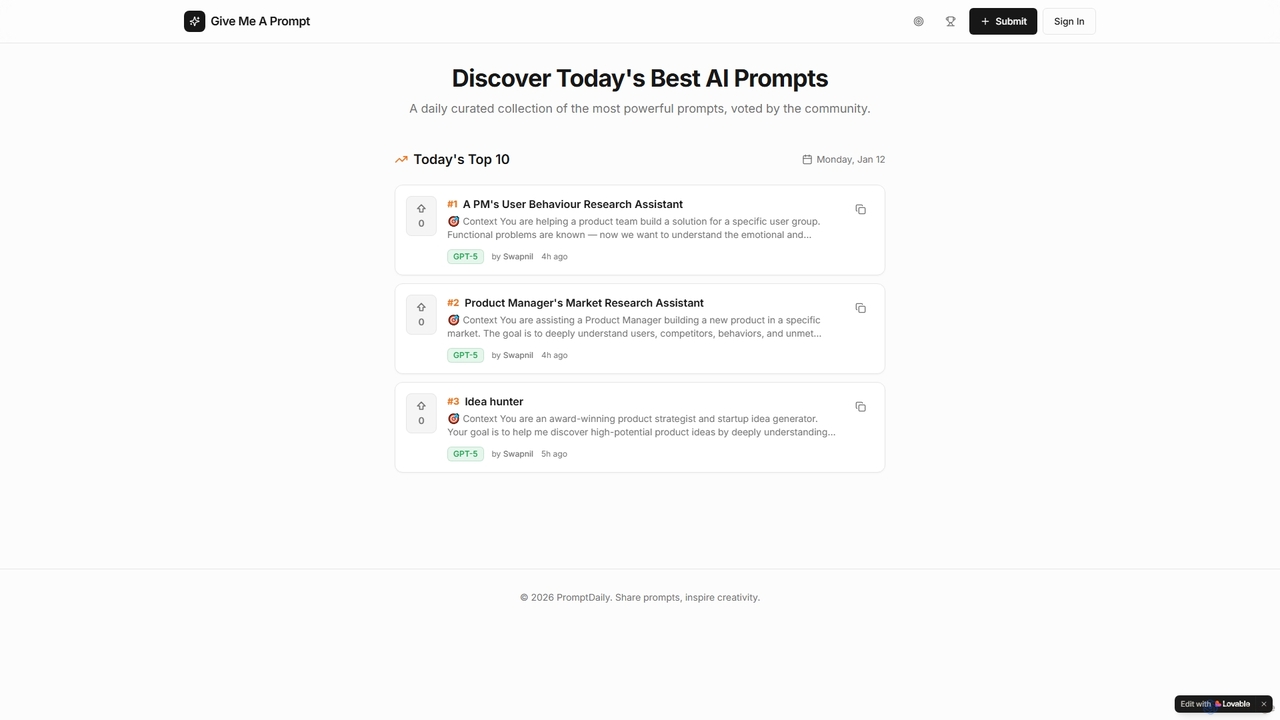
Give Me A Prompt is a platform offering a daily curated collection of powerful AI prompts, voted by …
Give Me A Prompt is a platform offering a daily curated collection of powerful AI prompts, voted by its community. It provides structured inspiration for tasks like product management, market research, and idea generation, helping users leverage AI more effectively for in-depth analysis and creative problem-solving.
Aicofounder
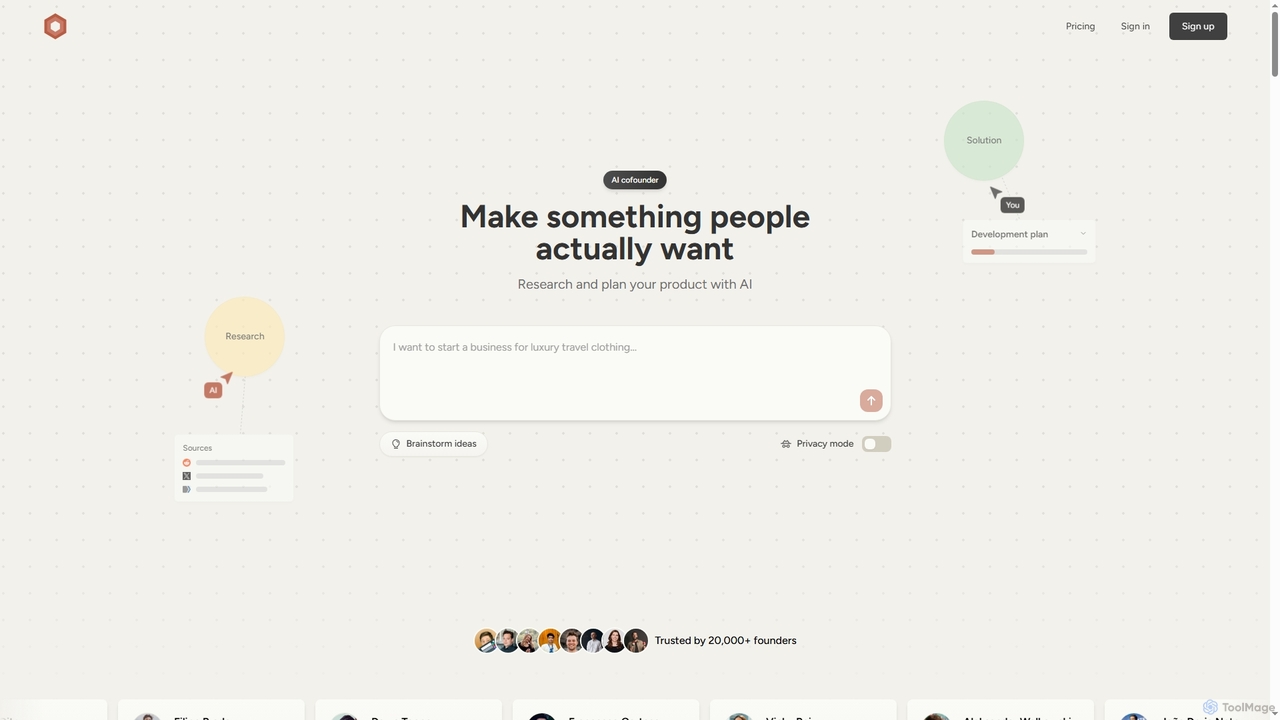
Aicofounder is an AI-powered platform designed to guide founders and entrepreneurs through the entire product development lifecycle, from …
Aicofounder is an AI-powered platform designed to guide founders and entrepreneurs through the entire product development lifecycle, from initial idea generation and market research to validation and structured planning. It acts as an intelligent co-founder, helping users build products people truly want.
GapNix
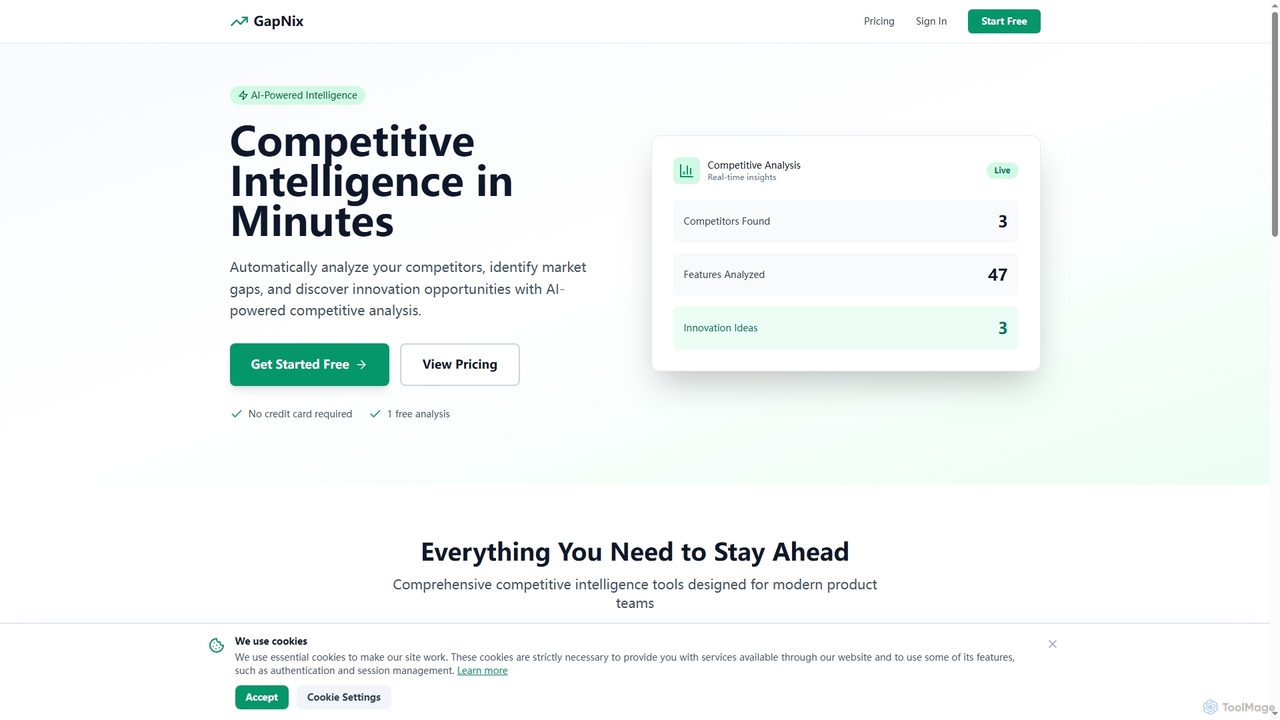
GapNix is an AI-powered competitive intelligence platform that helps product teams, marketers, and business leaders quickly analyze competitors, …
GapNix is an AI-powered competitive intelligence platform that helps product teams, marketers, and business leaders quickly analyze competitors, identify market gaps, and discover innovation opportunities. It automates research to provide actionable insights in minutes, enabling data-driven decision-making and strategic planning.
About Idea Generation
Idea Generation tools are AI-powered applications designed to stimulate and automate the creative process, helping to break through mental blocks. They utilize large language models and pattern analysis on vast datasets to produce novel concepts, topics, and solutions from simple prompts. These tools are valuable for creators, marketers, and innovators seeking to generate a high volume of diverse ideas quickly. By providing structured inspiration, they significantly accelerate the initial stages of any creative or strategic project.
Core Features
- Keyword-Based Brainstorming: Generates a wide array of ideas, headlines, or topics from a single keyword or phrase.
- Concept Expansion: Takes a basic idea and elaborates on it, suggesting different angles, sub-topics, and related concepts.
- Mind Map Generation: Visually organizes ideas and their connections, helping to structure complex thoughts and see relationships.
- Trend-Informed Suggestions: Analyzes current trends to suggest relevant and timely ideas for content or products.
- Customizable Prompts: Allows users to set constraints such as tone, style, target audience, or format to refine idea output.
Applicable Scenarios
These tools are widely used by content marketers for planning editorial calendars, entrepreneurs for brainstorming business names and models, and product managers for developing new feature ideas. They are also beneficial for writers, designers, and students looking for inspiration for scripts, ad campaigns, or academic projects.
Selection Criteria
When choosing an Idea Generation tool, evaluate the quality and originality of the ideas it produces. Consider the level of customization and control over the output, such as setting tone and constraints. Also, assess its ease of use and whether it integrates with your existing workflow, for example, by exporting ideas to writing or project management software.

Idea GenerationUse Cases
Generating a Content Calendar for Social Media
A social media manager needs to create a month's worth of engaging posts for a client in the fitness industry. Instead of manual brainstorming, they input core topics like 'home workouts,' 'healthy recipes,' and 'mental wellness' into an AI idea generator. The tool produces 50+ post ideas, including listicles, Q&A prompts, myth-busting topics, and challenge ideas, complete with suggested hashtags. This process reduces planning time from days to a few hours and ensures a diverse content mix.
Brainstorming Names for a New Product Line
A startup is launching a new line of eco-friendly cleaning products and is struggling to find a catchy, available brand name. The marketing team provides the AI tool with keywords like 'natural,' 'sparkle,' 'green,' and 'pure,' along with the target audience (environmentally conscious families). The tool generates hundreds of name variations, from single words to creative phrases. The team can then filter these suggestions and check for domain and trademark availability, streamlining a typically lengthy and difficult process.
Developing Slogans for an Advertising Campaign
An advertising agency is pitching ideas for a new coffee brand's campaign. To generate a wide range of slogans, the copywriters use an AI tool, inputting the brand's key attributes: 'sustainably sourced,' 'rich aroma,' and 'morning ritual.' The AI provides dozens of slogans in different tones—humorous, sophisticated, and energetic. This allows the team to quickly explore multiple creative directions and present a more comprehensive pitch to the client.
Overcoming Writer's Block for a Novel
A fiction author is stuck on a key plot point in their mystery novel. They use an AI idea generator not to write the story, but to spark new possibilities. By inputting the current scenario, character profiles, and the desired outcome (e.g., 'a surprising twist'), the tool suggests potential plot developments, character motivations, or unexpected clues. This external stimulus helps the author break their creative impasse and view the story from a fresh perspective.
Creating Unique Business or App Ideas
An aspiring entrepreneur wants to start a tech company but needs a unique idea. They use an AI tool that combines different industries, technologies, and user needs. The user inputs their areas of interest, such as 'AI,' 'education,' and 'sustainability.' The tool generates structured business concepts like 'An AI-powered app that creates personalized learning paths for sustainable living' or 'A platform connecting local farms to restaurants using predictive analytics.' This provides a solid foundation for further market research.
Formulating Research Questions for Academic Papers
A graduate student is beginning their thesis in sociology and needs to define a specific research question. They input broad topics and keywords from existing literature, such as 'social media impact,' 'political polarization,' and 'Gen Z.' The AI idea generator formulates a series of nuanced and specific research questions, such as 'How does algorithm-driven content on TikTok influence the political identity formation of Gen Z users?' This helps narrow the focus and identify gaps in current research.