ForumScout
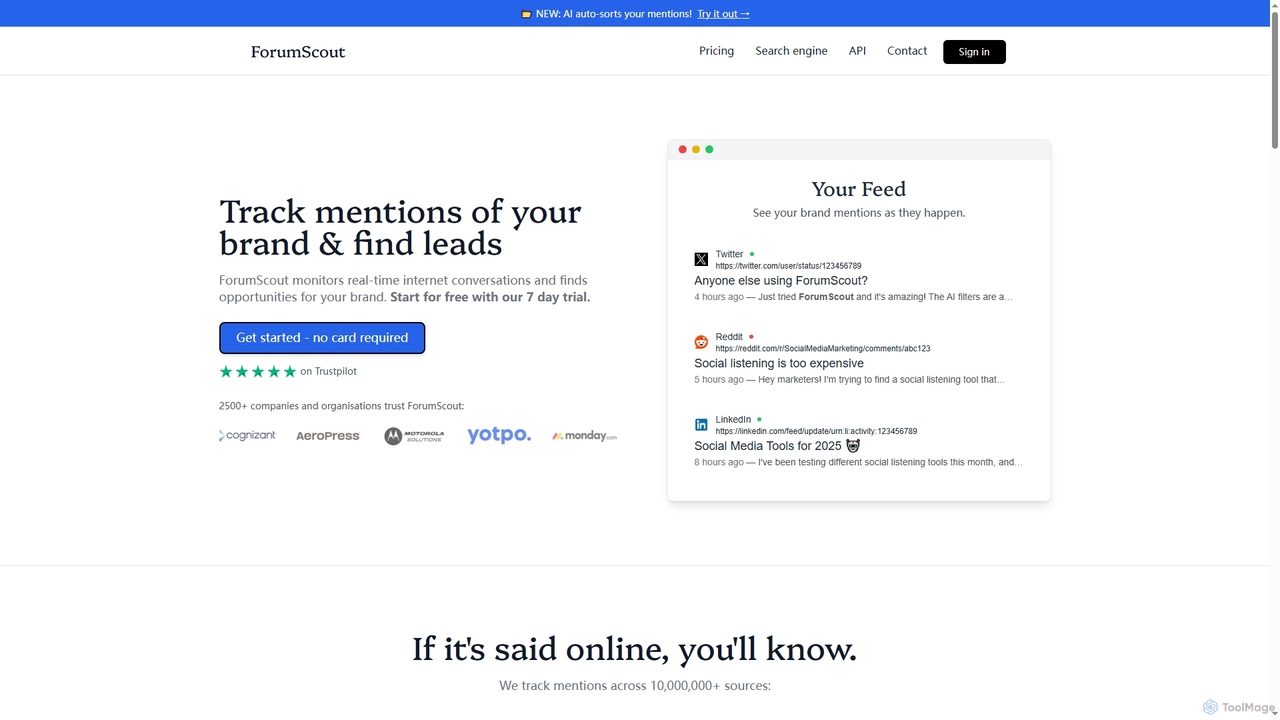
ForumScout is an AI-powered social listening tool designed to monitor online forums and communities for mentions of your …
ForumScout is an AI-powered social listening tool designed to monitor online forums and communities for mentions of your brand, products, or competitors. It offers real-time insights, AI-driven filtering, sentiment analysis, and competitive intelligence to help businesses identify opportunities, manage reputation, and understand audience engagement.
GapNix
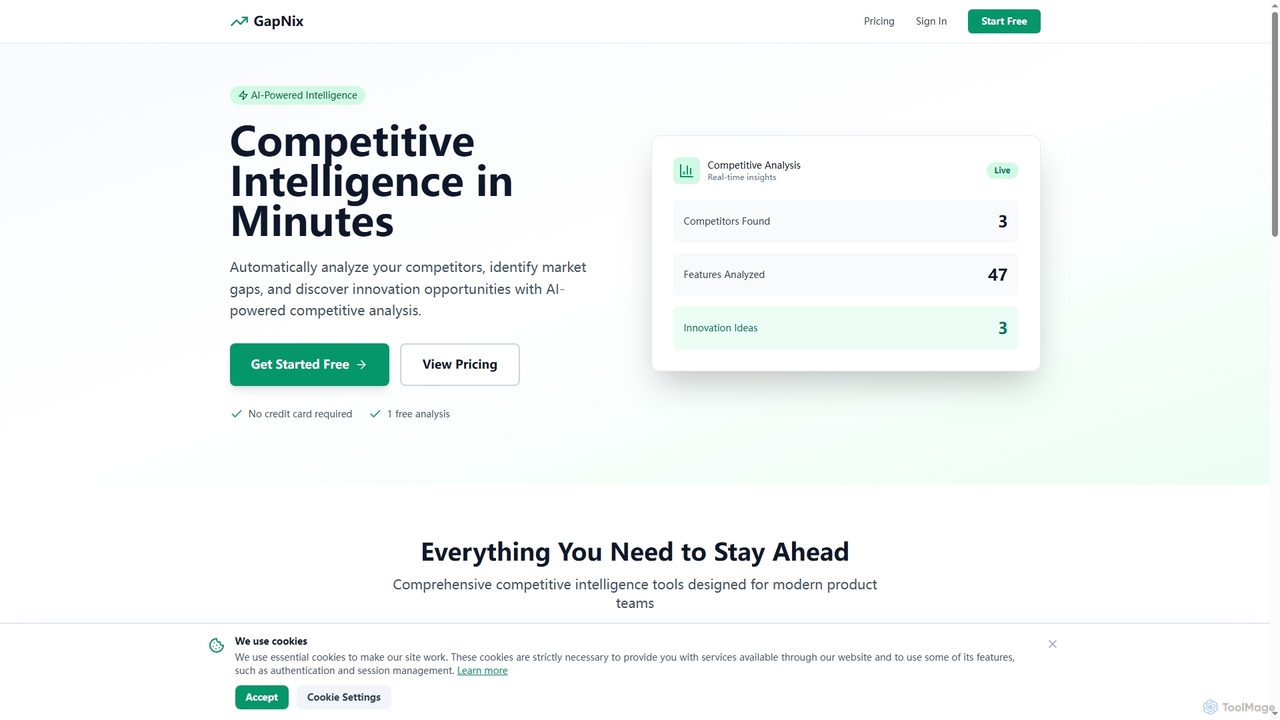
GapNix is an AI-powered competitive intelligence platform that helps product teams, marketers, and business leaders quickly analyze competitors, …
GapNix is an AI-powered competitive intelligence platform that helps product teams, marketers, and business leaders quickly analyze competitors, identify market gaps, and discover innovation opportunities. It automates research to provide actionable insights in minutes, enabling data-driven decision-making and strategic planning.
About Competitive Analysis
AI Competitive Analysis tools are a class of software that automates the gathering, processing, and analysis of competitor data. These tools leverage machine learning and natural language processing (NLP) to monitor websites, social media, customer reviews, and market trends in real-time. Their primary value lies in transforming vast amounts of unstructured data into actionable strategic insights, helping businesses understand their competitive landscape more deeply. This allows for quicker identification of opportunities, threats, and shifts in market dynamics compared to traditional manual research.
Core Features
- Automated Data Monitoring: Continuously tracks competitors' websites, pricing changes, product updates, and social media activity.
- Sentiment Analysis: Analyzes customer reviews and social mentions to gauge public perception of competing brands and products.
- SEO & Content Strategy Analysis: Deconstructs competitors' keyword strategies, backlink profiles, and top-performing content to inform your own efforts.
- Market Trend Identification: Identifies emerging topics, features, and consumer needs within your industry by analyzing market-wide conversations.
- Ad Campaign Tracking: Monitors competitors' digital advertising campaigns, including creatives, copy, and placement strategies.
Use Cases
These tools are widely used by product managers to inform roadmaps, marketing teams to identify campaign opportunities, and business strategists to conduct market positioning analysis. Startups also use them to find market gaps and validate their value proposition, while sales teams leverage competitive intelligence to refine their pitches.
How to Choose
When selecting an AI Competitive Analysis tool, consider the scope of data sources it covers (e.g., social media, news, ad networks). Evaluate the depth of its analytical capabilities—does it provide raw data or actionable insights? Also, assess its integration options with your existing workflow tools (like CRM or Slack) and the customizability of its dashboards and reporting features.

Competitive AnalysisUse Cases
Inform Product Strategy and Roadmapping
A product manager at a SaaS company uses an AI competitive analysis tool to continuously monitor feature releases, pricing changes, and customer feedback for three key competitors. The tool automatically categorizes competitor features and analyzes sentiment from user reviews. This provides a clear view of market gaps and highly requested features, allowing the product manager to prioritize their own roadmap with data-backed confidence, ensuring their product remains relevant and competitive.
Optimize Marketing and Content Campaigns
A marketing team for an e-commerce brand wants to outperform competitors on social media. They use an AI tool to analyze the top-performing posts, ad creatives, and content formats of their rivals. The AI identifies patterns, such as the most engaging video lengths or the hashtags driving the most traffic. Armed with these insights, the team adjusts their content strategy, focusing on proven formats and topics, leading to a measurable increase in engagement and conversion rates.
Uncover Competitor SEO and Keyword Strategies
An SEO specialist aims to rank for high-value keywords currently dominated by competitors. They use an AI analysis tool to perform a deep dive into the top three competing websites. The tool identifies their core keywords, analyzes their backlink profiles to find high-authority sources, and highlights 'keyword gaps'—terms competitors rank for that the specialist's site does not. This provides a clear, actionable roadmap for content creation and link-building to systematically capture more organic traffic.
Identify Market Gaps for a New Venture
An entrepreneur planning to launch a new project management app uses an AI tool to analyze the entire competitive landscape. The tool scrapes and analyzes thousands of user reviews from app stores and review sites for existing tools. The AI's sentiment analysis reveals common complaints, such as 'poor mobile experience' or 'lack of integration with accounting software'. This insight directly informs the new app's core value proposition, allowing the founder to build a product that solves a proven, unmet need in the market.
Enhance Sales Pitch Intelligence
A sales representative is preparing for a call with a major prospect who currently uses a competitor's product. Using an AI analysis tool, the rep quickly gets a summary of the competitor's most common user complaints, recent price increases, and missing features. They can then tailor their pitch to specifically address these pain points, positioning their product as a direct solution to the prospect's likely frustrations. This targeted approach significantly increases the chances of winning the deal.
Monitor Brand Reputation and Public Sentiment
A brand manager needs to understand how their brand is perceived relative to its main competitor. They set up an AI tool to monitor social media, news sites, and forums for mentions of both brands. The tool's dashboard provides a real-time comparison of sentiment scores (positive, negative, neutral), share of voice, and key topics of discussion. If the competitor is mentioned in a wave of negative press, the tool sends an alert, creating an opportunity for the brand manager to launch a proactive campaign highlighting their own brand's strengths in that area.