Inka
Inka is an AI-powered insurtech platform that provides hyper-personalized insurance recommendations and simplified claim support. It analyzes over …
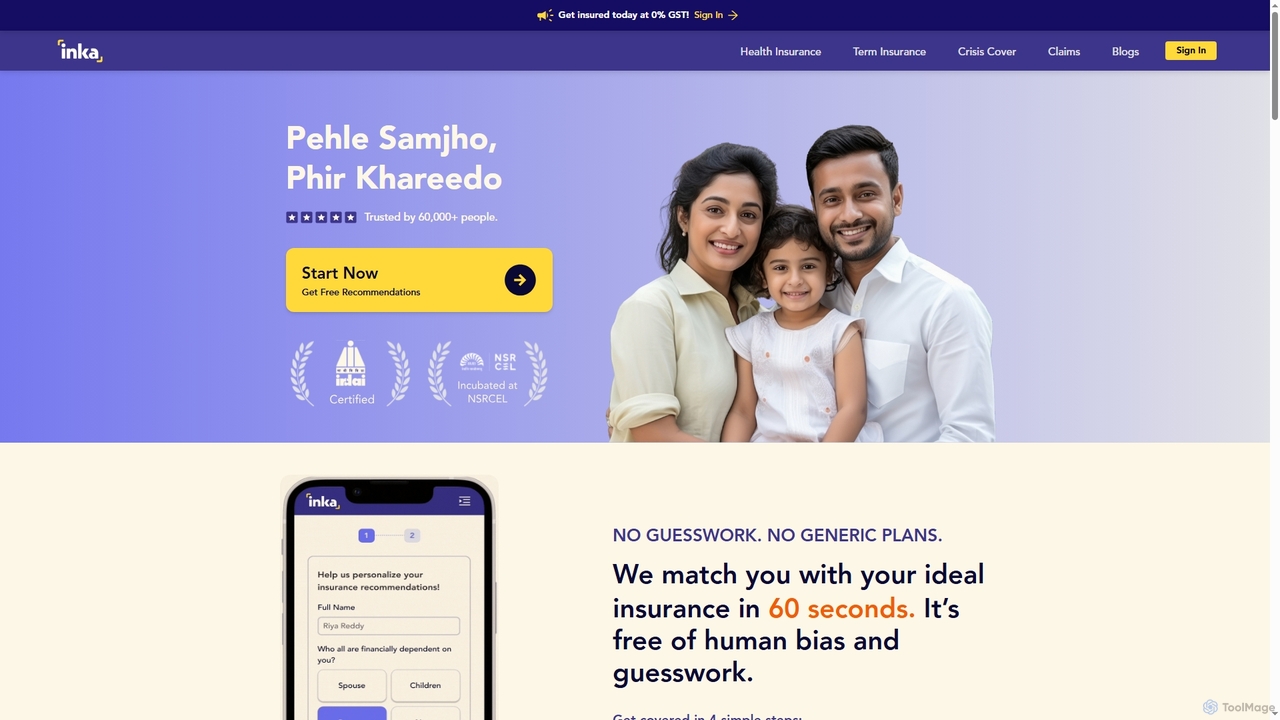
Inka is an AI-powered insurtech platform that provides hyper-personalized insurance recommendations and simplified claim support. It analyzes over 2,400 data points to match users with ideal health, term, and crisis cover plans, eliminating guesswork and human bias. With its 24/7 AI advisor, Vaani, Inka makes understanding and managing insurance accessible and transparent for everyone.
About Insurtech
Insurtech refers to AI-powered tools and platforms that leverage advanced technologies to innovate and optimize the insurance industry. These solutions integrate artificial intelligence, machine learning, big data analytics, and blockchain to transform traditional insurance processes. They aim to enhance efficiency, personalize customer experiences, improve risk assessment, and streamline operations across the entire insurance value chain. Insurtech tools offer a competitive edge by enabling faster claims processing, more accurate underwriting, and tailored product offerings.
Core Features
- Automated Claims Processing: Expedites claim submission, verification, and payout using AI and machine learning.
- Personalized Policy Generation: Creates customized insurance products and pricing based on individual risk profiles and behaviors.
- Fraud Detection and Prevention: Identifies suspicious patterns and anomalies in claims data to mitigate financial losses.
- Predictive Analytics for Risk Assessment: Utilizes vast datasets to forecast risks more accurately for underwriting and pricing.
- Customer Engagement Chatbots: Provides instant support, answers FAQs, and guides policyholders through processes.
Applicable Scenarios
Insurtech solutions are vital for insurance carriers, brokers, and policyholders seeking modernization. They are used by large enterprises to automate back-office operations, by startups to offer niche, on-demand insurance products, and by individual agents to better serve clients with personalized advice and faster service. This technology is transforming how policies are sold, managed, and claimed, making insurance more accessible and efficient.
How to Choose
When selecting an Insurtech solution, consider its integration capabilities with existing legacy systems to ensure seamless data flow. Evaluate the robustness of its AI and machine learning models for accuracy in risk assessment and fraud detection. Assess the scalability of the platform to accommodate future growth and increasing data volumes. Finally, prioritize solutions with strong data security protocols and compliance features to protect sensitive policyholder information.
InsurtechUse Cases
Automated Claims Processing for Policyholders
Policyholders can submit claims through an AI-powered portal or mobile app, where documents and images are analyzed instantly. AI algorithms verify information, detect potential fraud, and process eligible claims without human intervention, often leading to payouts within minutes or hours. This significantly reduces the waiting time for policyholders and frees up claims adjusters for more complex cases, improving overall customer satisfaction and operational efficiency.
Personalized Policy Recommendations for Agents
Insurance agents utilize Insurtech platforms that analyze vast amounts of customer data, including demographics, lifestyle, and past claims history. The AI generates highly personalized policy recommendations tailored to individual needs and risk appetites. This enables agents to offer relevant products proactively, improving conversion rates and customer loyalty. By leveraging data-driven insights, agents can move beyond generic offerings to provide truly bespoke insurance solutions, enhancing their advisory role.
Enhanced Fraud Detection and Prevention
Insurance companies deploy Insurtech tools equipped with machine learning models to analyze vast datasets of claims, policy applications, and external information. These models identify subtle patterns, anomalies, and suspicious connections that human analysts might miss, indicating potential fraudulent activities. By flagging high-risk claims early, insurers can prevent significant financial losses, streamline investigations, and ensure fair pricing for honest policyholders. This proactive approach strengthens the integrity of the insurance ecosystem.
Predictive Risk Assessment for Underwriting
Underwriters leverage Insurtech platforms that use AI and big data to analyze complex risk factors beyond traditional metrics. By integrating data from IoT devices, social media, public records, and historical claims, these tools create highly accurate risk profiles for individuals and businesses. This allows for more precise underwriting decisions, dynamic pricing, and the identification of new insurable risks. The result is a more competitive and profitable portfolio for insurers, and fairer premiums for policyholders based on their actual risk exposure.
Enhanced Customer Service with AI Chatbots
Insurance companies deploy AI-powered chatbots on their websites and mobile apps to provide instant, 24/7 customer support. These chatbots can answer common policy questions, guide users through claims submission, update personal information, and even help with policy renewals. By handling routine inquiries efficiently, chatbots reduce call center volumes and wait times, allowing human agents to focus on complex issues. This improves customer satisfaction and provides a seamless, accessible service experience for policyholders.
Usage-Based Insurance (UBI) Data Analysis
Insurtech enables usage-based insurance (UBI) models where policyholders' behavior (e.g., driving habits, health data from wearables) is monitored via IoT devices. AI platforms analyze this real-time data to assess individual risk dynamically. For example, safe drivers receive lower premiums, while those with higher risk behaviors might see adjustments. This creates fairer, more personalized pricing, incentivizes safer behavior, and provides insurers with granular data for more accurate risk modeling and product development, benefiting both parties.