YiIotCloud
YiIotCloud is an intelligent cloud storage and management platform for YI and Kami security cameras. It enhances home …
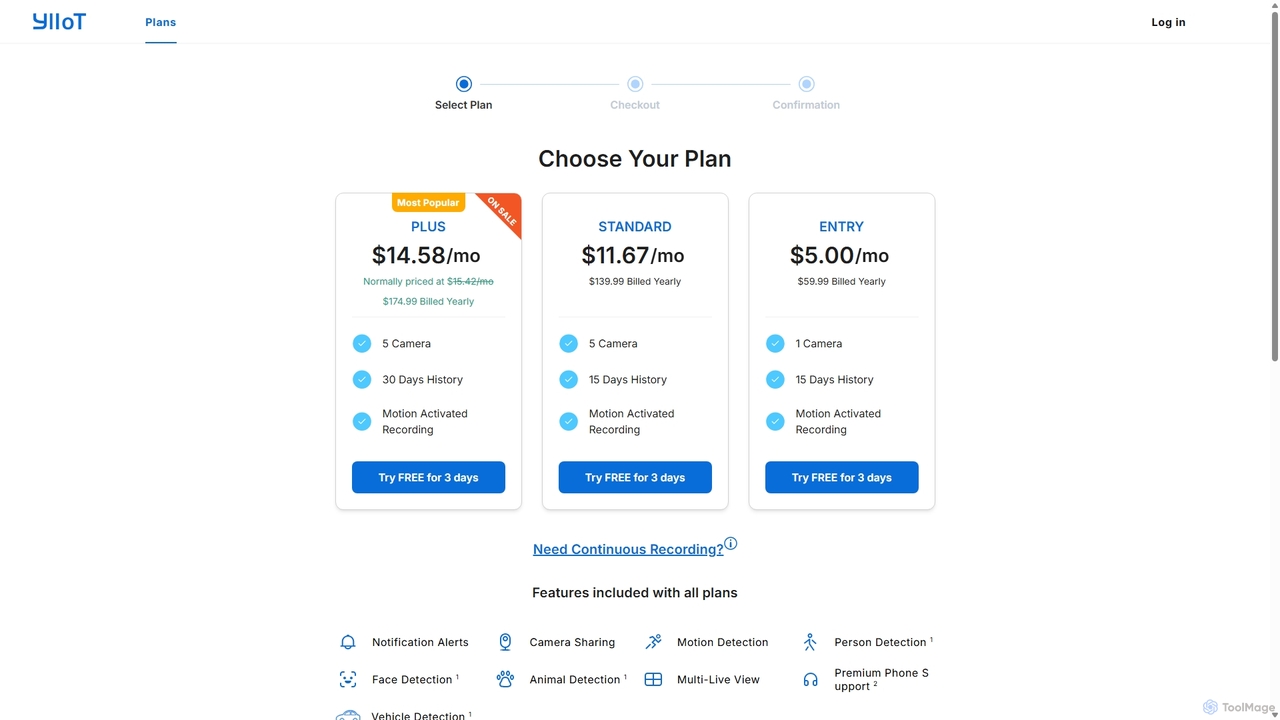
YiIotCloud is an intelligent cloud storage and management platform for YI and Kami security cameras. It enhances home and business security with secure cloud recording, real-time alerts, and advanced AI-powered detection for people, faces, vehicles, and animals, ensuring you only receive notifications that matter.
About Smart Home
Smart Home tools are AI-powered systems designed to automate and intelligently manage household devices and appliances. These tools utilize machine learning algorithms to learn user behaviors, predict needs, and optimize functions like climate control, lighting, and security. The primary value lies in creating a responsive, efficient, and secure living environment that adapts to the inhabitants' lifestyles. As a key application of the Internet of Things (IoT), they focus specifically on integrating various home devices into a single, cohesive, and automated ecosystem.
Core Features
- Predictive Automation: Learns user routines to automatically adjust settings like temperature and lighting without manual input.
- Voice and Gesture Control: Integrates with voice assistants (like Alexa, Google Assistant) for hands-free command of connected devices.
- Intelligent Security Monitoring: Uses AI to differentiate between familiar faces, strangers, pets, and vehicles, reducing false alarms.
- Energy Optimization: Analyzes usage patterns and external factors (like weather) to minimize electricity and gas consumption.
- Personalized Scene Creation: Allows users to create custom routines (e.g., "Movie Night") that trigger multiple actions across different devices simultaneously.
Use Cases
Smart Home tools are ideal for homeowners and renters seeking greater convenience, security, and energy efficiency. They are widely used for automated climate control that adapts to daily schedules, intelligent security systems that provide meaningful alerts, and voice-activated control over lighting and entertainment systems. These tools are also increasingly applied in assisted living scenarios to help seniors maintain independence safely.
How to Choose
When selecting a Smart Home tool or ecosystem, consider its compatibility with your existing devices (e.g., Apple HomeKit, Google Home, Amazon Alexa). Evaluate the platform's range of supported devices and its capacity for creating complex automation rules. Assess the user-friendliness of the control app and the company's data privacy policies. Finally, consider whether you prefer a DIY setup or require professional installation for a more integrated system.
Smart HomeUse Cases
Automated Energy Savings with Smart Thermostats
Homeowners looking to reduce their utility bills can use an AI-powered smart thermostat. The device learns the family's daily and weekly schedules, detecting when the house is empty or when people are sleeping. Based on these patterns, it automatically adjusts the heating and cooling to energy-saving temperatures, then returns to a comfortable level just before someone arrives home. This predictive capability, combined with data from local weather forecasts, can reduce heating and cooling costs by 10-20% annually without sacrificing comfort, providing a clear return on investment.
Enhanced Home Security with Intelligent Alerts
A family uses an AI-powered security camera system to monitor their property. Unlike traditional motion-activated cameras that trigger alerts for any movement, this system's AI can differentiate between people, animals, and vehicles. It can even be trained to recognize familiar faces. As a result, the homeowners receive specific, meaningful notifications, such as "A person is at your front door" instead of a generic "Motion detected." This significantly reduces the number of false alarms caused by pets or passing cars, ensuring that users only pay attention to genuinely important events.
Creating Personalized 'Good Morning' Routines
A user sets up a "Good Morning" routine within their smart home app. The AI system learns that the user typically wakes up around 7:00 AM on weekdays. At that time, it initiates a sequence of actions: the smart blinds gradually open to let in natural light, the smart coffee maker starts brewing, and the voice assistant provides a personalized briefing including the day's weather, traffic on the commute to work, and top news headlines. This automation eliminates several manual morning tasks, creating a smoother and more pleasant start to the day, tailored specifically to the user's habits.
Voice-Controlled Ambiance for Movie Nights
For a family movie night, a user can simply say, "Hey Google, it's movie time." The smart home AI, integrated with the voice assistant, understands this command as a trigger for a pre-configured 'Movie' scene. It immediately dims the smart lights to a cinematic level, lowers the smart blinds to block out external light, turns on the television and soundbar, and sets them to the correct inputs. This single voice command replaces the need to manually adjust multiple devices with different remote controls, creating the perfect viewing atmosphere instantly and effortlessly.
Proactive Appliance Maintenance Alerts
A smart refrigerator equipped with AI sensors constantly monitors its own performance, including compressor cycles and internal temperatures. The AI analyzes this data to detect anomalies that could indicate a future failure. For example, if the compressor is running more frequently than usual to maintain temperature, the system can send an alert to the homeowner's phone, suggesting they check the door seal or schedule a maintenance check. This proactive approach helps prevent costly repairs and food spoilage by addressing potential issues before they become critical problems.
Assisted Living Support for Elderly Relatives
For families caring for an elderly relative living alone, a smart home system provides peace of mind. AI-powered sensors can discreetly monitor daily activity patterns, such as movement between rooms, medication cabinet access, and appliance usage. The system learns the person's normal routine and can send an alert to a caregiver's phone if there's a significant deviation, like a lack of movement for an extended period, which could indicate a fall. Smart speakers can also be configured to allow easy, voice-activated calls to family members or emergency services, enhancing safety and independence.