ToolMage
Sign in

Best 3 Investing AI tools

Popular Investing AI tools include Zion Trading Algos, IntoTheBlock, and FXPredator, helping you work more efficiently.

FXPredator
Paid

FXPredator

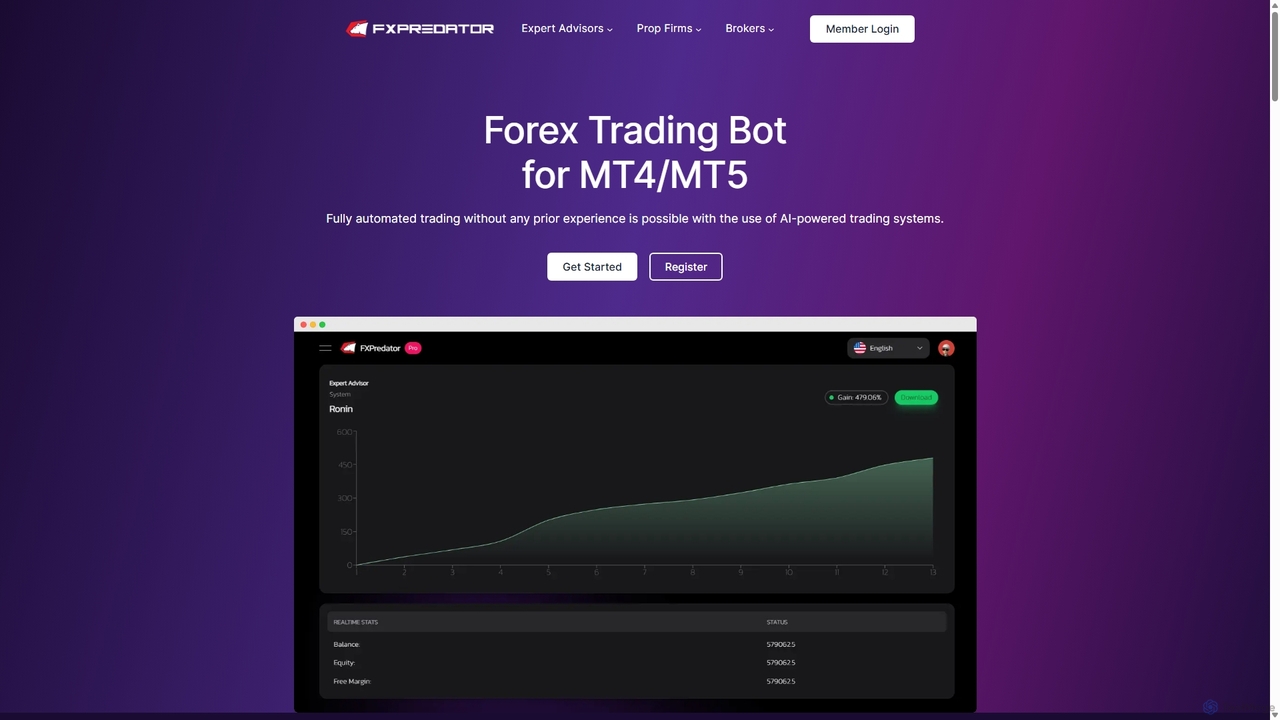
FXPredator is an AI-powered Forex trading bot (Expert Advisor) for MT4/MT5 platforms. It enables fully automated trading using advanced algorithms based on the Smart Money Concept (SMC). Designed for both novice and experienced traders, it aims to generate passive income by executing data-driven trades 24/7, with performance transparently verified through Myfxbook.

Trading
Visits 3.7KFavorites 136Likes 132
Zion Trading Algos
Paid

Zion Trading Algos

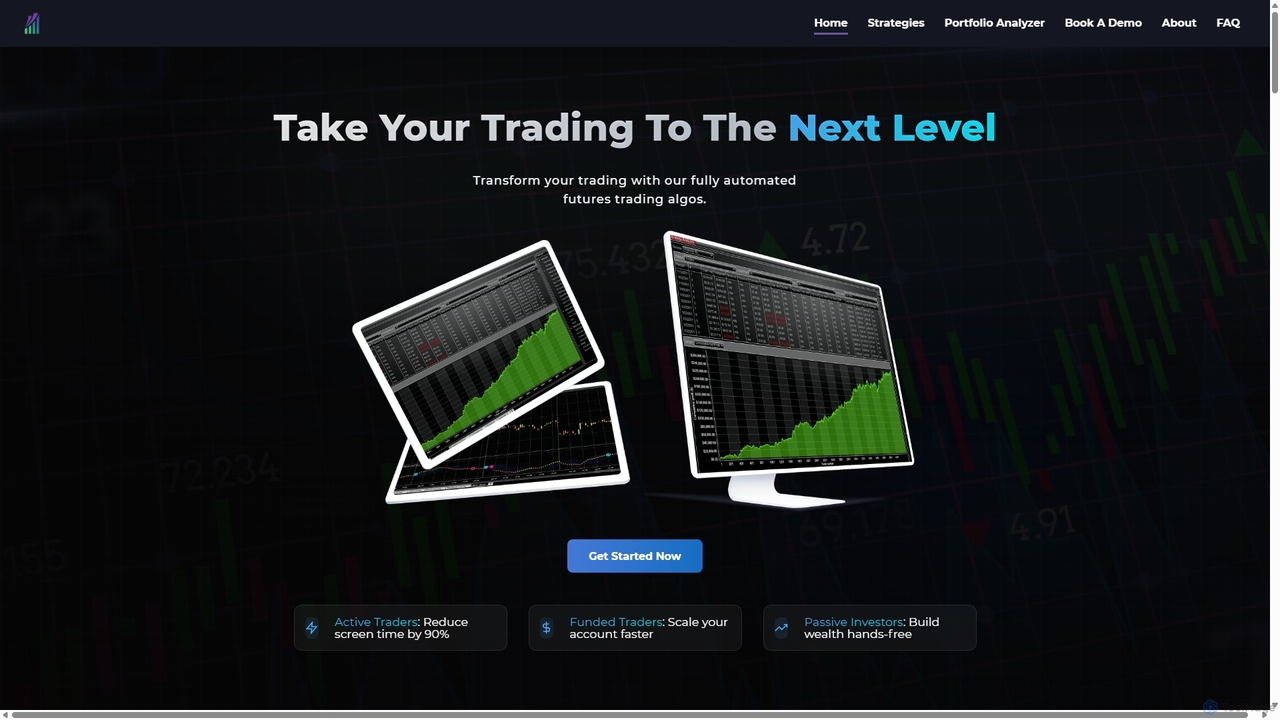
Zion Trading Algos offers fully automated futures trading algorithms for the NinjaTrader platform. It provides a 'done-for-you' service, including VPS setup and software installation, designed to eliminate emotional trading, reduce screen time by up to 90%, and achieve consistent performance. The service is ideal for active traders, funded traders, and passive investors seeking to leverage battle-tested, diversified strategies for hands-free wealth building.

Algorithmic Trading
Visits 6.1KFavorites 101Likes 123
IntoTheBlock
Paid

IntoTheBlock

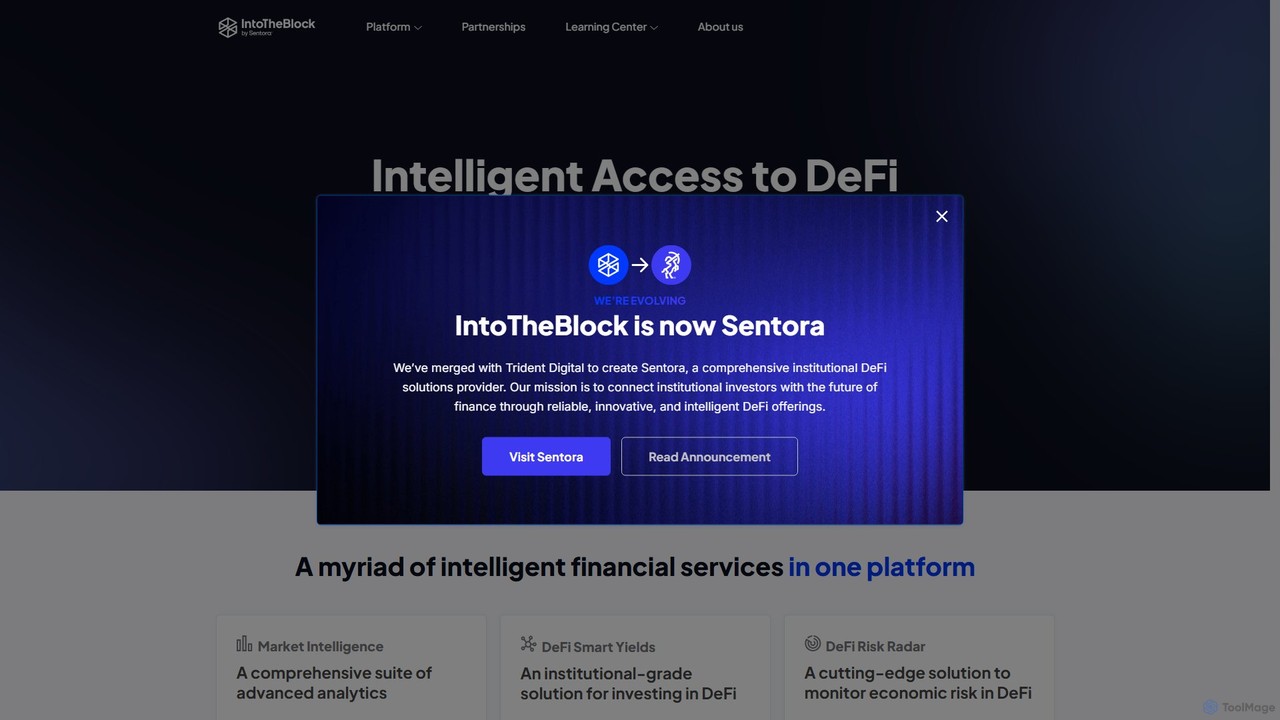
IntoTheBlock is an AI-powered financial intelligence platform providing institutional-grade analytics for the cryptocurrency and DeFi markets. It offers a suite of tools including market intelligence, on-chain analysis, DeFi smart yield strategies, and a real-time risk radar. By leveraging advanced quantitative models and AI, it delivers unique insights and actionable data across numerous blockchains and crypto assets, empowering investors and institutions to make informed decisions and manage risk effectively.

Analytics
Visits 5.3KFavorites 129Likes 128

About Investing

AI Investing tools are a class of software that leverages artificial intelligence to analyze financial markets and guide investment decisions. These tools process vast amounts of data, including market trends, news sentiment, and economic indicators, to identify potential opportunities and risks. They empower both individual and institutional investors to develop data-driven strategies, optimize portfolios, and manage risk more effectively. The key advantage lies in their ability to uncover complex patterns and execute trades with a speed and scale beyond human capability.

Core Features

  • Predictive Market Analysis: Uses machine learning models to forecast stock prices, market trends, and asset volatility.
  • Portfolio Optimization: Recommends asset allocation adjustments based on risk tolerance, goals, and real-time market conditions.
  • Algorithmic Trading: Executes trades automatically based on predefined AI-driven rules and signals, enabling high-speed strategies.
  • Risk Assessment: Quantifies potential risks in individual assets or entire portfolios using advanced statistical models.
  • Sentiment Analysis: Scans news, social media, and financial reports to gauge market sentiment towards specific assets.

Use Cases

These tools are utilized by retail investors seeking automated portfolio management (robo-advisors), quantitative analysts developing complex trading models, and wealth management firms aiming to enhance advisory services with data-driven insights.

How to Choose

When selecting an AI Investing tool, consider the accuracy and breadth of its data sources, the level of automation and user control offered, its integration capabilities with brokerage accounts, and whether the user interface matches your technical expertise.

Featured tool rankings

Investing use cases

1

Automated Portfolio Rebalancing for Professionals

A busy professional with a long-term retirement goal uses an AI investing tool, often called a robo-advisor, to manage their portfolio. They set an initial risk profile, such as 'moderate growth'. The AI continuously monitors the market and automatically rebalances the asset allocation—selling overperforming assets and buying underperforming ones—to maintain the target risk level. This process eliminates emotional decision-making and saves the user significant time, ensuring their investment strategy remains on track without constant manual oversight.

2

Identifying Undervalued Stocks with Data Analysis

A value investor uses an AI platform to screen thousands of stocks for potential opportunities. Instead of relying on simple metrics like P/E ratios, the AI analyzes complex datasets, including financial statements, earnings call transcripts, news sentiment, and macroeconomic indicators. It identifies companies with strong fundamentals that appear to be trading below their intrinsic value based on its predictive models. This allows the investor to uncover hidden gems that traditional screening methods might overlook, leading to a more robust, data-backed investment thesis.

3

Developing Algorithmic Trading Strategies

A quantitative analyst ('quant') at a trading firm uses an AI platform to backtest and deploy new trading strategies. They can input a hypothesis, such as 'buy tech stocks when positive news sentiment crosses a certain threshold'. The AI then simulates this strategy against historical market data over years to assess its potential profitability and risk. Once validated, the strategy can be deployed for live automated trading, where the AI executes buy and sell orders in milliseconds, capitalizing on opportunities far faster than any human trader could.

4

Real-time Risk Management for Hedge Funds

A hedge fund manager integrates an AI risk assessment tool to monitor their multi-billion dollar portfolio. The tool continuously analyzes market volatility, geopolitical news, and correlations between assets. If it detects an unusually high risk concentration, such as overexposure to a single industry facing regulatory threats, it sends an instant alert. This allows the manager to take proactive measures, like hedging positions or reallocating capital, to mitigate potential losses before they escalate, providing a crucial layer of automated oversight.

5

Crypto Market Trend Prediction

A cryptocurrency trader uses a specialized AI tool to navigate the volatile crypto market. The tool analyzes on-chain data (like transaction volumes and wallet activity), social media sentiment from platforms like X (Twitter) and Reddit, and trading patterns across multiple exchanges. By identifying correlations between social media hype and price movements, the AI provides predictive signals about potential short-term rallies or downturns. This helps the trader make more informed decisions on when to enter or exit positions in assets like Bitcoin or altcoins.

6

ESG Investment Screening for Ethical Funds

An asset manager for an ethical investment fund uses an AI tool to screen thousands of companies for Environmental, Social, and Governance (ESG) compliance. The AI scans news articles, corporate sustainability reports, and NGO data to score companies on factors like carbon emissions, labor practices, and board diversity. This automates a previously manual and time-consuming research process, allowing the fund to quickly identify companies that align with its ethical standards and avoid those with significant ESG risks, ensuring the portfolio's integrity.

Investing FAQ

What are AI Investing tools?

AI Investing tools are software applications that use artificial intelligence, particularly machine learning and natural language processing, to analyze financial data and assist in investment decision-making. They go beyond simple calculations to identify complex patterns, predict market trends, assess risk, and automate trading strategies. These tools can process vast amounts of information, including stock prices, economic reports, and news sentiment, to provide insights that are difficult for humans to uncover manually.

How do I choose the right AI Investing tool?

Choosing the right tool depends on your goals and expertise. Consider these factors:

  • Your Investment Style: Are you a long-term passive investor (a robo-advisor might be best) or an active trader needing real-time data and algorithmic tools?
  • Supported Markets: Ensure the tool covers the assets you trade, whether it's stocks, ETFs, crypto, or forex.
  • Brokerage Integration: Check if it can connect securely to your brokerage account for automated trading or portfolio tracking.
  • User Interface and Complexity: Select a tool that matches your technical skill. Some are designed for beginners, while others are complex platforms for quantitative analysts.
  • Cost and Fees: Understand the pricing model, which could be a flat subscription, a percentage of assets under management, or per-trade fees.
What's the difference between AI Investing tools and traditional stock screeners?

The key difference is dynamism and predictive capability. A traditional stock screener is a filter based on static, user-defined rules (e.g., 'show me stocks with a P/E ratio below 15 and revenue growth above 10%'). It only finds what you tell it to look for. An AI Investing tool, however, uses machine learning models that learn from historical data. It can identify complex, non-linear relationships between thousands of variables to find opportunities or predict trends that a simple rule-based screener would completely miss.

Can AI Investing tools guarantee profits?

No, no investment tool, AI-powered or otherwise, can guarantee profits. Financial markets are inherently unpredictable and subject to risk. AI tools are powerful analytical aids that can process more data and identify patterns better than humans, potentially increasing the probability of making successful decisions. However, they provide probabilistic forecasts, not certainties. All investments carry risk, and past performance, even when analyzed by AI, is not an indicator of future results. Users should always conduct their own due diligence.

Who are AI Investing tools for?

AI Investing tools cater to a wide spectrum of users. For beginners, robo-advisors offer a hands-off, automated way to invest based on a simple risk profile. For intermediate investors and active traders, AI tools provide advanced analytics, market sentiment data, and trade signals to enhance their existing strategies. For experts, such as quantitative analysts and hedge funds, these platforms provide the infrastructure to build, backtest, and deploy highly complex, proprietary trading algorithms. There is a tool for nearly every level of investment expertise.