Code88
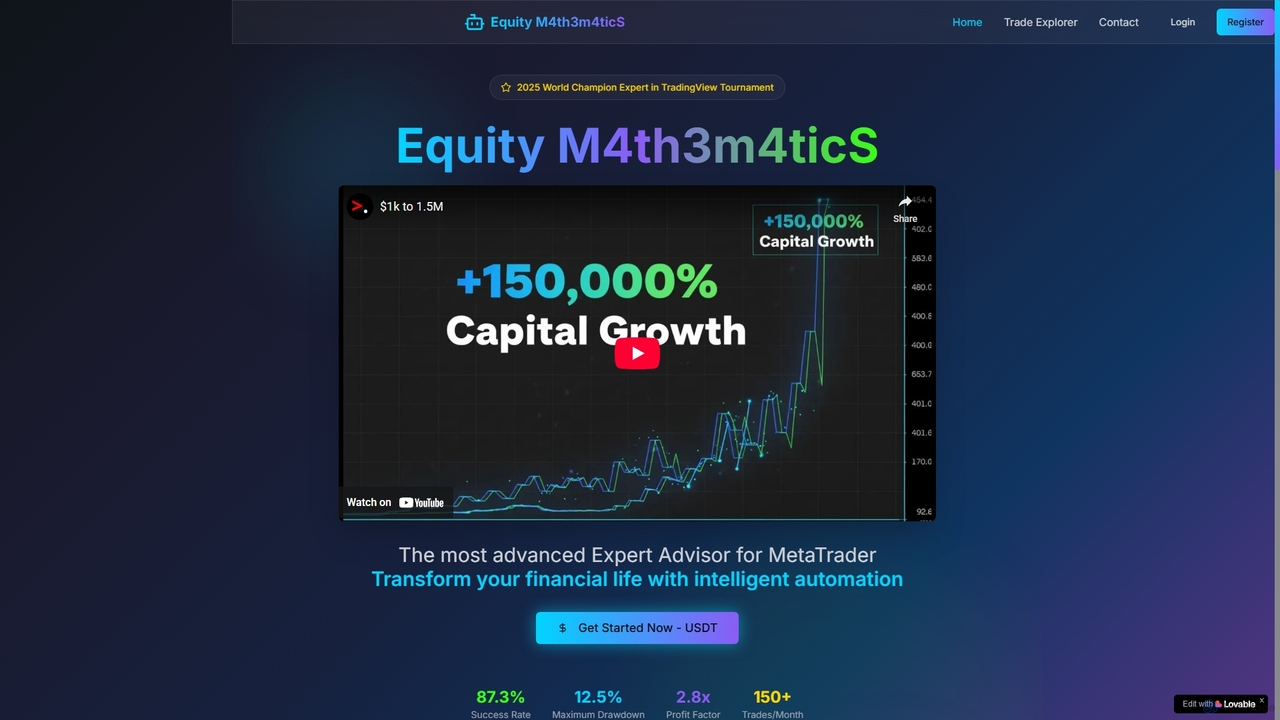
Code88 offers Equity M4th3m4ticS, an advanced AI-powered Expert Advisor for MetaTrader, designed to automate forex trading with high …
Code88 offers Equity M4th3m4ticS, an advanced AI-powered Expert Advisor for MetaTrader, designed to automate forex trading with high precision and intelligent risk management. It leverages machine learning and deep neural networks to transform financial life through intelligent automation and consistent capital growth.
Zion Trading Algos
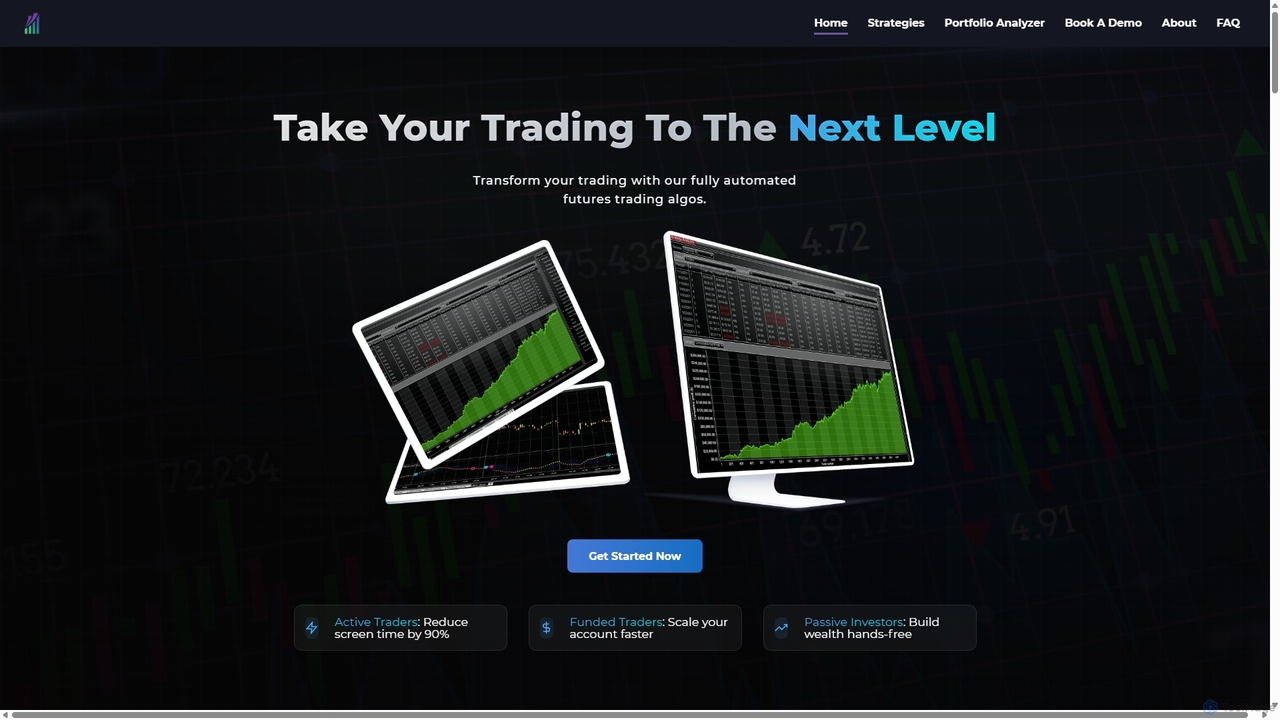
Zion Trading Algos offers fully automated futures trading algorithms for the NinjaTrader platform. It provides a 'done-for-you' service, …
Zion Trading Algos offers fully automated futures trading algorithms for the NinjaTrader platform. It provides a 'done-for-you' service, including VPS setup and software installation, designed to eliminate emotional trading, reduce screen time by up to 90%, and achieve consistent performance. The service is ideal for active traders, funded traders, and passive investors seeking to leverage battle-tested, diversified strategies for hands-free wealth building.
marketfeed
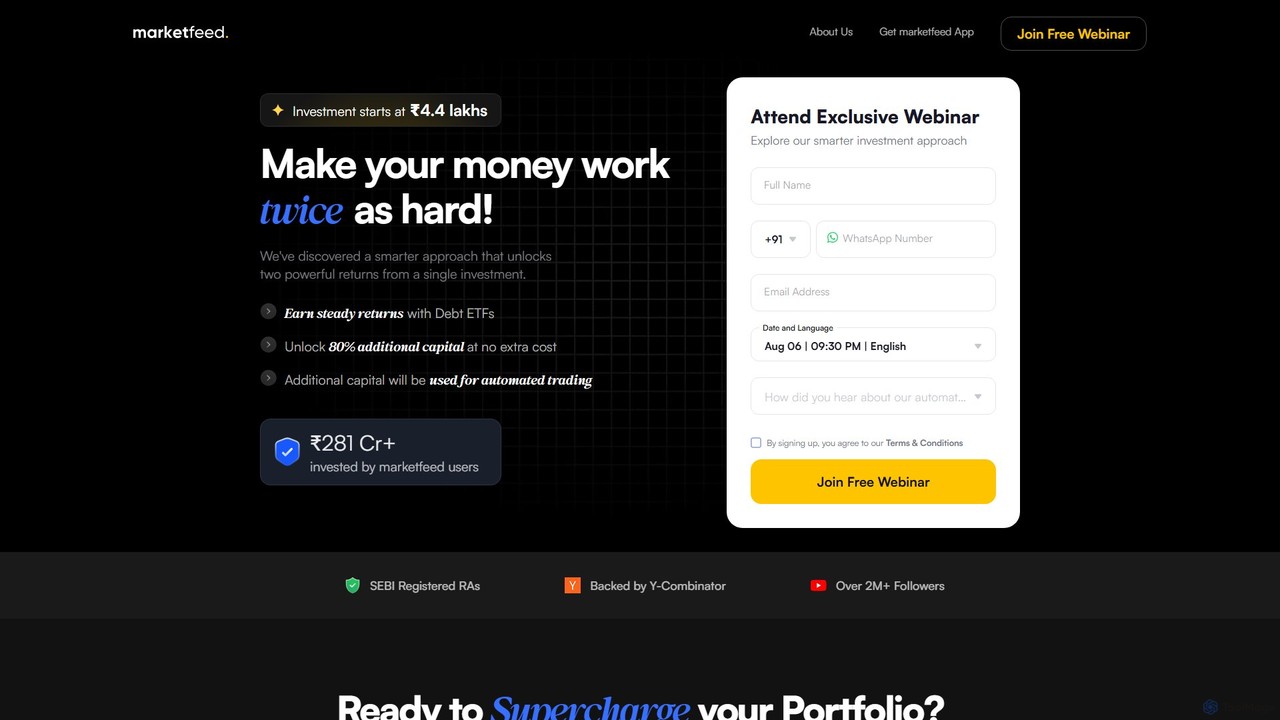
marketfeed is an investment platform that uses automated trading to generate dual returns from a single investment. It …
marketfeed is an investment platform that uses automated trading to generate dual returns from a single investment. It combines steady income from Debt ETFs with potential profits from expert-designed derivatives trading, all managed within your personal brokerage account.
SageFusion
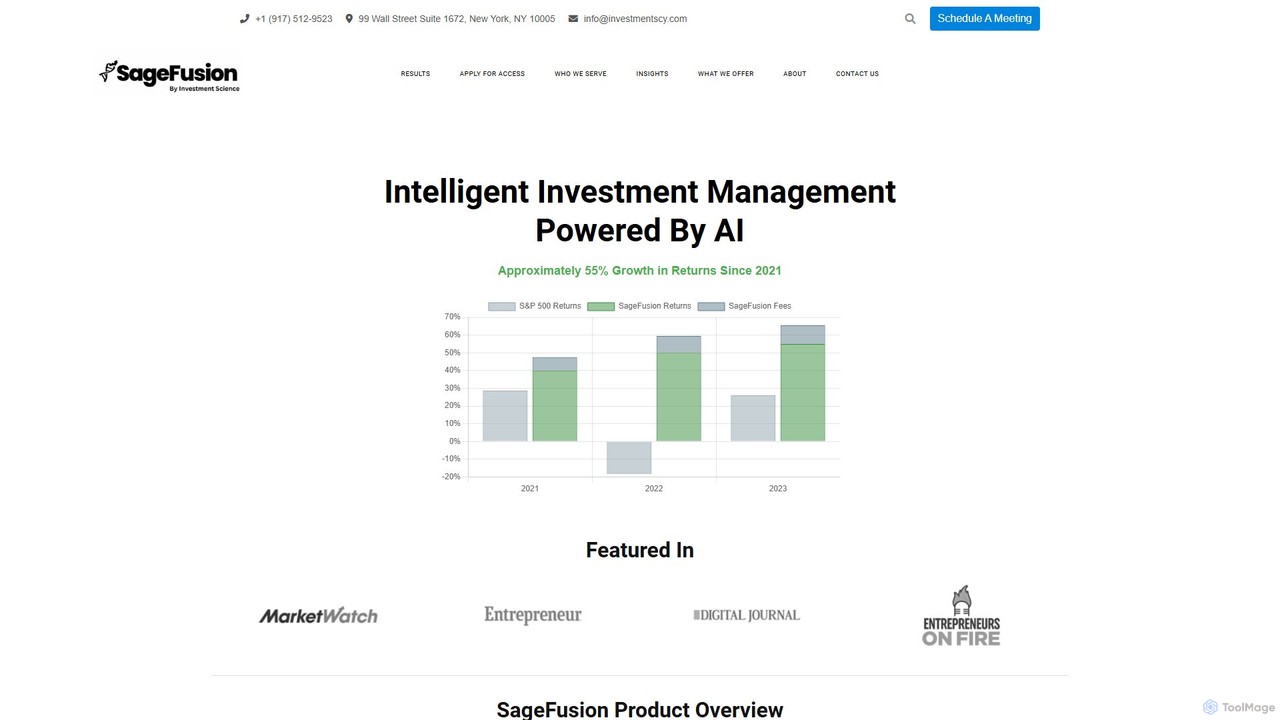
SageFusion is an AI-powered investment management platform that combines advanced technology with financial expertise to optimize portfolios. It …
SageFusion is an AI-powered investment management platform that combines advanced technology with financial expertise to optimize portfolios. It serves high-net-worth individuals, institutional investors, and governments, aiming to deliver superior returns by leveraging proprietary AI models, advanced risk management, and unique data analysis for intelligent trend forecasting.
About Algorithmic Trading
Algorithmic Trading refers to AI-powered tools that automate the execution of trading strategies based on predefined rules and mathematical models. These tools leverage advanced algorithms, often incorporating machine learning, to analyze market data, identify patterns, and execute trades at high speeds. The primary value lies in reducing human error, increasing efficiency, and capitalizing on fleeting market opportunities within the broader field of finance.
Core Features
- Automated Execution: Automatically places buy/sell orders based on strategy rules without human intervention.
- Market Data Analysis: Processes vast amounts of real-time and historical market data to inform trading decisions.
- Strategy Backtesting: Simulates trading strategies on past market data to evaluate their potential performance and robustness.
- Risk Management: Implements predefined risk controls, such as stop-loss orders and position sizing, to mitigate potential losses.
- Predictive Modeling: Utilizes AI and machine learning to forecast price movements and market trends, enhancing strategy effectiveness.
Use Cases
Algorithmic trading tools are widely used by institutional investors, hedge funds, and proprietary trading firms. They enable high-frequency trading, arbitrage, and market-making strategies, allowing firms to exploit micro-price discrepancies and provide liquidity efficiently. Individual quantitative traders also use these tools to automate their personal investment strategies and manage portfolios.
How to Choose
When selecting an algorithmic trading tool, consider its strategy customization capabilities, ensuring it supports your desired complexity and asset classes. Evaluate its data integration options for accessing diverse market feeds and its execution speed and reliability for low-latency trading. Robust backtesting and simulation environments are crucial for validating strategies, alongside comprehensive risk management features and adherence to regulatory compliance standards.
Algorithmic TradingUse Cases
Executing High-Frequency Trading Strategies
Institutional traders and proprietary firms leverage algorithmic trading tools to implement high-frequency trading (HFT) strategies. These algorithms detect micro-price discrepancies across multiple exchanges and execute thousands of buy and sell orders within milliseconds, capitalizing on fleeting market inefficiencies and contributing to market liquidity. This allows for rapid profit generation from small price movements that would be impossible for human traders to exploit.
Identifying Cross-Market Arbitrage Opportunities
Quantitative analysts deploy AI-driven algorithmic trading systems to continuously scan multiple markets (e.g., spot, futures, options) for price discrepancies of the same asset. The algorithms are programmed to automatically execute simultaneous buy and sell orders across these markets when profitable arbitrage opportunities arise, ensuring immediate capture of risk-free profits before the discrepancy corrects itself.
Automating Investment Portfolio Rebalancing
Asset managers and financial advisors utilize algorithmic trading platforms to continuously monitor client portfolios against target asset allocations. When market movements cause deviations from the desired allocation, the algorithms automatically execute trades to rebalance the portfolio, maintaining the desired risk levels and investment objectives without constant manual oversight. This ensures portfolios remain aligned with strategic goals efficiently.
Providing Liquidity through Automated Market Making
Specialized trading firms and market makers employ algorithmic trading systems to continuously place both buy and sell limit orders for specific assets. These algorithms dynamically adjust order prices and sizes based on real-time market depth, volatility, and order flow, profiting from the bid-ask spread while ensuring continuous liquidity provision to the market. This automated process enhances market efficiency and reduces transaction costs for other participants.
Implementing Statistical Arbitrage Strategies
Hedge fund managers and quantitative traders utilize algorithmic trading for statistical arbitrage. AI-driven models identify statistically correlated assets that temporarily diverge in price due to short-term market inefficiencies. The algorithms automatically execute paired trades (e.g., buying the underperforming asset and selling the outperforming one) expecting them to revert to their historical mean, generating profits from these temporary mispricings with reduced directional risk.
Optimizing Trade Execution with Smart Order Routing
Retail and institutional traders employ algorithmic trading tools for smart order routing (SOR). AI-powered SOR algorithms automatically send orders to the best available exchange, dark pool, or other trading venue, considering factors like price, liquidity, and execution speed across fragmented markets. This ensures optimal fill prices, minimizes slippage, and reduces overall transaction costs, significantly improving execution quality compared to manual routing.