Investment Best in category 1 results Portfolio Optimization AI Tool

Popular AI tools in the Portfolio Optimization field of Investment include OXin Agent, etc., helping you quickly improve efficiency.

Free
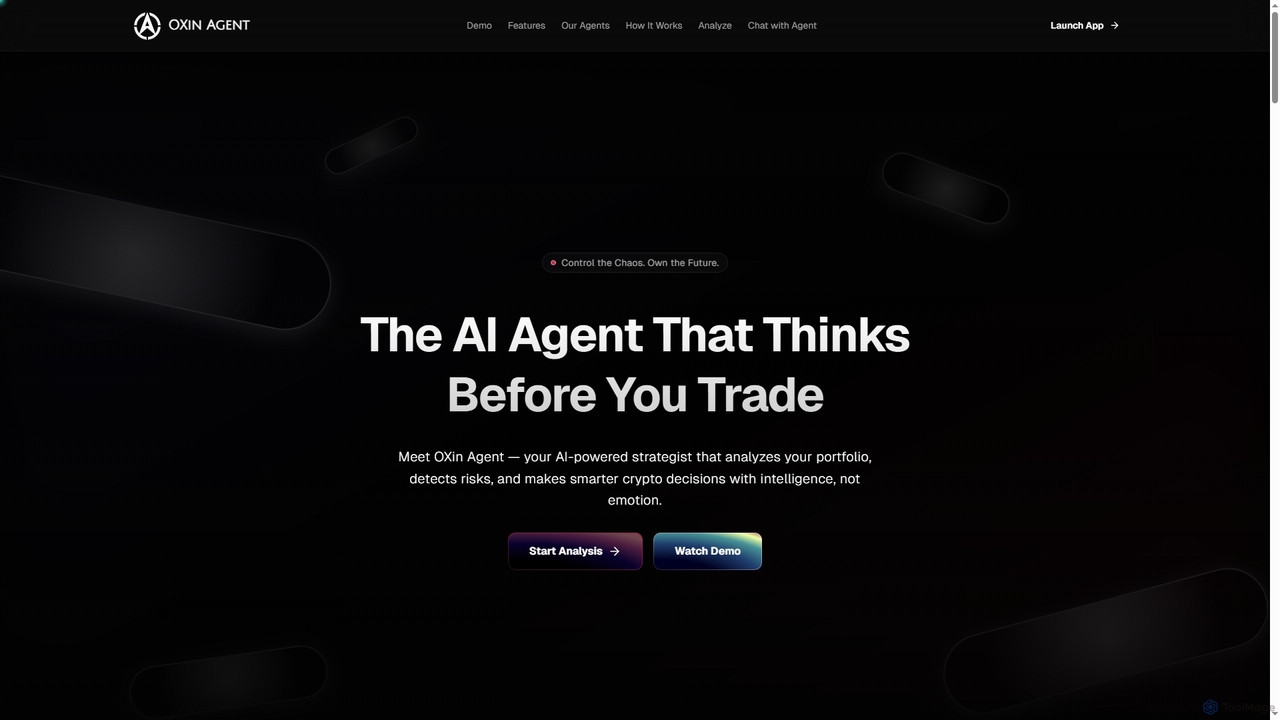
OXin Agent

OXin Agent

OXin Agent is an AI-powered strategist designed for cryptocurrency investors to manage and optimize their portfolios. It analyzes …

3.1K

About Portfolio Optimization

Portfolio Optimization tools leverage artificial intelligence to analyze vast amounts of financial data, predict market movements, and recommend optimal asset allocations. These AI-powered solutions aim to maximize investment returns while systematically minimizing risk, adapting dynamically to changing market conditions. They provide investors with data-driven insights to construct and manage portfolios that align with specific financial goals and risk tolerances. By automating complex calculations and scenario analyses, these tools enhance decision-making for both individual and institutional investors.

Core Features

  • Dynamic Asset Allocation: Automatically adjusts portfolio composition based on real-time market data and predictive analytics.
  • Risk-Adjusted Return Analysis: Evaluates potential returns against various risk metrics to find the most efficient portfolio frontier.
  • Scenario Modeling & Stress Testing: Simulates diverse economic conditions to assess portfolio resilience and identify vulnerabilities.
  • Constraint-Based Optimization: Incorporates specific investor requirements, such as liquidity needs, ethical preferences, or regulatory limits.
  • Performance Attribution: Breaks down portfolio returns to identify the specific drivers of performance and underperformance.

Use Cases

These tools are invaluable for financial professionals and individual investors alike. They are used by wealth managers to tailor investment strategies for diverse client profiles, ensuring portfolios meet individual risk appetites and financial objectives. Institutional investors, such as pension funds and endowments, deploy them to manage large, complex portfolios, optimizing for long-term growth and stability while adhering to strict governance. Individual investors can also utilize these platforms to gain sophisticated insights, making informed decisions about their personal savings and retirement plans.

How to Choose

When selecting a Portfolio Optimization tool, consider its algorithmic sophistication, particularly its ability to incorporate machine learning for predictive accuracy and adaptive strategies. Evaluate the breadth of data integration, ensuring it can connect with all necessary market and personal financial data sources. Look for robust customization options that allow for specific investment goals, risk tolerances, and regulatory constraints. An intuitive user interface and comprehensive reporting capabilities are also crucial for effective decision-making and transparency. Finally, assess its security measures and compliance with financial regulations.

Portfolio OptimizationUse Cases

1

Optimizing Individual Retirement Portfolios

An individual investor uses an AI portfolio optimization tool to manage their retirement savings. By inputting their age, desired retirement age, risk tolerance, and income goals, the tool analyzes market trends and recommends an optimal asset allocation across stocks, bonds, and alternative investments. This ensures the portfolio is dynamically adjusted to maximize growth potential while mitigating risks over their investment horizon, potentially increasing their retirement fund by 15-20% compared to a static portfolio.

2

Enhancing Wealth Management for Financial Advisors

A financial advisor with hundreds of clients leverages portfolio optimization software to efficiently manage diverse portfolios. The AI analyzes each client's unique financial situation, risk profile, and investment objectives, then generates tailored recommendations for rebalancing or new investments. This automation allows the advisor to serve more clients with personalized strategies, saving up to 30% of their time previously spent on manual analysis and improving client satisfaction through data-driven advice.

3

Strategic Asset Allocation for Institutional Funds

A pension fund manager employs AI-driven portfolio optimization to ensure the long-term solvency and growth of the fund. The tool processes vast amounts of macroeconomic data, interest rate forecasts, and actuarial liabilities to recommend strategic asset allocations that meet future payout obligations while maximizing risk-adjusted returns. This enables the fund to navigate volatile markets more effectively, potentially improving annual returns by 1-2% while maintaining regulatory compliance.

4

Risk Management for Corporate Treasuries

A corporate treasury department utilizes portfolio optimization to manage its short-term cash reserves and working capital. The AI analyzes liquidity needs, interest rate movements, and credit risks to optimize investments in money market instruments, short-term bonds, and other liquid assets. This ensures sufficient liquidity for operational needs while maximizing yield on idle cash, potentially increasing interest income by 5-10% annually and reducing exposure to unforeseen market fluctuations.

5

Developing Algorithmic Trading Strategies

A quantitative analyst at a hedge fund uses portfolio optimization to develop and backtest complex algorithmic trading strategies. The AI evaluates thousands of potential asset combinations and trading rules against historical market data, identifying strategies that offer superior risk-adjusted returns under various market conditions. This allows the analyst to refine and deploy more robust trading algorithms, leading to potentially higher alpha generation and more consistent performance for the fund.

6

Personalized Investment Recommendations for Robo-Advisors

A robo-advisor platform integrates AI portfolio optimization to provide scalable, personalized investment advice to a broad user base. Upon user signup, the system collects data on financial goals, risk tolerance, and investment horizon. The AI then automatically constructs and rebalances diversified portfolios tailored to each user, offering a low-cost, accessible way for millions to invest effectively. This automation reduces operational costs by up to 70% while delivering consistent, expert-level advice.

Portfolio OptimizationFrequently Asked Questions