
FillGenius
FillGenius is an AI-powered Chrome extension that automates the tedious process of filling out online forms. By storing …
FillGenius is an AI-powered Chrome extension that automates the tedious process of filling out online forms. By storing your information once, it intelligently detects and populates fields across various websites, from job applications on Upwork to e-commerce product listings. It saves you time, reduces manual errors, and boosts productivity, allowing you to focus on more important tasks.
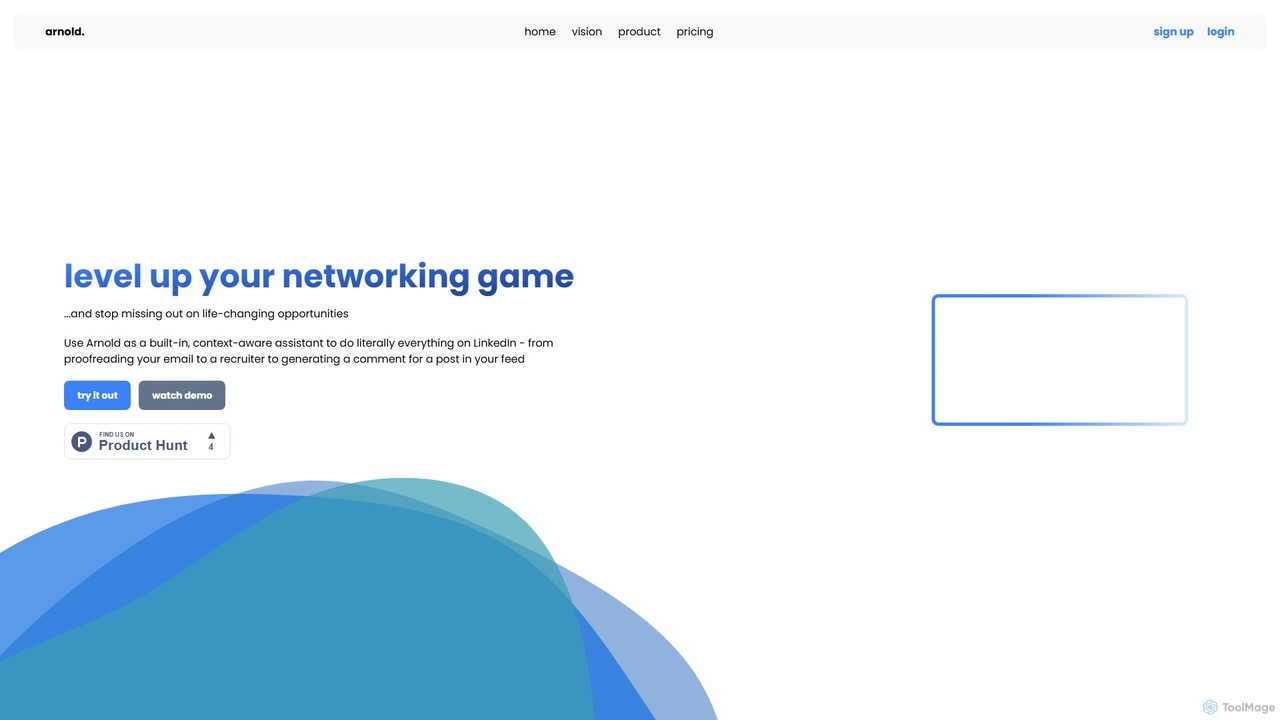
networkwitharnold
Arnold is an AI-powered networking assistant for LinkedIn, designed as a Chrome extension. It helps users enhance their …
Arnold is an AI-powered networking assistant for LinkedIn, designed as a Chrome extension. It helps users enhance their networking by generating personalized comments, crafting goal-oriented messages, summarizing profiles, and assisting with job applications, including cover letter creation.
About Job Search
AI Job Search tools are a class of platforms that leverage artificial intelligence to streamline and enhance the entire job-seeking process. These tools utilize technologies like natural language processing (NLP) to analyze resumes and job descriptions, and machine learning algorithms to provide personalized job recommendations. They help candidates optimize their application materials, practice for interviews, and discover opportunities that align with their skills and career goals. This technology-driven approach significantly increases the efficiency and effectiveness of finding a new position.
Core Features
- AI Resume Optimization: Analyzes your resume against a specific job description and suggests keywords and formatting changes to pass Applicant Tracking Systems (ATS).
- Intelligent Job Matching: Goes beyond simple keyword searches to match your skills, experience, and career preferences with the most relevant job openings.
- Automated Cover Letter Generation: Creates tailored and professional cover letters based on your resume and the details of the job you are applying for.
- AI Interview Coaching: Offers mock interviews with AI-powered feedback on your answers, speaking pace, and body language.
- Automated Application Tracking: Helps you manage all your job applications in one place, sending reminders for follow-ups and tracking interview stages.
Use Cases
These tools are valuable for a wide range of users, from recent graduates seeking their first role to experienced professionals looking for a career change. Human resources professionals also use similar technologies for initial candidate screening. They are particularly effective for individuals applying to multiple positions in competitive fields like tech, marketing, and finance, where application materials need to be highly tailored.
How to Choose
When selecting an AI Job Search tool, consider the scope of its features—does it focus solely on resume building or offer a comprehensive suite including interview prep and job matching? Evaluate the quality of its AI-driven suggestions and the accuracy of its job matching. Also, consider its integration capabilities with popular job boards like LinkedIn, its user interface, and its pricing model, which often ranges from free basic features to premium subscriptions for advanced functionalities.
Job SearchUse Cases
Resume Optimization for ATS Screening
A software developer is applying for a Senior Backend Engineer position at a major tech company. They use an AI Job Search tool to upload their resume and the job description. The tool analyzes both documents, highlighting keywords like 'microservices,' 'AWS,' and 'system design' that are present in the description but missing or underrepresented in the resume. It suggests specific phrasing to incorporate these terms naturally. By implementing these changes, the developer increases their resume's relevance score, significantly improving its chances of passing the initial automated screening by the Applicant Tracking System (ATS) and reaching a human recruiter.
AI-Powered Mock Interview Practice
A recent university graduate is preparing for their first interviews for a Data Analyst role. They use an AI interview coach to practice. The platform provides common questions for this role, such as 'Describe a time you used data to influence a decision.' The user records their answers, and the AI provides instant feedback. It analyzes their speech for clarity, use of filler words ('um', 'like'), and pacing. It also assesses the content of their answers for relevance to the STAR (Situation, Task, Action, Result) method. This practice helps the graduate build confidence and refine their communication skills, making them better prepared for the actual interviews.
Generating Tailored Cover Letters at Scale
A marketing professional is applying for several Brand Manager roles, each with slightly different requirements. Manually writing a unique cover letter for each application is time-consuming. They use an AI cover letter generator. For each application, they input their resume and the specific job description. The AI then generates a draft cover letter that highlights the most relevant experiences from their resume, such as 'led a product launch that increased market share by 15%,' and aligns them with the company's stated needs, like 'seeking a candidate with proven experience in market growth.' This allows the professional to quickly edit and personalize dozens of high-quality cover letters, significantly speeding up their application process.
Discovering Relevant Jobs Beyond Keywords
A project manager with a background in the construction industry wants to transition into the tech sector. Traditional job searches using keywords like 'Project Manager' yield thousands of irrelevant results. They use an AI job matching platform that analyzes their entire profile, including skills like 'Agile methodologies,' 'stakeholder management,' and 'budget forecasting.' The AI understands the context of these skills and suggests roles like 'Technical Program Manager' or 'Scrum Master' in software companies, positions the user might not have searched for directly. This intelligent matching helps career changers discover hidden opportunities that align with their transferable skills.
Automating Job Applications to Increase Volume
A freelance graphic designer is looking for contract work and needs to apply to a high volume of postings to secure consistent projects. They use an AI tool with an auto-apply feature. After setting up their profile, resume, and a portfolio link, they define specific criteria for jobs they are interested in, such as 'remote', 'UI/UX design', and a minimum hourly rate. The AI then scans multiple job boards and automatically submits applications on their behalf for roles that meet these criteria. This automation allows the designer to apply to hundreds of relevant jobs per week, drastically increasing their reach and the likelihood of landing interviews without spending hours on manual submissions.
Centralized Application Tracking and Management
A job seeker is actively applying to over 20 companies simultaneously through various channels like LinkedIn, company websites, and referrals. Keeping track of each application's status, interview dates, and contact persons is becoming chaotic. They use an AI-powered job search platform that centralizes everything. The tool automatically imports application data via a browser extension or email forwarding. It creates a dashboard showing each application's stage (Applied, Interviewing, Offer). The AI can also send automated reminders to follow up with recruiters after a certain period of inactivity, helping the job seeker stay organized and proactive throughout their search, ensuring no opportunity is missed.