AI Image Translator
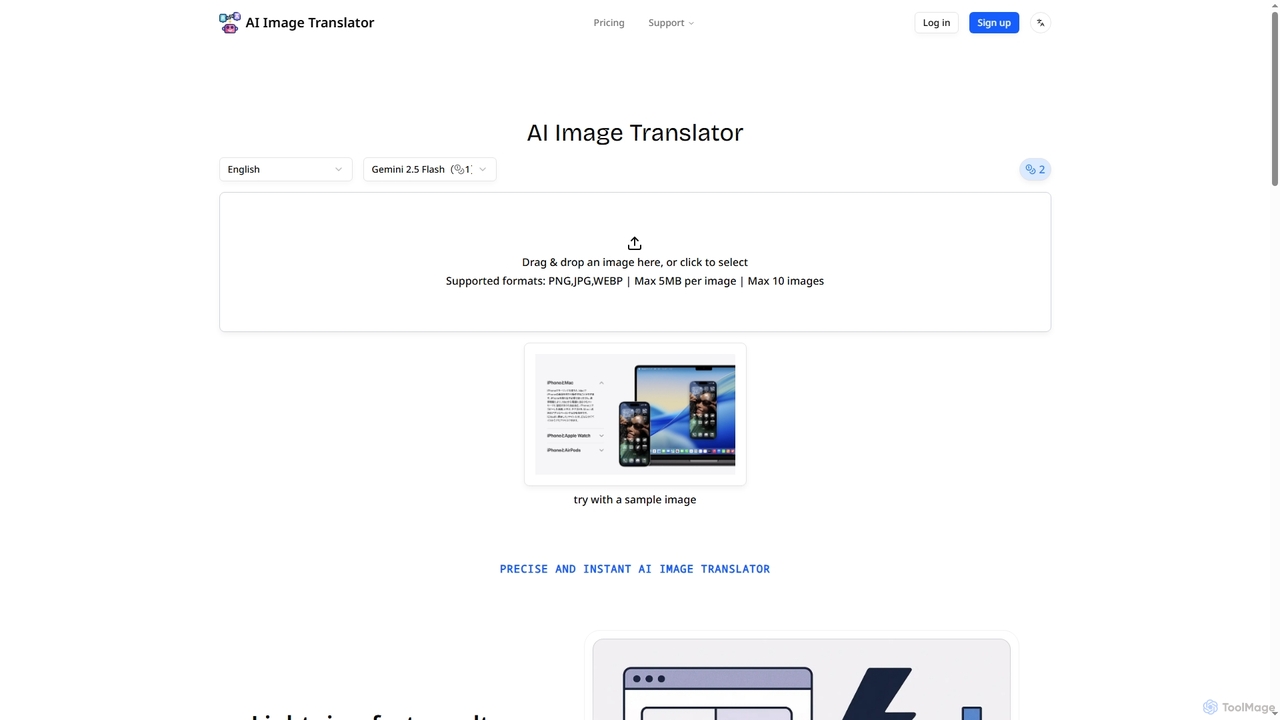
AI Image Translator is an advanced tool that precisely translates text within images into over 100 languages. It …
AI Image Translator is an advanced tool that precisely translates text within images into over 100 languages. It features lightning-fast processing, automatic text detection, and smart restoration to seamlessly integrate translated content while preserving original visual integrity.
About Localization
Localization tools are AI-powered solutions specifically engineered to adapt content, products, and services for specific local markets, moving far beyond simple linguistic translation. These sophisticated tools leverage advanced natural language processing (NLP), machine learning algorithms, and deep cultural intelligence to ensure that content is not only accurately translated but also culturally relevant, contextually appropriate, and fully compliant with local regulations and consumer expectations. By intelligently automating and streamlining this intricate process, they empower businesses to effectively communicate with diverse global audiences, significantly enhance the user experience in various regions, and maintain consistent brand messaging and identity across international borders.
Core Features
- AI-powered Translation: Provides highly accurate, automated, and context-aware translation for a wide array of content types, including text, audio, and video, adapting to specific domain requirements.
- Terminology Management: Ensures the consistent and precise use of brand-specific terms, approved glossaries, and established style guides across all localized materials, maintaining brand voice and accuracy.
- Cultural Adaptation: Identifies and intelligently adjusts content for local customs, idiomatic expressions, humor, social norms, and cultural sensitivities, ensuring the message deeply resonates with target audiences without causing offense.
- Content Transcreation: Focuses on creatively recreating marketing messages, slogans, and other creative content to evoke similar emotions and achieve the intended persuasive impact in vastly different cultural contexts, rather than just direct translation.
- Localization Quality Assurance: Automates comprehensive checks for linguistic accuracy, cultural appropriateness, functional correctness, and adherence to style guides within localized assets, significantly minimizing human errors and ensuring high quality.
Use Cases
These tools are indispensable for global software deployment, ensuring user interfaces, features, and accompanying documentation are culturally intuitive and functionally sound for international users, reducing friction and support needs. They also critically support multilingual marketing campaigns by intelligently adapting slogans, ad copy, and visual elements to local nuances, maximizing engagement. Furthermore, they significantly streamline e-commerce expansion by precisely localizing product descriptions, customer reviews, and pricing structures for international online stores, directly driving global sales and market penetration.
How to Choose
When selecting an AI localization tool, it's paramount to consider its comprehensive breadth of language support, ensuring it effectively covers all your current and future target markets. Evaluate its seamless integration capabilities with your existing content management systems (CMS), development pipelines, and translation memory (TM) software for efficient workflows. Furthermore, assess the level of customization offered for terminology management and style guides, alongside its robust built-in quality assurance features, and its scalability to efficiently handle varying content volumes, complexities, and rapid market expansion needs.
LocalizationUse Cases
Localizing Software UI/UX for Global Markets
Software development teams and product managers utilize AI localization tools to adapt user interfaces, menus, and help documentation for diverse linguistic and cultural conventions. The AI identifies UI elements, translates strings, suggests layout adjustments for text expansion, and flags culturally sensitive imagery or phrasing. This ensures a seamless and intuitive user experience for international users, significantly reducing support queries related to usability.
Adapting Global Marketing Campaigns and Slogans
Global marketing specialists and brand managers employ these tools to transcreate marketing copy, slogans, and ad creatives for specific regional markets. AI analyzes the source content's intent and emotional impact, then suggests culturally relevant alternatives that resonate with local audiences while preserving the core brand message. This leads to increased engagement, higher conversion rates, and stronger brand recognition in target countries.
Localizing E-commerce Product Descriptions and Listings
E-commerce managers and product content specialists leverage AI localization to translate and adapt product descriptions, specifications, and customer reviews for international online stores. The tools accurately translate product details, adjust units of measurement, currency, and localize SEO keywords to improve search visibility in local markets. This helps present products appealingly and accurately to global customers, driving international sales.
Creating Multilingual Customer Support Content
Customer service managers and content writers use AI localization tools to translate and adapt FAQs, knowledge base articles, and chatbot responses. The AI ensures clarity, cultural appropriateness, and consistency across all support materials, making information accessible to a global customer base. This enhances customer satisfaction, reduces the workload on support agents, and provides consistent, high-quality assistance in multiple languages.
Ensuring Compliance for Legal and Regulatory Documents
Legal teams and compliance officers utilize AI localization to adapt contracts, terms of service, privacy policies, and regulatory documents for different jurisdictions. The tools assist in translating complex legal jargon, identifying region-specific clauses, and flagging potential compliance issues based on local laws. This minimizes legal risks, ensures adherence to international regulations, and facilitates smoother cross-border business operations.
Localizing Video Subtitles, Captions, and Voiceovers
Media producers, content creators, and e-learning developers employ AI localization to translate and adapt video and audio content for global audiences. The tools generate accurate translations for subtitles and captions, synchronize them with the media, and can even assist with AI voice cloning or text-to-speech for localized voiceovers. This significantly broadens audience reach, improves accessibility, and enhances content consumption globally.