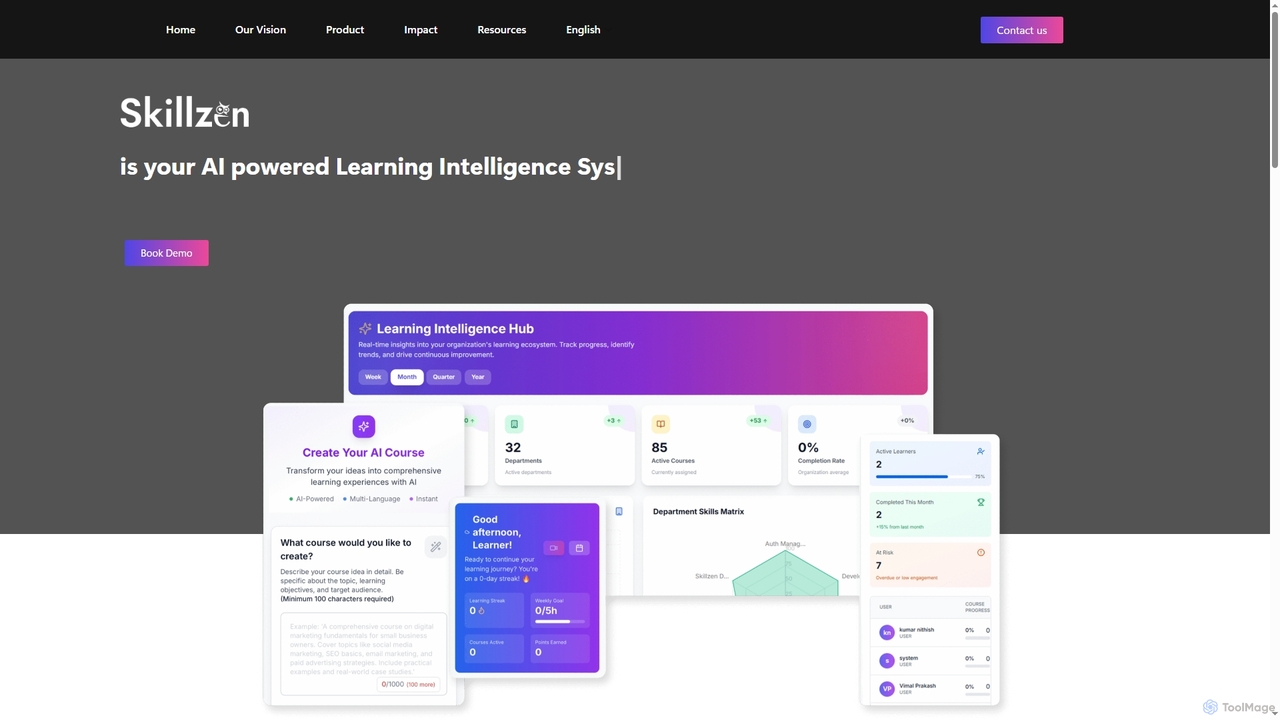
Learning & Development tools are AI-powered platforms designed to enhance educational experiences, streamline training processes, and foster continuous skill acquisition. These innovative solutions leverage artificial intelligence to personalize learning paths, automate content creation, and provide intelligent feedback, making education more accessible, engaging, and effective for individuals and organizations alike. They transform traditional learning by adapting to user needs, optimizing resource allocation, and delivering measurable improvements in knowledge retention and skill development.
Core Features
- Personalized Learning Paths: AI algorithms analyze user performance and preferences to tailor educational content and progression, ensuring relevance and engagement.
- Automated Content Curation: Tools can automatically discover, organize, and recommend relevant learning materials from vast data sources, saving time for educators and learners.
- Intelligent Tutoring & Feedback: AI provides real-time, adaptive guidance and constructive feedback on assignments, mimicking a human tutor to accelerate understanding.
- Skill Gap Analysis: Identifies individual or organizational skill deficiencies and suggests targeted training modules to bridge those gaps efficiently.
- Performance Analytics: Offers deep insights into learning progress, engagement levels, and knowledge retention, enabling data-driven improvements to training programs.
Use Cases
These tools are invaluable across various sectors. In corporate training, they help HR departments rapidly onboard new employees and upskill existing staff with customized modules. Educational institutions utilize them to create adaptive curricula and provide supplementary learning resources. For individual learners, they offer self-paced courses and personalized study aids to master new subjects or prepare for certifications.
How to Choose
When selecting a Learning & Development AI tool, consider its customization capabilities for learning paths, the breadth and quality of its content library, and its integration with existing LMS platforms. Evaluate the sophistication of its feedback mechanisms, the clarity of its analytics dashboards, and its scalability to accommodate your user base. Also, assess the user interface for ease of use and the level of technical support provided.