Life Management Best in category 1 results Self Improvement AI Tool

Popular AI tools in the Self Improvement field of Life Management include Decider AI, etc., helping you quickly improve efficiency.

Decider AI

Decider AI

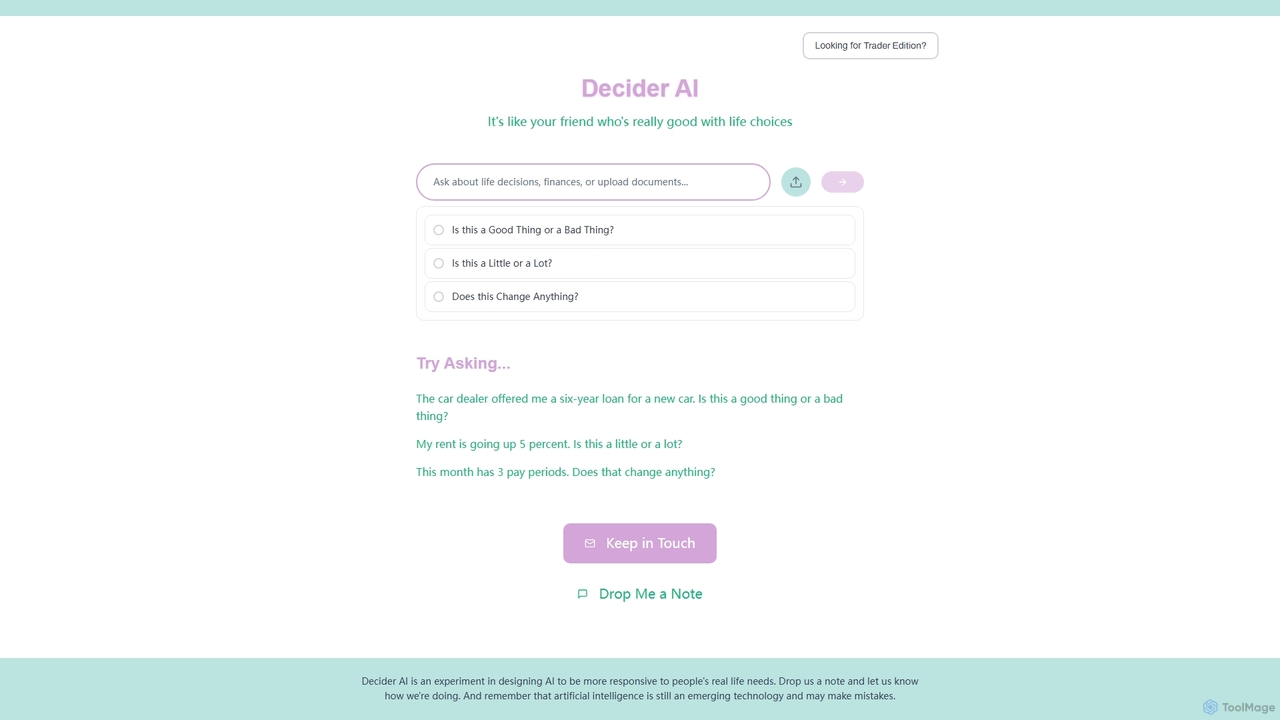
Decider AI is an experimental AI tool designed to assist individuals with everyday life choices by offering quick …

3.1K

About Self Improvement

Self Improvement AI tools are designed to empower individuals in personal growth, skill development, and well-being, forming a specialized segment within Life Management. These tools leverage artificial intelligence to offer personalized guidance, track progress, and provide data-driven insights. They help users cultivate positive habits, achieve personal goals, and enhance various aspects of their lives through adaptive learning and intelligent feedback.

Core Features

  • Personalized Goal Setting: AI assists in defining realistic, measurable goals and breaking them into actionable steps.
  • Habit Formation & Tracking: Monitors daily routines, provides reminders, and analyzes progress to build sustainable habits.
  • Skill Development Guidance: Offers tailored learning paths, resources, and practice exercises for acquiring new skills.
  • Emotional Intelligence & Mindfulness: Provides tools for stress reduction, mood tracking, and developing self-awareness.
  • Productivity & Time Management: Analyzes work patterns and suggests optimized schedules and focus techniques.

Applicable Scenarios

These tools are invaluable for individuals seeking structured personal development, professionals aiming to upskill or manage stress, and anyone committed to fostering better mental and physical well-being. They support continuous learning, behavioral change, and the pursuit of a more fulfilling life, adapting to individual needs and progress.

How to Choose

When selecting a Self Improvement AI tool, consider its specialization (e.g., career, mental health, habits), the level of personalization offered, and its data privacy policies. Evaluate the user interface for ease of use, the quality of AI-driven insights, and whether it integrates with other apps you use. Look for tools with clear methodologies and a supportive community or resources.

Self ImprovementUse Cases

1

Personalized Habit Building & Tracking

Individuals aiming to establish new, positive routines can leverage AI self-improvement tools. By inputting desired habits like daily meditation or regular exercise, the AI creates a personalized schedule, sends timely reminders, and tracks adherence. It provides visual progress reports and insights into consistency, helping users overcome common hurdles and solidify new behaviors for long-term personal growth.

2

Career Skill Enhancement & Learning Efficiency

Professionals seeking to acquire new skills or improve existing ones can use AI self-improvement tools. These tools analyze a user's current skill set and career goals, then recommend personalized learning paths, online courses, or practice exercises. They can adapt to learning pace, provide instant feedback on performance, and even simulate real-world scenarios, significantly boosting learning efficiency and career readiness.

3

Emotional Management & Stress Reduction

Individuals struggling with stress, anxiety, or emotional regulation can find support in AI self-improvement tools. These tools often include features like mood tracking, guided meditation, breathing exercises, and AI-powered journaling prompts. They analyze emotional patterns over time, identify triggers, and suggest personalized coping strategies, helping users develop greater emotional resilience and mental well-being.

4

Setting & Achieving Personal Goals

For users with ambitious personal goals, such as writing a book or running a marathon, AI self-improvement tools offer structured support. The AI helps break down large goals into smaller, manageable milestones, sets deadlines, and monitors progress. It provides motivational nudges, identifies potential roadblocks, and suggests adjustments to the plan, keeping users accountable and focused on their long-term aspirations.

5

Optimizing Time Management & Productivity

Individuals struggling with procrastination or inefficient time usage can benefit from AI self-improvement tools. These tools analyze daily schedules, identify time-wasting activities, and suggest optimized routines. They can help prioritize tasks, block distractions, and provide insights into peak productivity times, enabling users to manage their time more effectively and achieve more in less time.

6

Cultivating Positive Mindset & Resilience

For those aiming to foster a more positive outlook and build mental resilience, AI self-improvement tools offer guided exercises and personalized prompts. These tools can include gratitude journaling, positive affirmation generators, and cognitive reframing exercises. By analyzing user input and emotional responses, the AI provides tailored interventions to challenge negative thought patterns and encourage a growth mindset, enhancing overall mental fortitude.

Self ImprovementFrequently Asked Questions