
Timmy
Timmy is an AI-powered spending buddy, not a traditional budgeting app. It connects to your bank account, analyzes …
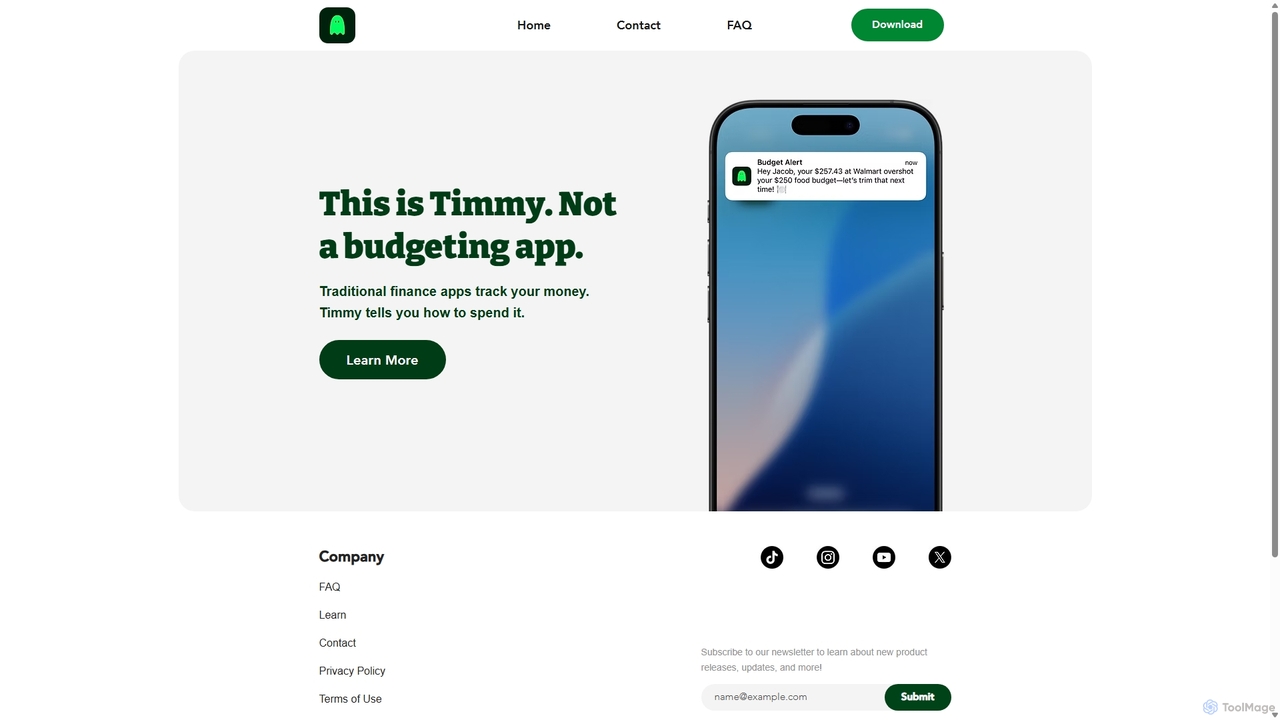
Timmy is an AI-powered spending buddy, not a traditional budgeting app. It connects to your bank account, analyzes your spending, and provides proactive suggestions on how to spend smarter to achieve your personalized financial goals.
About Budgeting
AI Budgeting tools are applications that use artificial intelligence to automate and optimize financial management. These tools connect to financial accounts to automatically categorize transactions, analyze spending patterns, and provide predictive forecasts. By leveraging machine learning, they offer personalized insights and actionable recommendations to help users achieve savings goals and improve their financial health. They transform the often tedious task of budgeting into a streamlined, intelligent process integrated into a modern digital lifestyle.
Core Features
- Automated Transaction Categorization: Automatically sorts income and expenses from linked accounts into relevant categories like groceries, transport, and bills.
- Predictive Cash Flow Forecasting: Uses historical data to project future account balances, helping to anticipate shortfalls or surpluses.
- Personalized Goal Setting: Recommends achievable savings targets and tracks progress towards goals like a down payment or vacation.
- Spending Anomaly Detection: Identifies unusual transactions or deviations from typical spending habits, alerting users to potential issues.
- Debt Repayment Simulation: Models different strategies for paying down loans or credit card debt to find the most efficient path.
Applicable Scenarios
These tools are ideal for individuals seeking to gain control over their personal finances, families managing a household budget, and freelancers or gig workers with variable income streams. They are also valuable for anyone planning for significant life events, such as buying a home, saving for retirement, or strategically paying off debt.
Selection Criteria
When choosing an AI Budgeting tool, consider its bank connectivity and support for your financial institutions. Evaluate the security measures, such as encryption standards and privacy policies. Assess whether the feature set—from basic tracking to advanced forecasting—aligns with your needs. Finally, consider the user interface's clarity and the platform's pricing model.
BudgetingUse Cases
Personal Finance Management for Individuals
A young professional uses an AI budgeting tool to gain clarity on their spending habits. By linking their bank accounts, the tool automatically categorizes all transactions, revealing that a significant portion of their income goes towards dining out and subscriptions. Based on this data, the AI suggests a realistic monthly budget with specific spending limits for each category. This enables the user to consciously reduce non-essential spending and allocate an extra $200 per month towards their vacation savings goal, which the app helps them track.
Household Budget Planning for Families
A family uses a shared AI budgeting app to manage joint finances. The tool provides a consolidated view of income and expenses from multiple accounts. It forecasts major upcoming bills like the mortgage and utilities, ensuring funds are available. The AI also identifies areas of overspending, such as on groceries. It suggests a weekly meal plan and shopping list to stay within budget, helping the family save an average of 15% on their monthly food expenses and work together towards a shared goal of renovating their kitchen.
Cash Flow Management for Freelancers
A freelance graphic designer with fluctuating monthly income uses an AI budgeting tool to maintain financial stability. The tool tracks incoming payments from clients and automatically categorizes business expenses like software subscriptions and office supplies for easy tax reporting. Its predictive forecasting feature analyzes past income trends to project future cash flow, helping the designer anticipate slow months. This allows them to build a sufficient cash reserve and make informed decisions about when to take on new projects or invest in new equipment.
Strategic Debt Reduction Planning
A user with multiple sources of debt, including student loans and credit cards, uses an AI budgeting tool to create a repayment plan. The tool consolidates all debt information and uses its simulation feature to compare different strategies, such as the 'avalanche' (highest interest first) and 'snowball' (smallest balance first) methods. The AI visualizes how each strategy impacts the total interest paid and the time to become debt-free. Based on the clear comparison, the user chooses the avalanche method, saving them thousands in interest and providing a clear, actionable roadmap to financial freedom.
Tracking Savings for a Major Purchase
A couple is saving for a down payment on their first home. They use an AI budgeting tool to set a savings goal of $50,000. The tool analyzes their joint income and spending, then recommends a monthly savings contribution to reach their goal within three years. It creates a dedicated virtual savings pot and automatically tracks progress. The AI also provides motivational alerts when they meet monthly targets and suggests ways to accelerate savings, such as temporarily cutting back on specific discretionary spending categories, keeping them focused and on track.
Small Business Budget Forecasting
A small e-commerce business owner uses an AI budgeting tool to manage company finances. The tool integrates with their sales platform and bank accounts to provide a real-time overview of revenue and expenses. The AI forecasting engine analyzes historical sales data and market trends to predict quarterly profits and identify potential cash flow gaps. This allows the owner to proactively manage inventory, plan marketing spend, and make strategic decisions, such as securing a line of credit before a projected slow season, ensuring the business remains financially healthy and poised for growth.