LoveAdvisor AI
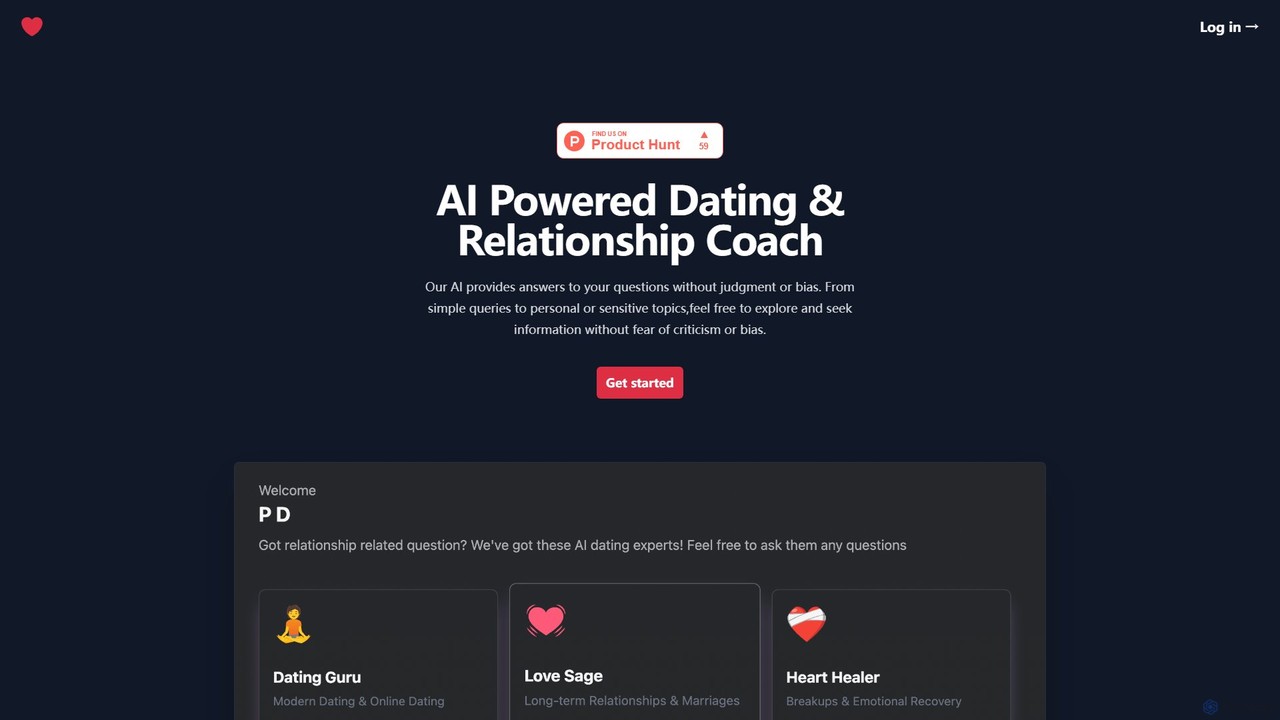
LoveAdvisor AI is a 24/7 dating and relationship coach that provides confidential, unbiased, and empathetic advice. Ask anything …
LoveAdvisor AI is a 24/7 dating and relationship coach that provides confidential, unbiased, and empathetic advice. Ask anything from simple questions to sensitive topics and receive personalized guidance to navigate the complexities of modern relationships and build confidence.
About Relationship Advice
AI Relationship Advice tools are a class of applications that use artificial intelligence to provide personalized guidance and insights for improving interpersonal connections. These tools analyze communication patterns, emotional tones, and user-provided context using natural language processing (NLP) and machine learning models. They offer users a private and accessible way to understand relationship dynamics, practice constructive communication, and find solutions to common challenges. Unlike static articles, these AI assistants provide interactive feedback and tailored suggestions.
Core Features
- Communication Analysis: Scans text conversations to identify sentiment, tone, and potentially problematic communication patterns.
- Personalized Guidance: Generates tailored advice and conversation starters based on specific situations and user goals.
- Conflict Resolution Simulation: Allows users to role-play difficult conversations and receive feedback on their phrasing and approach.
- Emotional Pattern Recognition: Identifies recurring emotional triggers and behavioral cycles from user inputs or journal entries.
- Activity & Connection Suggestions: Recommends personalized date ideas, bonding activities, or appreciation prompts to strengthen relationships.
Use Cases
These tools are valuable for individuals and couples seeking to improve their romantic partnerships, families navigating communication barriers, or professionals aiming to enhance their interpersonal skills at work. They serve as a digital coach for preparing for difficult conversations, a mediator for analyzing disagreements, or a creative source for rekindling connections.
How to Choose
When selecting an AI Relationship Advice tool, prioritize data privacy and security, as you will be sharing sensitive information. Evaluate the AI's methodology—whether it's based on established psychological principles like CBT or attachment theory. Consider the scope of advice (e.g., romantic, familial, professional) and ensure the user interface is intuitive and provides a safe, non-judgmental space for interaction.
Relationship AdviceUse Cases
Analyzing a Text Message Disagreement
A user is feeling misunderstood after a text argument with their partner. They copy and paste the conversation into the AI tool. The AI analyzes the exchange, highlighting phrases with accusatory tones (e.g., 'you always...') and identifying moments where the conversation escalated. It then provides alternative phrasing suggestions that focus on 'I' statements and expressing feelings rather than blame, helping the user understand their own communication patterns and how to approach the topic more constructively next time.
Preparing for a Difficult Conversation with a Family Member
A user needs to discuss a sensitive financial matter with a sibling. They are worried it will cause conflict. Using the AI's simulation feature, they type out their intended opening lines. The AI provides feedback, suggesting a softer, more collaborative opening. The user then role-plays the potential conversation, with the AI acting as the sibling and presenting common defensive reactions. This practice helps the user feel more prepared, confident, and equipped with empathetic language to keep the real conversation productive.
Generating Creative and Personalized Date Ideas
A couple feels they are in a relationship rut and their date nights have become repetitive. They use an AI tool and input their shared interests (e.g., hiking, trying new cuisines, art) and their current budget. The AI generates a list of unique, personalized date ideas, such as 'a picnic at a scenic viewpoint after a short hike, with a pre-packed meal from a new local restaurant' or 'an at-home pottery night with a DIY kit'. This provides fresh inspiration that aligns with their actual preferences, helping them reconnect in a meaningful way.
Drafting a Professional Email to Address a Conflict
An employee is having a recurring issue with a colleague over project responsibilities. They want to address it via email but are concerned about sounding confrontational. They describe the situation to an AI relationship tool focused on professional contexts. The AI helps draft an email that uses a neutral tone, clearly states the problem with specific examples, explains the impact on the project, and proposes a collaborative solution, such as a brief meeting to clarify roles. This empowers the employee to handle the conflict constructively and maintain a positive working relationship.
Understanding a Partner's Communication Style
A person feels their partner is often emotionally distant. They use an AI tool to journal about recent interactions, describing what was said and how they felt. The AI identifies a potential pattern: the partner may have an avoidant attachment style and communicates more through actions than words. The tool provides articles and prompts to help the user understand this style, suggesting ways to create emotional safety and appreciate non-verbal forms of affection. This insight helps the user reframe their partner's behavior, reducing personal frustration and fostering more empathy.
Daily Check-ins for Relationship Self-Reflection
A user wants to be more mindful in their relationship. They use an AI app for a 5-minute daily check-in. The AI prompts them with questions like, 'What is one thing you appreciated about your partner today?' or 'Was there a moment of miscommunication today, and how could it have been handled differently?'. Over time, the AI tracks their responses and provides insights into recurring themes, such as a consistent need for more quality time or a pattern of avoiding certain topics. This practice encourages daily gratitude and proactive problem-solving, strengthening the relationship over the long term.