sixtyfour
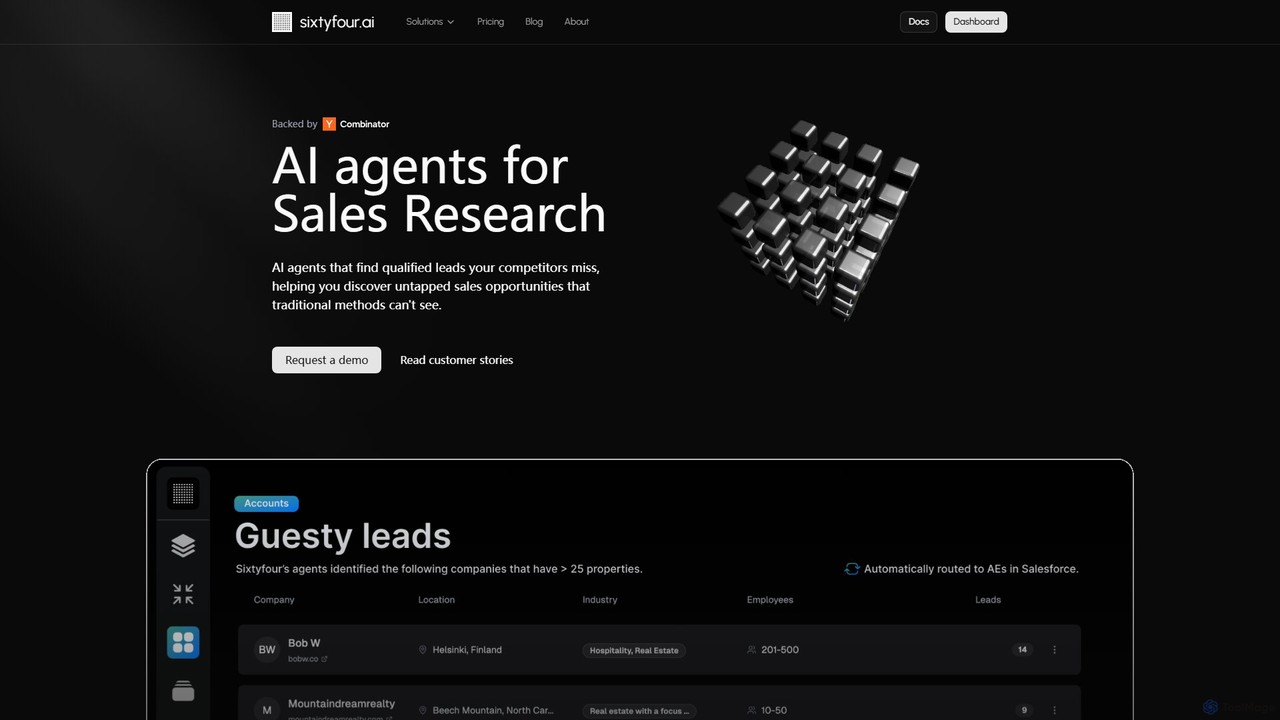
sixtyfour is an AI-powered sales research platform that deploys intelligent agents to uncover high-quality leads missed by traditional …
sixtyfour is an AI-powered sales research platform that deploys intelligent agents to uncover high-quality leads missed by traditional tools. It leverages proprietary data and advanced technology detection to find untapped sales opportunities, providing sales teams with enriched, precisely targeted prospect profiles for effective outreach.
galadon
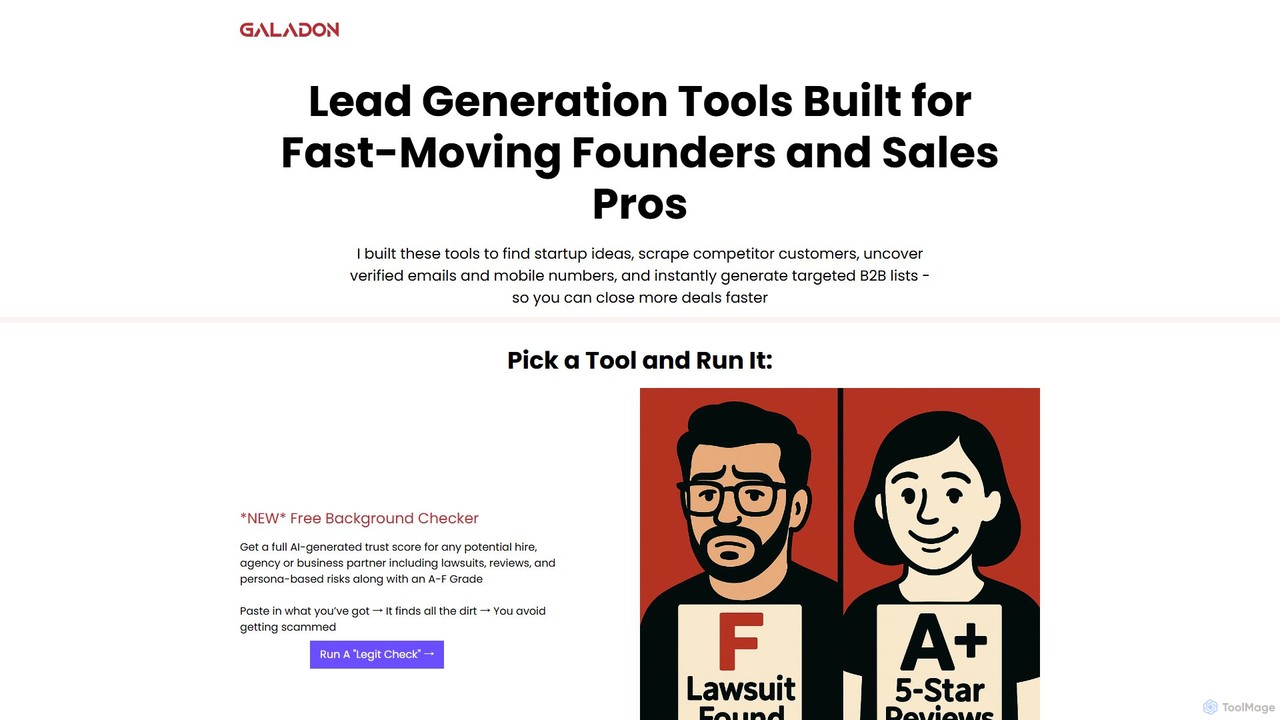
Galadon is a suite of AI-powered lead generation and sales intelligence tools designed for founders and sales professionals. …
Galadon is a suite of AI-powered lead generation and sales intelligence tools designed for founders and sales professionals. It helps find startup ideas, scrape competitor customers, uncover verified contact details, and generate targeted B2B lists to accelerate the sales cycle.
About Sales Intelligence
Sales Intelligence tools are AI-powered platforms that gather, analyze, and present data to help sales professionals identify, understand, and engage with high-potential prospects. These tools leverage advanced algorithms to extract insights from vast datasets, including public records, social media, news, and CRM systems. By providing actionable insights into buyer behavior, market trends, and competitor activities, Sales Intelligence empowers sales teams to optimize their strategies, personalize outreach, and accelerate the sales cycle.
Core Features
- Lead Scoring & Prioritization: Automatically ranks leads based on their likelihood to convert, enabling sales teams to focus on the most promising opportunities.
- Prospect Research & Enrichment: Gathers comprehensive data on potential clients, including company size, industry, technology stack, and key decision-makers, and enriches existing contact information.
- Buyer Intent Signals: Identifies when prospects are actively researching or showing interest in specific products or services, allowing for timely and relevant engagement.
- Competitive Analysis: Monitors competitor activities, product updates, and market positioning to inform sales strategies and differentiate offerings.
- Market Trend Analysis: Provides insights into industry shifts and emerging opportunities, helping sales teams adapt their approach and identify new target markets.
Applicable Scenarios
Sales Intelligence is invaluable for sales development representatives seeking to identify and qualify leads, account executives aiming to personalize their pitches, and sales managers optimizing team performance and market penetration. It supports strategic planning for new market entry, enhances customer relationship management by providing deeper insights, and streamlines the prospecting process across various industries.
How to Choose
When selecting a Sales Intelligence platform, consider its data sources and coverage, ensuring it aligns with your target markets and customer profiles. Evaluate the accuracy and depth of its AI-driven insights, particularly for lead scoring and intent detection. Assess its integration capabilities with your existing CRM and sales engagement tools for seamless workflow. Finally, consider the user interface and ease of adoption for your sales team, along with pricing models that fit your budget and scale.

Sales IntelligenceUse Cases
Identify High-Potential Leads
Sales development representatives utilize AI-powered Sales Intelligence to automatically score and prioritize leads based on predictive analytics. By analyzing historical data, engagement patterns, and firmographic information, the tool identifies prospects most likely to convert, allowing SDRs to focus their efforts on the warmest leads and significantly improve conversion rates.
Personalize Sales Outreach
Account executives leverage Sales Intelligence to gain deep insights into a prospect's company, industry challenges, and key decision-makers before making contact. This allows them to craft highly personalized emails, phone scripts, and presentations that directly address the prospect's specific pain points and needs, leading to more meaningful conversations and higher engagement rates.
Monitor Buyer Intent Signals
Marketing and sales teams use Sales Intelligence to track online behaviors of potential customers, such as website visits to specific product pages, content downloads, or keyword searches. By identifying these buyer intent signals, teams can proactively reach out to prospects at the opportune moment when they are actively researching solutions, significantly shortening the sales cycle and increasing conversion likelihood.
Optimize Sales Territory Planning
Sales managers leverage Sales Intelligence to analyze geographic and market data, combined with AI-driven insights into potential customer density and industry growth. This enables them to strategically define and optimize sales territories, ensuring balanced workloads, maximizing resource allocation, and identifying untapped market opportunities for their sales teams, leading to improved overall sales performance.
Gather Competitive Intelligence
Sales professionals use Sales Intelligence tools to continuously monitor competitor activities, including product launches, pricing changes, marketing campaigns, and customer reviews. This real-time competitive intelligence allows sales teams to understand their market positioning, anticipate competitive moves, and refine their sales pitches to highlight unique selling propositions, giving them an edge in competitive scenarios.
Accelerate New Sales Rep Onboarding
Sales managers utilize Sales Intelligence platforms to provide new sales representatives with immediate access to comprehensive prospect data, buyer intent signals, and successful sales playbooks. This rapid access to actionable insights and best practices significantly shortens the onboarding time, enabling new hires to quickly understand target customer profiles, industry trends, and effective sales strategies, leading to faster productivity and revenue generation.