Bsub
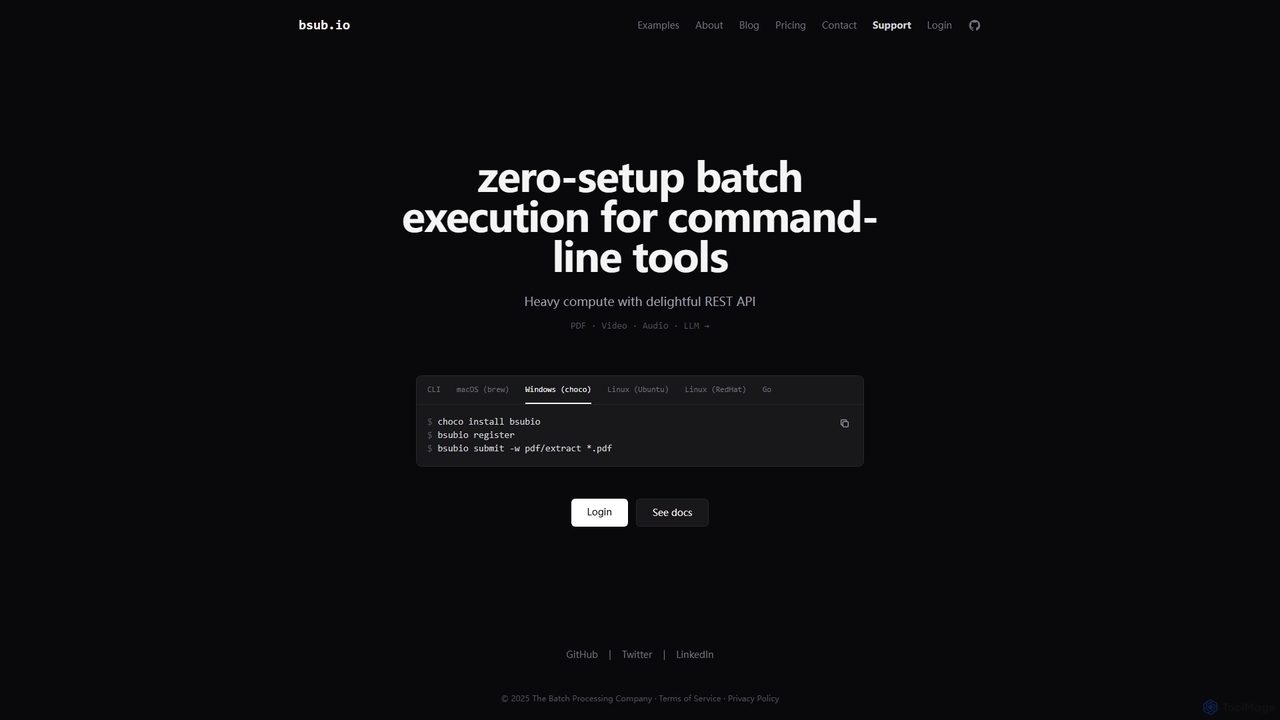
Bsub is a zero-setup batch processing platform designed for developers to execute command-line tools at scale. It simplifies …
Bsub is a zero-setup batch processing platform designed for developers to execute command-line tools at scale. It simplifies heavy computational tasks like PDF extraction, video transcoding, audio transcription, and large language model (LLM) batch inference through a simple REST API, eliminating infrastructure management and scaling concerns.
About Video Transcoding
Video Transcoding tools are AI-powered solutions designed to convert video files from one format, codec, resolution, or bitrate to another. As a specialized form of media processing, these tools leverage advanced AI algorithms to optimize video properties for various platforms and devices, ensuring broad compatibility and efficient delivery. They are crucial for content creators, broadcasters, and streaming services aiming to deliver high-quality video experiences across diverse viewing environments while managing storage and bandwidth effectively.
Core Features
- Format & Codec Conversion: Seamlessly convert between different video formats (e.g., MP4, WebM, MOV) and codecs (e.g., H.264, H.265, AV1) for universal playback.
- Resolution & Bitrate Scaling: Dynamically adjust video resolution (e.g., 4K to 1080p) and bitrate to suit target devices, network conditions, and streaming quality requirements.
- Adaptive Bitrate (ABR) Preparation: Generate multiple video renditions at varying resolutions and bitrates, enabling smooth adaptive streaming experiences.
- Quality Enhancement: Utilize AI to intelligently upscale lower-resolution videos or improve visual fidelity during the transcoding process, minimizing artifacts.
Use Cases
Video transcoding is essential for preparing content for multi-platform distribution, optimizing videos for web streaming, and archiving media efficiently. It allows media companies to reach wider audiences, ensures smooth playback on mobile devices, and helps reduce storage costs by creating optimized versions of large video files.
How to Choose
When selecting a video transcoding tool, consider its support for various input/output formats and codecs, scalability for handling large volumes, integration capabilities with existing workflows, and the quality of its AI-driven optimization features. Evaluate pricing models based on usage and ensure it meets your specific quality, performance, and security requirements.
Video TranscodingUse Cases
Optimizing Videos for Multi-Platform Streaming
Streaming platforms and broadcasters utilize video transcoding to prepare content for delivery across a multitude of devices, from smart TVs to mobile phones. AI-powered tools automatically generate multiple adaptive bitrate (ABR) renditions, ensuring viewers receive the best possible quality based on their network conditions, minimizing buffering and maximizing reach.
Archiving and Storage Optimization
Media archives and production houses use transcoding to convert large, high-resolution master files into more storage-efficient formats without significant loss of quality. AI algorithms can identify redundant frames or optimize compression settings, drastically reducing storage costs and making historical footage more accessible for future use.
Ensuring Compatibility for User-Generated Content (UGC)
Social media platforms and video sharing sites face a deluge of user-generated content in diverse formats. Transcoding tools automatically convert uploaded videos into standardized, web-friendly formats, ensuring consistent playback across all devices and browsers, simplifying content moderation and delivery pipelines.
Preparing Content for International Distribution
Film studios and content distributors use transcoding to adapt videos for different regional standards and broadcast requirements, including frame rates, aspect ratios, and audio tracks. AI can assist in detecting and correcting discrepancies, streamlining the localization process for global audiences.
Enhancing Legacy Video Quality for Modern Displays
Organizations with extensive libraries of older, lower-resolution video content employ AI video transcoding to upscale and enhance these assets for modern high-definition displays. AI-driven super-resolution and noise reduction techniques can breathe new life into archival footage, making it suitable for contemporary viewing experiences.
Real-time Live Stream Adaptation
Live event broadcasters and online gaming platforms use real-time video transcoding to adapt live streams on-the-fly. This allows a single high-quality input stream to be simultaneously converted into multiple lower-resolution, lower-bitrate versions, ensuring a smooth, low-latency viewing experience for all audience members regardless of their internet speed.