Bsub
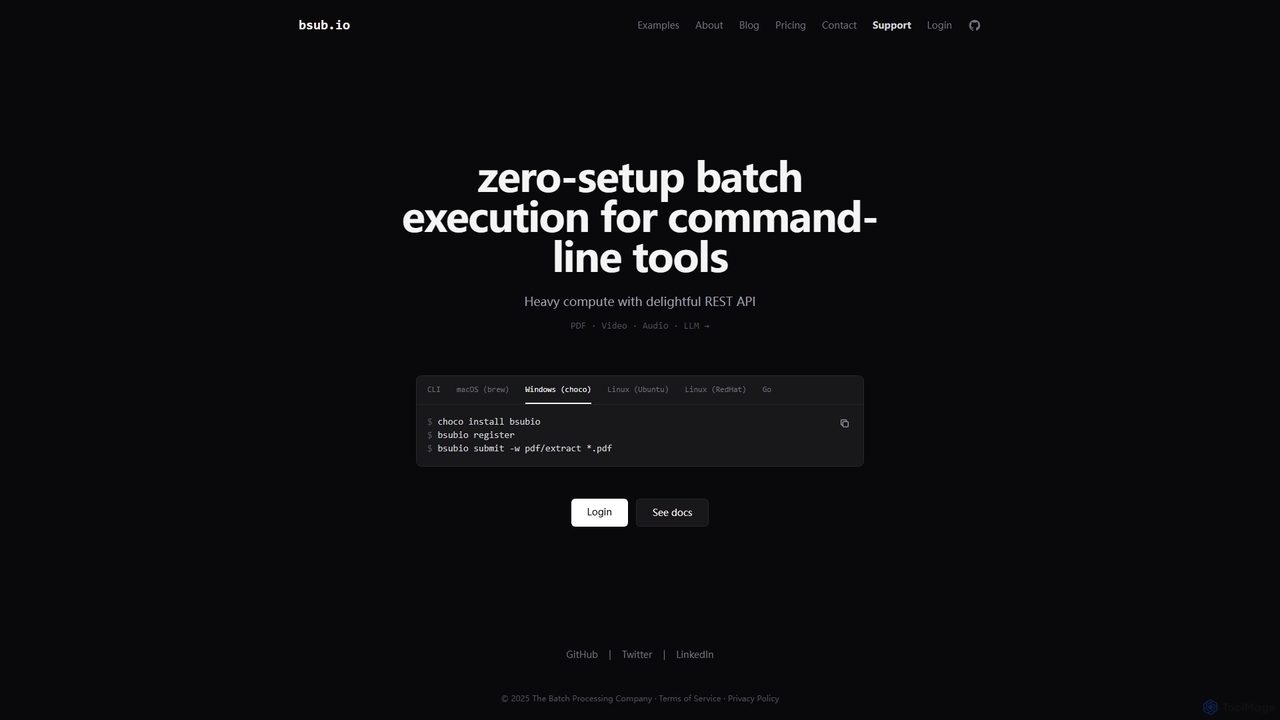
Bsub is a zero-setup batch processing platform designed for developers to execute command-line tools at scale. It simplifies …
Bsub is a zero-setup batch processing platform designed for developers to execute command-line tools at scale. It simplifies heavy computational tasks like PDF extraction, video transcoding, audio transcription, and large language model (LLM) batch inference through a simple REST API, eliminating infrastructure management and scaling concerns.
About Media Processing
Media Processing tools are AI-powered solutions designed to automate, enhance, and transform various forms of digital media, including images, audio, and video. Leveraging advanced machine learning, computer vision, and natural language processing, these tools significantly streamline content creation workflows, improve media quality, and enable innovative applications across industries. They empower users to achieve professional-grade results with unprecedented speed and efficiency, making complex media tasks accessible to a broader audience.
Core Features
- Image Enhancement & Editing: Automate tasks like background removal, intelligent upscaling, color correction, object manipulation, and style transfer for visual assets.
- Video Production Automation: Generate short clips from long-form content, automatically add subtitles, apply dynamic effects, and assist in editing sequences for various platforms.
- Audio Transcription & Analysis: Convert spoken language to accurate text, identify multiple speakers, translate audio, and analyze sentiment or key topics within audio files.
- Content Moderation: Automatically detect and flag inappropriate, harmful, or copyrighted content in images, videos, and audio streams, ensuring brand safety and compliance.
- Media Restoration & Upscaling: Enhance the resolution of low-quality images and videos, remove noise, repair damage, and colorize old black-and-white media for improved clarity.
Applicable Scenarios
Content creators, digital marketers, filmmakers, broadcasters, and e-commerce businesses widely adopt AI media processing tools. They are crucial for automating repetitive editing tasks, generating high-quality visual and auditory content at scale, and ensuring brand consistency across diverse platforms. From social media management and personalized advertising to professional post-production and archival restoration, these tools redefine efficiency and creative possibilities in media production.
How to Choose
When selecting an AI Media Processing tool, consider the specific media types you primarily work with (images, video, audio) and the core functionalities most critical for your workflow, such as intelligent upscaling, precise transcription, or advanced background removal. Evaluate its integration capabilities with your existing software ecosystem, the output quality it consistently delivers, and its processing speed for your typical workload. Furthermore, assess the tool's scalability, pricing model, and overall ease of use to ensure it aligns perfectly with your budget, technical proficiency, and long-term operational needs.
Media ProcessingUse Cases
Automate Social Media Video Creation
Social media managers often need to produce a high volume of short, engaging video clips from longer source material. AI media processing tools allow them to automatically identify highlights, trim footage, add dynamic captions, and apply brand-consistent filters. This significantly reduces manual editing time, enabling the creation and scheduling of dozens of unique video posts daily, boosting audience engagement and content output.
Batch Enhance E-commerce Product Images
E-commerce businesses require pristine product images for online listings. With AI media processing, photographers and marketing teams can upload hundreds of product photos and automatically remove backgrounds, adjust lighting, correct colors, and upscale resolution. This ensures consistent, high-quality visuals across all product pages, improving conversion rates and saving countless hours of manual photo editing.
Generate Accurate Subtitles for Video Content
Content creators and educators producing video lectures or tutorials need accurate subtitles for accessibility and SEO. AI audio processing tools automatically transcribe spoken dialogue into text, synchronize it with the video, and even translate it into multiple languages. This process, which once took hours, is now completed in minutes, making content more accessible and discoverable globally.
Real-time Content Moderation for UGC Platforms
User-generated content (UGC) platforms face the challenge of moderating vast amounts of media for inappropriate or harmful content. AI media processing solutions can analyze images, videos, and audio in real-time to detect nudity, violence, hate speech, or copyrighted material. This automated moderation protects users, maintains platform integrity, and reduces the burden on human moderation teams.
Restore and Upscale Archival Footage
Archivists, filmmakers, and enthusiasts often work with old, low-resolution, or damaged video footage and photographs. AI media processing tools can intelligently upscale resolution, remove scratches, reduce noise, stabilize shaky footage, and even colorize black-and-white films. This breathes new life into historical assets, making them suitable for modern displays and preserving cultural heritage.
Create Personalized Marketing Video Variants
Digital marketers aiming for highly targeted campaigns need to produce numerous variations of video ads. AI media processing enables the rapid generation of personalized video content by automatically swapping out product images, text overlays, voiceovers, or background music based on audience segments. This facilitates extensive A/B testing and optimizes ad performance without extensive manual re-editing.