
Freemium
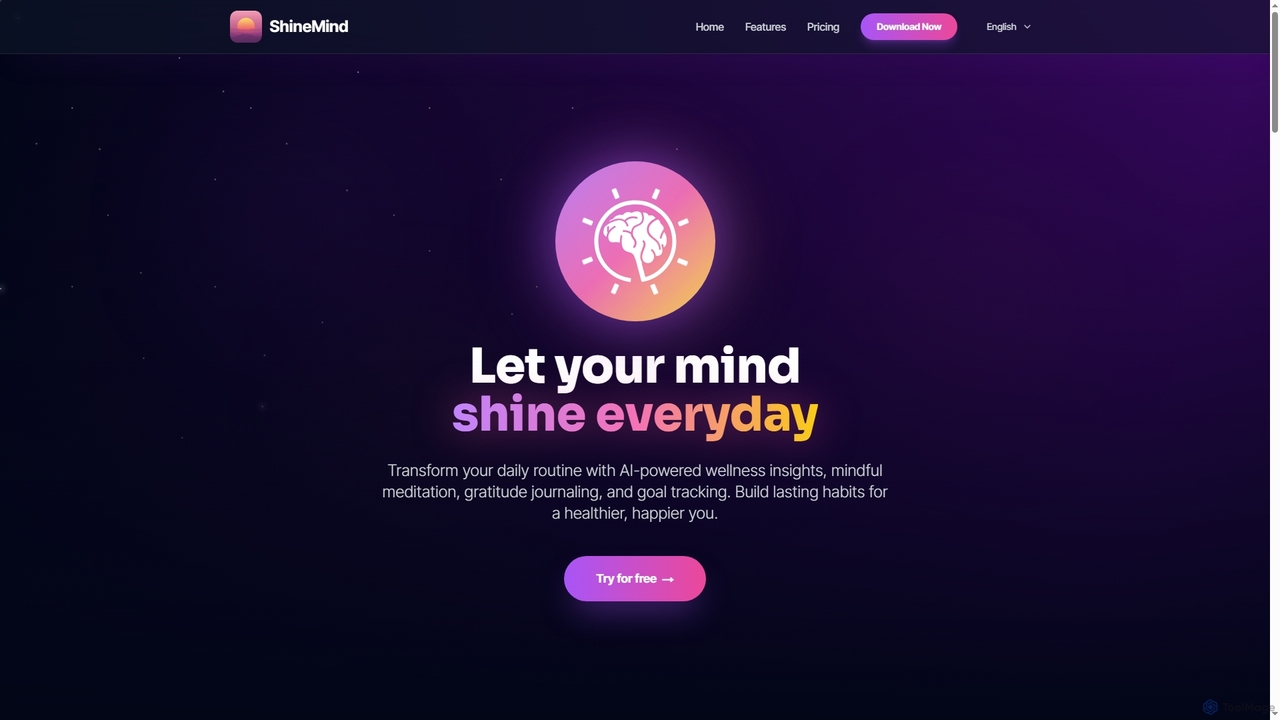
Popular Mindfulness AI tools in Meditation include ShineMind, helping you work more efficiently.
Mindfulness AI tools are applications designed to guide users through mindfulness practices, leveraging artificial intelligence to personalize experiences and enhance mental well-being. These tools often utilize algorithms to adapt content based on user input, mood tracking, and even biometric data. They aim to cultivate present-moment awareness, reduce stress, and improve emotional regulation, serving as a modern complement to traditional meditation techniques.
Individuals seeking to integrate mindfulness into their daily routines for improved mental health and focus often turn to these tools. They are particularly useful for busy professionals needing quick stress relief, students aiming to enhance concentration, or anyone looking to develop consistent mindfulness habits without extensive prior experience.
When selecting a Mindfulness AI tool, consider its personalization capabilities, the diversity and quality of its content library, and its integration options with other health devices. Evaluate the data privacy policies and the clarity of progress tracking features to ensure it aligns with your personal wellness goals and data security preferences.
Office professionals can utilize AI mindfulness tools during short breaks to quickly de-stress and regain focus. By engaging in AI-guided 5-minute breathing exercises or micro-meditations, they can reduce tension, improve concentration for subsequent tasks, and prevent burnout in demanding work environments.
Individuals struggling with insomnia or restless nights can benefit from AI-powered sleep modules. These tools offer personalized sleep stories, calming soundscapes, and guided body scans that adapt to user preferences, helping to quiet the mind and facilitate a smoother transition into deep, restorative sleep.
Students and remote workers can leverage mindfulness AI to sharpen their concentration and minimize distractions. Tools provide focus-oriented meditations and ambient sounds that train the mind to stay present, leading to improved productivity and better retention of information during study or complex tasks.
Parents, caregivers, or anyone facing emotionally challenging situations can use these tools to develop greater emotional awareness and control. AI-guided exercises help users identify and process emotions in real-time, fostering a more balanced response to stress and cultivating emotional resilience.
Individuals aiming to cultivate healthier eating habits can use AI mindfulness tools to practice mindful eating. Guided sessions encourage users to pay attention to the sensory experience of food, recognize hunger and fullness cues, and reduce impulsive eating, leading to a more conscious and satisfying relationship with food.
Athletes and fitness enthusiasts can integrate mindfulness AI into their post-workout routine for mental recovery and enhanced body awareness. Short guided meditations or visualization exercises can help calm the nervous system, reduce muscle tension, and improve mental clarity, complementing physical recovery.
AI Mindfulness tools are digital applications that use artificial intelligence to deliver personalized mindfulness and meditation experiences. They go beyond traditional apps by adapting content, duration, and techniques based on user input, mood, and sometimes biometric data, aiming to enhance present-moment awareness and mental well-being.
The key difference lies in personalization and adaptivity. Traditional meditation apps offer static, pre-recorded content, while AI Mindfulness tools leverage algorithms to tailor sessions, provide real-time feedback (often via wearables), and track progress with data-driven insights, offering a more dynamic and responsive user journey.
Anyone seeking to reduce stress, improve focus, enhance emotional regulation, or cultivate a consistent mindfulness practice can benefit. They are particularly useful for beginners who need structured guidance, busy individuals looking for quick mental breaks, or those who appreciate data-driven insights into their well-being journey.
Look for robust personalization capabilities, a diverse library of guided meditations and exercises, and integration with health trackers for biofeedback. Important considerations also include intuitive progress tracking, clear data privacy policies, and programs tailored to specific goals like sleep improvement or stress reduction.
AI Mindfulness tools serve as powerful complements rather than direct replacements for human coaches. While AI offers unparalleled accessibility, personalization, and data insights, a human coach provides nuanced, empathetic interaction, deeper accountability, and the ability to address complex individual challenges that AI cannot fully replicate.