
Freemium
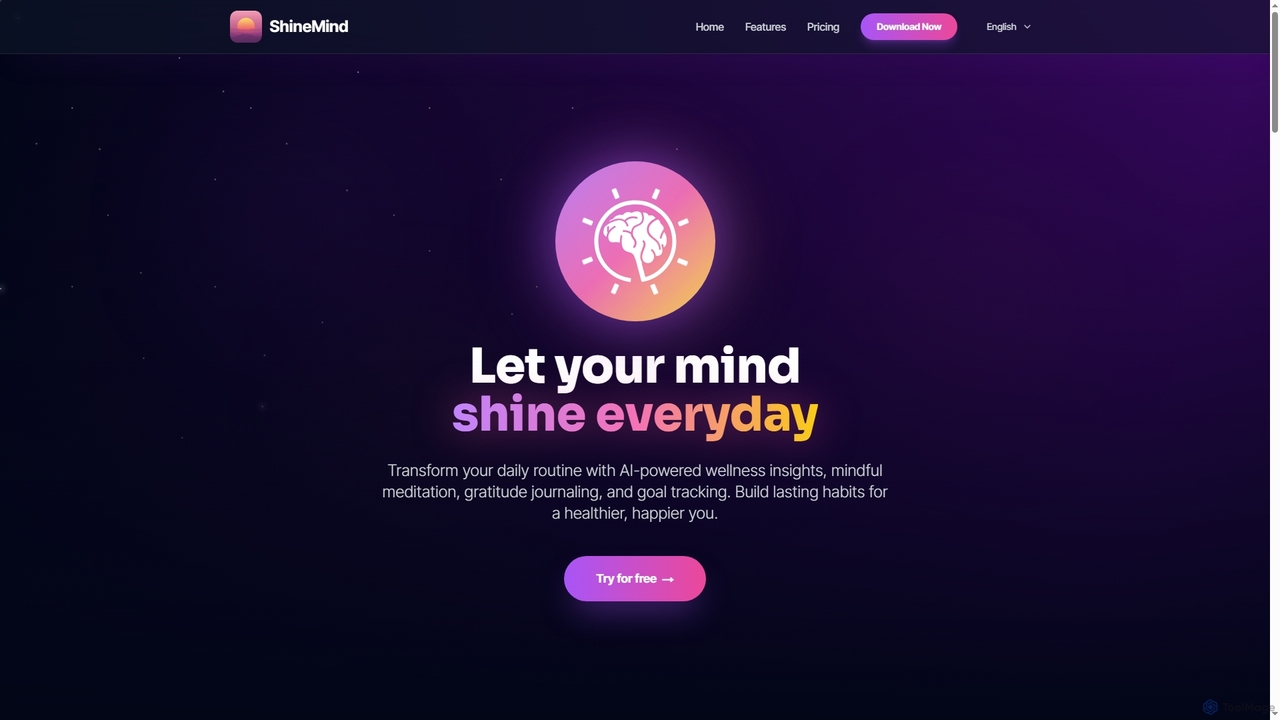
Popular Self Care AI tools in Lifestyle include Plushie Therapy and ShineMind, helping you work more efficiently.
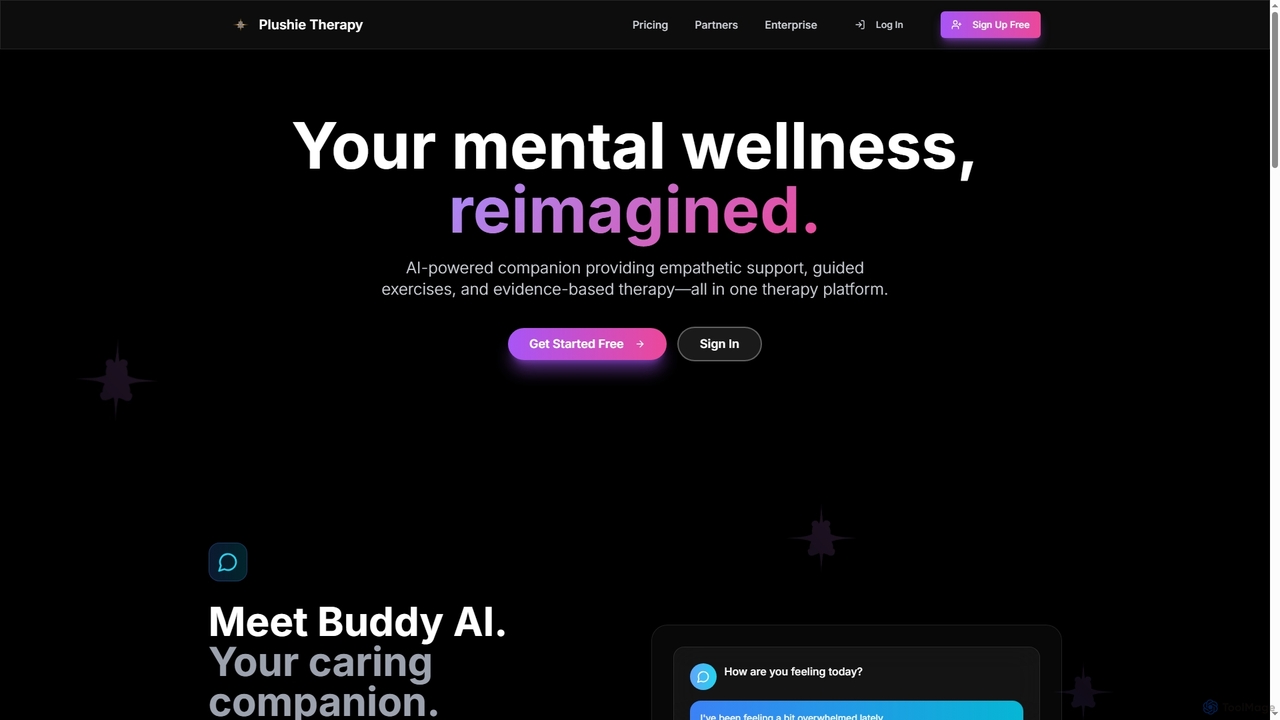
Plushie Therapy is an AI-powered mental wellness platform offering 24/7 empathetic support, guided exercises, and evidence-based therapeutic resources. It helps users track moods, explore feelings, and access tools like journaling and CBT techniques to foster emotional balance and personal growth in a safe, non-judgmental space.
Therapy CompanionAI Self Care tools are applications that leverage artificial intelligence to provide personalized support for mental and emotional well-being. They utilize technologies like natural language processing (NLP) and machine learning to analyze user inputs, track mood patterns, and offer guided exercises. These tools empower users to build resilience, manage daily stress, and cultivate mindfulness habits. Their primary advantage is offering accessible, on-demand mental health support that adapts to individual needs.
These tools are widely used by individuals seeking to manage everyday anxiety and stress, professionals aiming to prevent burnout and improve focus, and anyone new to mindfulness practices looking for a structured starting point. They serve as a private, accessible resource for emotional regulation and self-awareness.
When selecting an AI Self Care tool, consider the underlying methodology (e.g., is it based on CBT, MBSR?). Evaluate the level of personalization and how the AI adapts to your progress. Crucially, review the data privacy policy to ensure your sensitive information is protected. Finally, choose a tool with a user interface that you find calming and intuitive to use.
A young professional feeling overwhelmed by work deadlines uses an AI Self Care app. When anxiety spikes, they open the app and engage with a CBT-based chatbot. The AI guides them through a thought-reframing exercise, helping them identify a negative thought like 'I'll never finish this on time' and challenge it with more balanced perspectives. The chatbot provides a structured, non-judgmental dialogue, making a complex psychological technique accessible. This on-demand intervention helps them calm down, regain focus, and approach their tasks with a clearer mindset, reducing overall stress.
A user new to mindfulness wants to start meditating but struggles with consistency. They use an AI Self Care tool that personalizes the experience. Each day, the app asks for their current mood and energy level. Based on their input (e.g., 'stressed' and 'low energy'), the AI recommends a short, 5-minute guided breathing meditation instead of a longer, more demanding session. It also sends intelligent reminders at times the user is most likely to be free, learned from their usage patterns. This adaptive approach removes friction, making it easier for the user to build a daily practice and experience the long-term benefits of mindfulness.
An individual struggling with insomnia uses an AI Self Care app to wind down at night. Instead of generic playlists, the AI curates a personalized 'sleep journey'. It might start with a short, guided meditation to calm the mind, followed by a sleep story with a soothing voice, and then transition into ambient soundscapes like gentle rain. The AI learns which sounds and voices are most effective for the user over time, optimizing the sequence for better sleep induction. This targeted approach helps the user disengage from daily stressors and creates a consistent pre-sleep routine, leading to improved sleep onset and duration.
A user seeking better self-awareness uses an AI tool to log their mood and activities throughout the day. They input simple entries like 'Feeling anxious after a team meeting' or 'Energized after a morning walk'. The AI's natural language processing understands the context and sentiment. After a few weeks, the tool generates a report highlighting correlations, such as a consistent dip in mood on Sunday evenings or a spike in happiness after social interactions. These AI-driven insights go beyond simple charting, helping the user proactively identify and manage their specific emotional triggers, leading to improved overall well-being.
A person looking to cultivate a more positive outlook finds it hard to maintain a journaling habit. They use an AI Self Care app that provides intelligent prompts. Instead of a blank page, the app asks specific, thought-provoking questions like, 'What is a skill you are proud of?' or 'Describe a moment of kindness you witnessed today.' The AI can also analyze past entries to identify recurring positive themes and remind the user of them during low moments. This guided and interactive approach transforms journaling from a chore into an engaging practice, helping the user consistently focus on positive aspects of their life.
A student facing exam stress feels the need to talk through their feelings late at night, when friends or family are unavailable. They turn to an AI companion within a self-care app. They can vent their frustrations and fears in a private, secure chat. The AI is trained to provide empathetic and validating responses, such as 'It sounds like you're under a lot of pressure, and it's understandable to feel that way.' While not a substitute for human connection, this 24/7 availability provides immediate emotional relief, helping the student feel heard and less isolated, allowing them to calm down and refocus.
AI Self Care tools are mobile or web applications that use artificial intelligence to provide personalized support for mental and emotional health. They go beyond simple tracking by actively engaging with the user. Key features often include AI chatbots for conversational support, personalized recommendations for mindfulness exercises or CBT techniques, and intelligent analysis of mood patterns. They are designed to be accessible, on-demand resources for managing daily stress, improving self-awareness, and building healthy mental habits.
Choosing the right app depends on your personal goals. Consider these factors:
No, AI Self Care tools are not a replacement for professional therapy or medical advice. They are best viewed as supplementary tools that can support mental well-being. They are excellent for managing everyday stress, building healthy habits, and increasing self-awareness. However, for clinical conditions such as depression, severe anxiety disorders, or trauma, it is essential to consult a licensed mental health professional. These apps can be a valuable part of a comprehensive mental health plan, but they do not replace the nuanced, personalized care a human therapist provides.
The key difference lies in focus and interactivity. A general wellness tracker, often part of the broader 'Lifestyle' category, typically focuses on logging physical metrics like steps, sleep duration, or calorie intake. Its main function is data collection. An AI Self Care app, however, is specifically designed for mental and emotional health. It uses AI not just to track, but to interact. It provides personalized, actionable guidance, facilitates therapeutic exercises (like CBT), and offers conversational support, making it an active tool for emotional regulation rather than a passive data logger.
AI significantly enhances self-care by providing personalization and accessibility at a scale previously impossible. Unlike static content, AI can: