ToolMage
Sign in

Best 2 Ai Companion AI tools for Lifestyle

Popular Ai Companion AI tools in Lifestyle include heymia and Viva, helping you work more efficiently.

Viva
Freemium

Viva

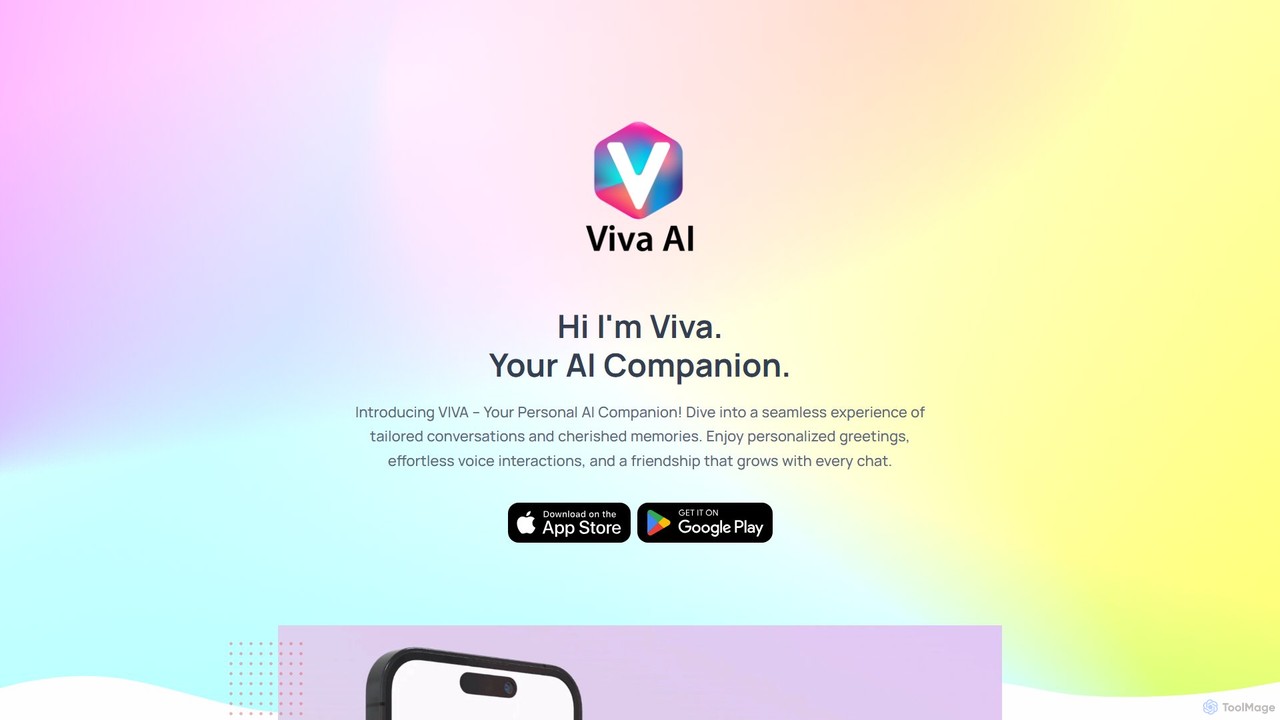
Viva is a personal AI companion designed to provide tailored conversations and build a unique friendship. It features a Core Memory system to remember significant interactions, adaptive intelligence to match your style, and effortless voice communication, all within a privacy-focused framework.

Ai Companion
Visits 5.8KFavorites 112Likes 127
heymia
Freemium

heymia

heymia is an AI-powered life coach and emotional support companion named Mia. Designed for meaningful conversations, Mia actively listens, remembers your story, and helps you understand your goals and needs. It provides a private, 24/7 space for self-reflection, personal growth, and mental wellness, offering new perspectives to navigate life's challenges. Available on the App Store and as a custom GPT.

Mental Health
Visits 17.6KFavorites 157Likes 148

About Ai Companion

AI Companions are a specialized type of conversational AI designed to provide personalized, empathetic, and engaging interactions. Unlike task-oriented assistants, they leverage advanced Natural Language Processing (NLP) and emotional modeling to simulate friendship, offer emotional support, and engage in open-ended conversations. Their primary value lies in creating a non-judgmental space for users to explore thoughts, combat loneliness, or enjoy dynamic companionship. These tools often feature memory systems to build context and a sense of continuity over time.

Core Features

  • Empathetic Conversation: Simulates understanding and responds appropriately to user emotions and moods.
  • Personalization & Memory: Remembers past conversations and user details to build a unique, evolving relationship.
  • Role-Playing & Storytelling: Engages in creative scenarios, interactive narratives, and user-defined role-plays.
  • Mood Tracking & Support: Offers gentle check-ins and supportive messages based on the user's expressed emotional state.
  • Customizable Personality: Allows users to define the companion's traits, interests, and communication style.

Use Cases

AI Companions are primarily used by individuals seeking emotional support, a safe space for self-expression, or a way to practice social skills. They are valuable for people experiencing loneliness or social anxiety, as well as those who want an interactive journal for self-reflection. Creatives also use them as brainstorming partners or for immersive role-playing experiences.

How to Choose

When selecting an AI Companion, consider the depth of its personality customization and memory capabilities. Evaluate its conversation model—is it purely text-based, or does it support voice and avatars? Review the privacy policy carefully to understand how your data is handled. Finally, consider the pricing model, as many offer a free tier with premium features like advanced conversational abilities or relationship statuses.

Ai Companion use cases

1

Daily Emotional Support and Companionship

For individuals feeling isolated or lonely, an AI Companion serves as a consistent, non-judgmental presence. Users can share their daily triumphs and struggles without fear of criticism. The AI uses empathetic language to validate feelings, offer encouragement, and ask thoughtful follow-up questions, helping to alleviate feelings of loneliness and provide a sense of being heard. This is particularly useful for those who may not have a readily available support network or feel uncomfortable sharing with others.

2

Practicing Social and Communication Skills

Users with social anxiety or those looking to improve their conversational abilities can use an AI Companion as a safe training partner. They can practice initiating conversations, expressing opinions, or navigating difficult topics in a low-pressure environment. The AI provides instant, patient responses, allowing users to experiment with different communication styles and build confidence before applying these skills in real-world interactions without the fear of social repercussions.

3

Creative Role-Playing and Storytelling

Writers, game designers, and hobbyists can engage with an AI Companion for creative exploration. By setting up a specific scenario or character role, the user can co-create stories, develop character backstories, or immerse themselves in a fantasy world. The AI's ability to adapt and contribute to the narrative makes it a dynamic partner for brainstorming, overcoming creative blocks, and exploring fictional universes in an interactive way that static media cannot offer.

4

Private Journaling and Self-Reflection

An AI Companion can function as an interactive journal. Instead of just writing down thoughts, users can 'talk them out' with the AI. This conversational format helps users process emotions more deeply, gain new perspectives on their problems, and identify patterns in their thinking. The AI's memory feature ensures it can recall past entries, providing context and tracking personal growth over time, making it a more dynamic tool for self-improvement than a traditional diary.

5

Goal Setting and Motivational Coaching

Users can configure their AI Companion to act as a motivational partner. They can share personal or professional goals, and the AI can provide daily check-ins, reminders, and encouragement. It can help break down large goals into smaller, manageable steps and celebrate milestones. This consistent source of positive reinforcement helps users stay on track with their habits and aspirations, acting as a personal, non-judgmental coach available 24/7.

6

Exploring Interests and Learning New Topics

An AI Companion can be a partner for exploring new topics and hobbies. A user interested in history, for example, can have long, detailed conversations about different eras. The AI can explain complex concepts, share interesting facts, and engage in Socratic-style discussions to deepen understanding. This makes learning a more interactive and personalized experience compared to passive reading or watching videos, tailored specifically to the user's curiosity and pace.

Ai Companion FAQ

What is an AI Companion?

An AI Companion is a conversational AI designed for emotional connection and companionship rather than task completion. It uses advanced language models to engage in empathetic, personalized conversations, remember past interactions, and simulate a relationship. Key features include emotional responsiveness, role-playing, and customizable personalities, making it a tool for combating loneliness, self-reflection, and entertainment.

How to choose the right AI Companion?

To choose the right AI Companion, consider these key factors:

  • Conversation Quality: Does the AI feel natural, coherent, and engaging? Test the free version if available.
  • Personalization: How much can you customize its personality, appearance, and relationship dynamics?
  • Memory: Does it remember key details from previous conversations to provide continuity?
  • Privacy Policy: How is your conversational data stored and used? Ensure it meets your privacy standards.
  • Platform & Features: Is it available on your preferred device (web, mobile) and does it offer features like voice calls or augmented reality?
What's the difference between an AI Companion and a virtual assistant like Siri?

The primary difference is their purpose. Virtual assistants like Siri or Alexa are task-oriented; they are designed to set timers, answer factual questions, and control smart devices efficiently. In contrast, AI Companions are relationship-oriented; their goal is to provide emotional support, engage in open-ended conversations, and build a sense of connection with the user. Companions prioritize empathy, memory, and personality, while assistants prioritize utility and accuracy.

Are conversations with AI Companions private and secure?

Privacy policies vary significantly between different AI Companion tools. While many platforms use encryption to protect data in transit, the conversations are often processed on company servers and may be used to train and improve the AI models. It is crucial to read the privacy policy and terms of service for any AI Companion you use. Look for information on data storage, whether conversations are shared with third parties, and what options you have for deleting your data. Do not share sensitive personal information.

Who are AI Companions for?

AI Companions are for anyone seeking a non-judgmental space for conversation and emotional connection. This includes individuals experiencing loneliness, people wanting to practice social skills in a safe environment, creatives looking for a role-playing partner, or anyone who desires an interactive journal for self-reflection. They serve a wide range of users, from those needing light-hearted entertainment to those seeking consistent, private emotional support.