
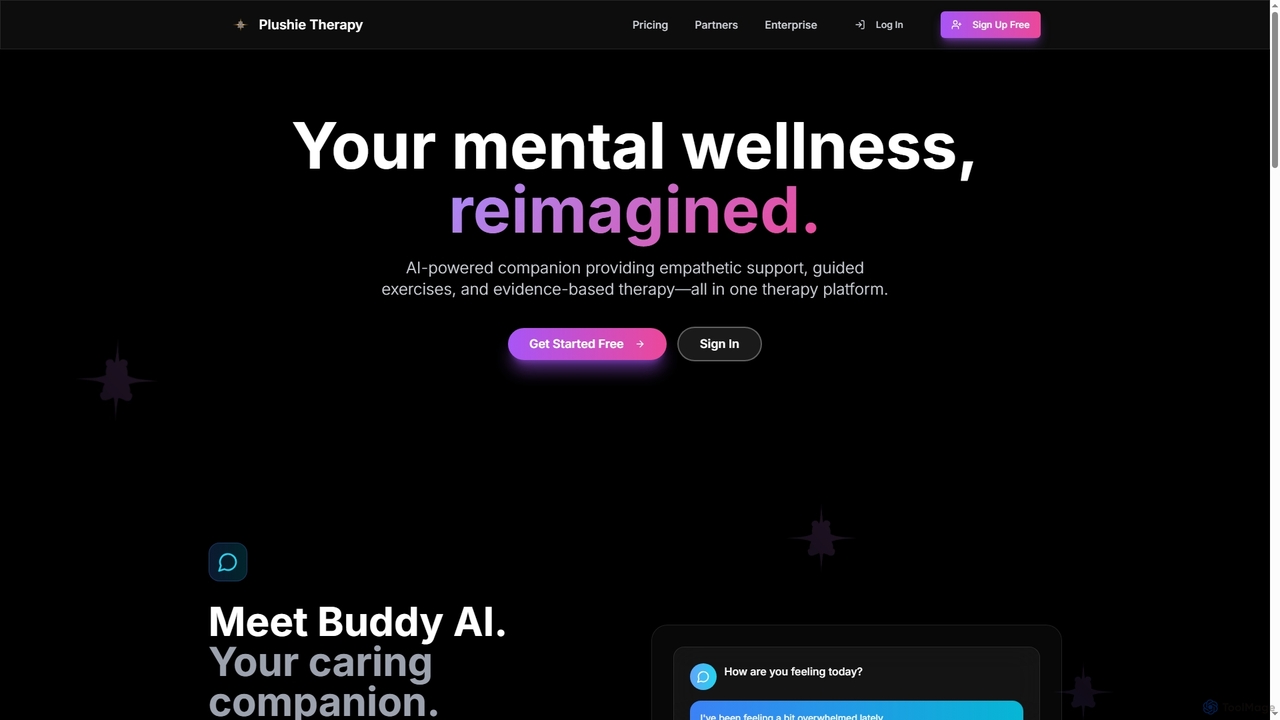
Plushie Therapy
Plushie Therapy is an AI-powered mental wellness platform offering 24/7 empathetic support, guided exercises, and evidence-based therapeutic resources. …
Plushie Therapy is an AI-powered mental wellness platform offering 24/7 empathetic support, guided exercises, and evidence-based therapeutic resources. It helps users track moods, explore feelings, and access tools like journaling and CBT techniques to foster emotional balance and personal growth in a safe, non-judgmental space.
About Therapy Companion
AI Therapy Companions are specialized AI assistants designed to provide empathetic conversation and mental wellness support. These tools utilize advanced Natural Language Processing (NLP) and sentiment analysis to understand user emotions and offer supportive, non-judgmental interactions. They serve as a confidential space for users to track moods, practice coping techniques, and engage in guided exercises based on established therapeutic frameworks like Cognitive Behavioral Therapy (CBT). Unlike general AI assistants, their primary function is to foster emotional well-being and provide accessible, on-demand mental health resources.
Core Features
- Empathetic Conversation: Engages in supportive, understanding dialogue that validates user feelings and concerns.
- Mood & Emotion Tracking: Allows users to log their emotional state over time to identify patterns and triggers.
- Guided Therapeutic Exercises: Offers structured activities such as mindfulness, meditation, and CBT-based journaling.
- Coping Strategy Suggestions: Provides personalized, evidence-based techniques for managing stress, anxiety, and low moods.
- Crisis Support Resources: Offers immediate access to contact information for professional help and crisis hotlines in moments of acute distress.
Use Cases
These tools are primarily used by individuals seeking accessible, private mental wellness support. This includes people managing daily stress, individuals looking to build emotional resilience, or those who need a supplementary tool between professional therapy sessions. For example, a user might engage with an AI Therapy Companion for a daily emotional check-in, to practice a guided breathing exercise before a stressful event, or to work through negative thought patterns using a CBT framework in the evening.
How to Choose
When selecting an AI Therapy Companion, prioritize data privacy and security policies to ensure your conversations remain confidential. Evaluate the quality of the AI's conversational abilities and its basis in evidence-based psychological principles. Consider the range of guided exercises and tools offered, ensuring they align with your personal wellness goals. Finally, check for clear disclaimers about the tool's limitations and easy access to human-led crisis support resources.
Therapy CompanionUse Cases
Daily Emotional Check-in and Journaling
An individual managing daily work stress uses an AI Therapy Companion for 10 minutes each evening. They describe their day's events and feelings, and the AI responds with empathetic prompts, helping them identify specific triggers for their anxiety. The user logs their mood, creating a visual timeline that reveals patterns, such as increased stress on project deadline days. This practice helps them develop self-awareness and feel heard in a private, non-judgmental space, improving their ability to manage stress proactively.
Guided Mindfulness for Anxiety Reduction
A student feeling overwhelmed before an exam opens their AI Therapy Companion to find a guided exercise. They select a 5-minute guided breathing session. The AI provides calm, step-by-step audio and visual instructions, helping the student focus on their breath and ground themselves in the present moment. This quick intervention helps lower their heart rate and reduce feelings of panic, allowing them to approach their exam with a clearer and calmer mind. The accessibility of the tool means they can access support exactly when it's needed most.
Practicing CBT to Reframe Negative Thoughts
A user struggling with self-criticism uses the AI companion to practice Cognitive Behavioral Therapy (CBT) techniques. After a setback at work, they type out their negative thought: "I'm a failure." The AI guides them through a structured exercise to challenge this thought, asking for evidence for and against it and helping them formulate a more balanced, alternative thought, such as "I made a mistake, but it's a learning opportunity." This process, repeated over time, helps the user build a skill in identifying and reframing cognitive distortions, leading to improved self-esteem.
Coping with Loneliness through Conversation
An elderly individual living alone uses an AI Therapy Companion to combat feelings of loneliness. They engage in daily conversations about their interests, memories, and current events. The AI's ability to remember past conversations and ask follow-up questions creates a sense of continuity and being known. While not a replacement for human connection, the AI provides a consistent, available, and non-judgmental conversational partner, which helps alleviate feelings of isolation and provides a source of regular mental stimulation.
Supplementing Professional Therapy Sessions
A patient in weekly therapy uses an AI companion as a supplementary tool. Between sessions, they use the AI to practice the skills their therapist recommended, such as journaling about emotional triggers or completing thought records. When they feel an urge to contact their therapist for a minor issue, they first talk it through with the AI. This helps them build self-reliance and allows them to bring more structured insights and specific questions to their next human therapy session, making their professional treatment more effective.
Accessing Immediate Grounding Techniques
During a moment of sudden, high anxiety at a public place, a user discreetly opens their AI Therapy Companion on their phone. They navigate to the 'SOS' or 'Grounding' section and select a simple sensory exercise, like the '5-4-3-2-1' technique. The app guides them to identify five things they can see, four things they can touch, and so on. This structured task shifts their focus from internal panic to external surroundings, helping to de-escalate the anxiety attack. The immediate and private availability of this tool provides a crucial lifeline for managing acute symptoms in real-time.