Meetings Best in category 1 results Collaboration AI Tool

Popular AI tools in the Collaboration field of Meetings include Vocol.ai, etc., helping you quickly improve efficiency.

Vocol.ai

Vocol.ai

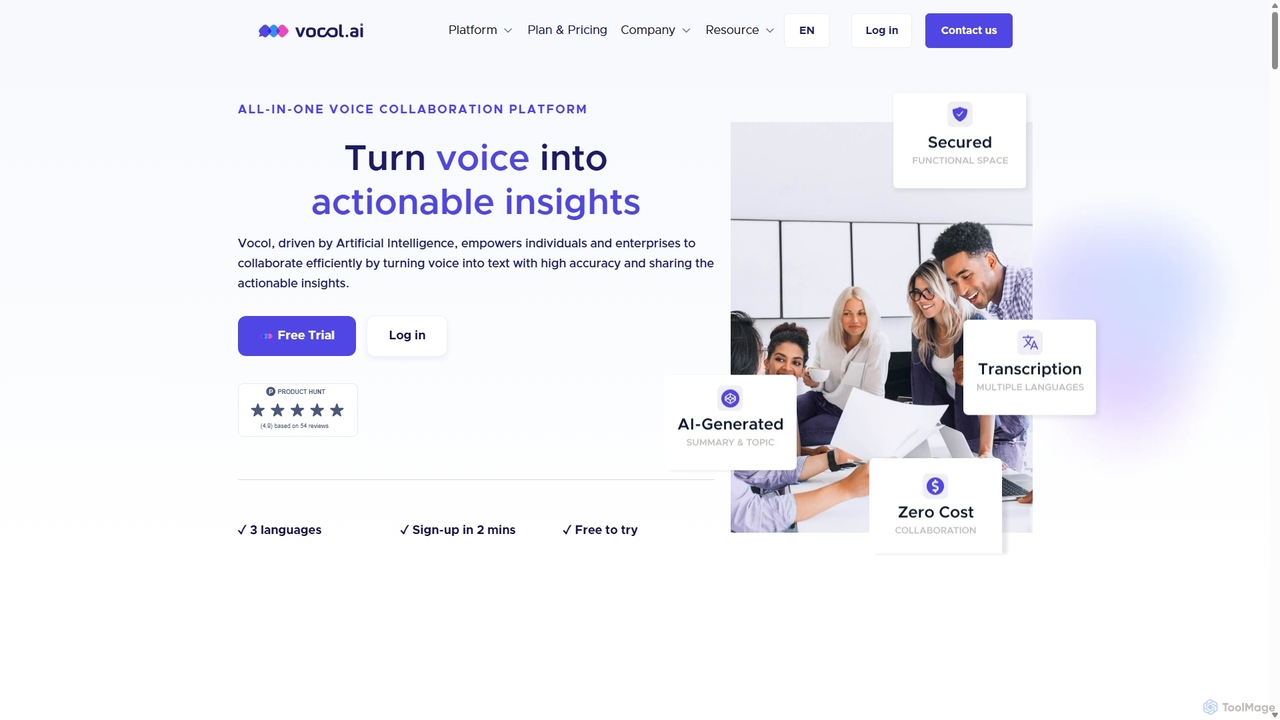
Vocol.ai is an all-in-one AI voice collaboration platform that transforms spoken conversations into actionable insights. It provides high-accuracy, …

20.0K

About Collaboration

AI Collaboration tools are designed to enhance team productivity and communication by leveraging artificial intelligence. These tools often integrate advanced natural language processing, machine learning, and automation to streamline workflows and facilitate seamless interaction. They empower teams to work more efficiently, especially in remote or hybrid settings, by automating routine tasks and providing intelligent insights. Within the broader context of meetings, they transform passive participation into active engagement, ensuring every interaction is productive.

Core Features

  • Intelligent Note-taking & Summarization: Automatically transcribes discussions, identifies key decisions, and generates concise summaries.
  • Real-time Translation & Transcription: Breaks down language barriers in global teams with instant voice and text translation.
  • Smart Task Assignment & Follow-up: Identifies action items from conversations and assigns them to team members with deadlines.
  • Sentiment Analysis & Engagement Monitoring: Provides insights into team mood and participation levels during discussions.
  • Automated Agenda Generation: Suggests relevant topics and structures for meetings based on past discussions and project goals.

Applicable Scenarios

These tools are invaluable for distributed teams, cross-functional projects, and international organizations. They facilitate more effective brainstorming sessions by capturing every idea, ensure project alignment by tracking decisions, and improve cross-cultural communication in global virtual meetings.

How to Choose

When selecting AI collaboration tools, consider their integration capabilities with your existing platforms (e.g., calendars, project management software), the accuracy and language support of their AI models, data security protocols, and the extent of real-time features. Evaluate the user interface for ease of adoption and scalability to fit your team's growth.

CollaborationUse Cases

1

Streamlining Cross-Continental Project Meetings

For global project managers, AI collaboration tools automatically transcribe multi-language discussions, translate in real-time, and summarize key decisions. This ensures all team members, regardless of location or native language, are fully aligned, reducing misunderstandings and accelerating project timelines by eliminating manual translation and note-taking efforts.

2

Enhancing Brainstorming Sessions with AI Insights

Marketing teams use AI collaboration platforms to capture every idea during brainstorming. The AI can then analyze these ideas, identify emerging themes, and even suggest related concepts or potential pitfalls based on historical data. This transforms raw ideas into structured insights, fostering more innovative solutions and saving hours of manual synthesis.

3

Automating Meeting Minutes and Action Item Tracking

Team leads leverage AI tools to automatically generate detailed meeting minutes, including speaker identification, discussion points, and identified action items. The AI then assigns these tasks to relevant team members and sets reminders, ensuring accountability and follow-through. This frees up significant administrative time, allowing leaders to focus on strategic discussions.

4

Facilitating Onboarding for Remote New Hires

HR departments utilize AI collaboration tools to create interactive onboarding experiences for remote employees. The AI can guide new hires through company policies, answer common questions instantly, and connect them with relevant team members or resources. This personalized, always-available support accelerates integration and ensures new hires feel connected and informed from day one.

5

Improving Client Communication and Feedback Loops

Consulting firms employ AI collaboration platforms to manage client interactions. The AI can analyze client feedback from various channels, summarize sentiment, and highlight critical issues or requests. This enables consultants to respond proactively and tailor their services, strengthening client relationships and ensuring all feedback is systematically addressed.

6

Optimizing Distributed Team Stand-ups and Updates

Software development teams with members across different time zones use AI collaboration tools for asynchronous stand-ups. Team members record their updates, and the AI transcribes, summarizes, and flags any blockers or dependencies. This ensures everyone stays informed without needing to coordinate complex meeting schedules, maintaining project velocity and transparency.

CollaborationFrequently Asked Questions