Vitality
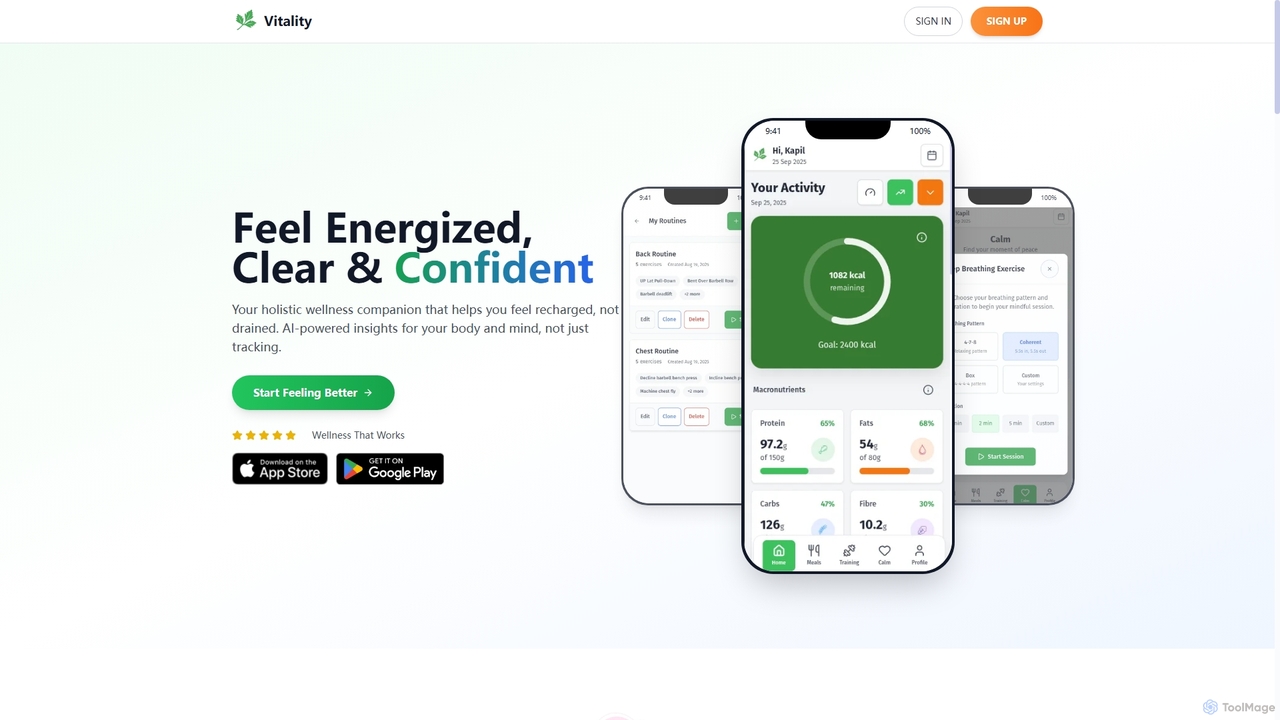
Vitality is an AI-powered holistic wellness companion designed to help users feel energized, clear, and confident. It moves …
Vitality is an AI-powered holistic wellness companion designed to help users feel energized, clear, and confident. It moves beyond simple tracking by providing personalized insights into nutrition, movement, and mindfulness, fostering sustainable habits without guilt or burnout. Users can easily log meals via photo, track workouts, and monitor various wellness metrics to achieve their health goals.
About Mindfulness
Mindfulness AI tools are AI-powered applications and platforms designed to support and enhance an individual's mindfulness practice. These tools leverage artificial intelligence to personalize meditation experiences, track progress, and provide guided exercises, helping users cultivate present-moment awareness, reduce stress, and improve overall mental well-being. By adapting to individual needs and offering data-driven insights, they make mindfulness more accessible and effective for a diverse range of users.
Core Features
- Personalized Meditation Paths: AI algorithms adapt meditation sessions based on user mood, goals, and progress, ensuring a tailored experience.
- Real-time Biofeedback Integration: Connects with wearables to provide live data on heart rate, breath patterns, or brain activity, offering immediate insights during practice.
- Guided Exercises & Soundscapes: Offers an extensive library of guided meditations, breathing techniques, and ambient soundscapes for relaxation and focus.
- Mood Tracking & Journaling: AI analyzes user inputs from mood logs and journal entries to identify emotional patterns and suggest relevant mindfulness practices.
- Stress & Anxiety Reduction Programs: Provides structured, AI-curated programs specifically designed to help users manage and alleviate symptoms of stress and anxiety.
Use Cases
Mindfulness AI tools are utilized across various personal and professional settings. Individuals seeking to manage daily stressors often use them for short, guided meditation breaks during work or before sleep. Professionals leverage these tools to enhance focus and concentration during demanding tasks, while students might use them to reduce test anxiety and improve academic performance. They also serve as a valuable resource for anyone looking to cultivate greater emotional regulation and overall mental resilience.
How to Choose
When selecting a Mindfulness AI tool, consider the level of personalization offered; a good tool should adapt to your specific needs and progress. Evaluate the quality and breadth of its content library, including guided meditations, soundscapes, and exercises. Check for integration capabilities with wearables or other health apps if you desire biofeedback. User interface and ease of use are crucial for consistent engagement. Finally, assess the privacy policy regarding personal health data and compare the cost and subscription models to ensure it aligns with your budget and requirements.
MindfulnessUse Cases
Daily Stress Reduction for Professionals
Busy professionals often face high-stress environments. Mindfulness AI tools offer short, guided meditation sessions or breathing exercises that can be integrated into a workday. By dedicating 5-10 minutes during breaks, users can quickly recenter, reduce cortisol levels, and improve their ability to handle workplace pressures, leading to enhanced productivity and emotional resilience.
Managing Daily Stress and Overwhelm
Individuals in demanding jobs utilize mindfulness AI tools to integrate short, guided meditation breaks throughout their workday. By engaging in 5-10 minute sessions, they can effectively reduce accumulated stress, clear their minds, and prevent burnout, leading to improved emotional balance and sustained productivity.
Improving Sleep Quality and Insomnia Management
Individuals struggling with sleep often find their minds racing at night. Mindfulness AI tools provide specialized sleep meditations, calming soundscapes, and body scan exercises designed to relax the nervous system. Users can follow these programs before bedtime to quiet their thoughts, ease into a state of rest, and improve the duration and quality of their sleep without relying on medication.
Enhancing Focus and Cognitive Performance
Students and professionals employ AI-powered mindfulness exercises to sharpen their concentration before study sessions or complex tasks. These tools provide targeted focus meditations that train the mind to stay present, minimizing distractions and significantly boosting cognitive performance and learning retention.
Enhancing Focus and Concentration for Students
Students often struggle with distractions and maintaining focus during study sessions. Mindfulness AI tools offer short focus-enhancing meditations and exercises that train the mind to stay present. By practicing these techniques, students can improve their attention span, reduce mind-wandering, and enhance their ability to absorb and retain information, leading to better academic performance.
Improving Sleep Quality and Relaxation
Users struggling with insomnia or restless nights turn to mindfulness AI tools for pre-sleep routines. The AI curates calming soundscapes, guided body scans, or sleep stories that promote deep relaxation, helping individuals fall asleep faster and achieve more restorative sleep without medication.
Emotional Regulation and Resilience Building
Managing strong emotions like anger, sadness, or anxiety can be challenging. Mindfulness AI tools provide exercises rooted in cognitive behavioral therapy (CBT) and emotional intelligence, helping users identify, understand, and respond to their emotions constructively. Regular practice builds emotional resilience, enabling individuals to navigate life's ups and downs with greater equanimity and self-awareness.
Cultivating Emotional Regulation and Resilience
Individuals seeking to better understand and manage their emotions use AI tools that offer guided emotional awareness practices and journaling prompts. The AI helps identify emotional triggers and patterns, providing strategies to respond thoughtfully rather than reactively, thereby building greater emotional resilience.
Personalized Well-being Coaching and Progress Tracking
Users looking for a structured approach to mental well-being can leverage Mindfulness AI tools for personalized coaching. Based on mood logs, biometric data, and stated goals, the AI can suggest specific practices, track progress over time, and offer insights into patterns of stress or calm. This data-driven approach helps users understand their mental landscape better and tailor their journey towards improved well-being.
Supporting Workplace Well-being Programs
Organizations integrate mindfulness AI platforms into their employee wellness initiatives. Employees access personalized stress reduction programs and short mindfulness exercises during breaks, leading to a healthier work environment, reduced absenteeism, and improved overall job satisfaction and mental health.
Support for Chronic Pain Management
Individuals living with chronic pain can use Mindfulness AI tools to shift their relationship with discomfort. These tools offer specific meditations focused on body awareness, acceptance, and distraction techniques, helping users manage pain perception. By regularly practicing mindfulness, users can reduce the emotional distress associated with chronic pain, improve coping mechanisms, and enhance their overall quality of life.
Personalized Meditation for Specific Goals
Users with specific personal development goals, such as increasing compassion, gratitude, or self-awareness, leverage AI tools that tailor meditation paths. The AI tracks progress and adjusts exercises to align with these objectives, providing a structured and effective journey towards personal growth.