Titania
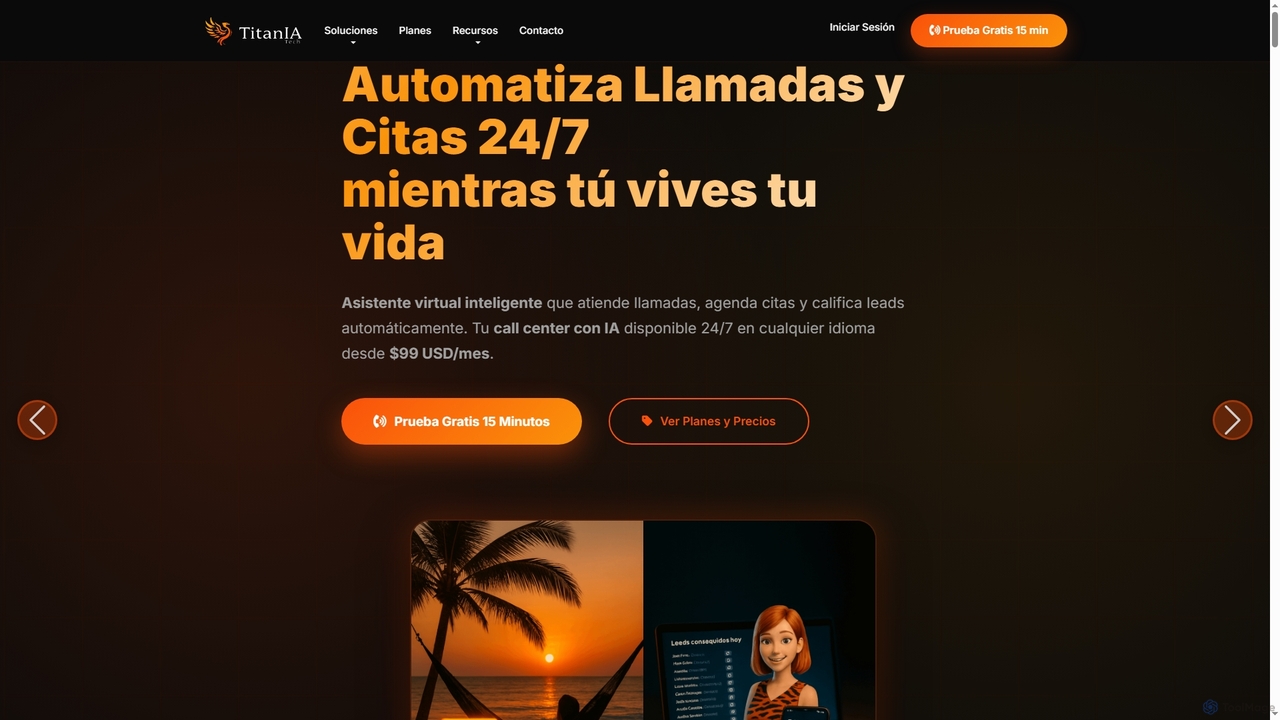
Titania is an AI-powered virtual receptionist and operator platform designed to automate customer service, sales, and operational tasks …
Titania is an AI-powered virtual receptionist and operator platform designed to automate customer service, sales, and operational tasks 24/7. It offers specialized solutions across various industries, enhancing efficiency, customer satisfaction, and business growth through intelligent call management and personalized interactions.
About Multilingual Communication
Multilingual Communication tools are AI-powered solutions designed to break down language barriers and facilitate seamless interaction across diverse linguistic backgrounds. They leverage advanced natural language processing (NLP), machine translation, and speech recognition technologies to enable real-time translation, interpretation, and content generation. These tools are crucial for global businesses, international teams, and individuals seeking to communicate effectively in a world without linguistic borders, enhancing understanding and collaboration.
Core Features
- Machine Translation: Instantly translates text, documents, and web pages between multiple languages with high accuracy.
- Real-time Interpretation: Provides live voice or text translation during conversations, meetings, and video calls.
- Multilingual Content Generation: Assists in creating original content directly in various languages or localizing existing content.
- Speech-to-Text & Text-to-Speech: Converts spoken language into written text and vice versa, supporting multiple languages.
- Cross-lingual Search: Enables users to search for information across documents and databases in different languages.
Applicable Scenarios
These tools are indispensable for global enterprises conducting international business meetings, where real-time interpretation ensures all participants are on the same page. They are also vital for customer support centers handling inquiries from a diverse global clientele, enabling agents to communicate effectively in customers' native languages. Furthermore, content creators and marketing teams utilize them for efficient localization of websites, marketing campaigns, and product documentation to reach broader international audiences.
How to Choose
When selecting a Multilingual Communication tool, prioritize its translation accuracy and fluency across your required languages, as this directly impacts communication quality. Evaluate its real-time performance for live interactions and its ability to handle complex linguistic nuances. Consider supported language variety and the tool's integration capabilities with existing platforms like CRM, communication apps, or content management systems. Finally, assess its security protocols, especially for sensitive business communications, and its scalability to meet future demands.
Multilingual CommunicationUse Cases
Facilitating Real-time Multilingual Business Meetings
For international teams and global enterprises, AI-powered multilingual communication tools provide instant translation of spoken words and chat messages during virtual or in-person meetings. This ensures all participants, regardless of their native language, can fully understand discussions, contribute effectively, and make informed decisions. It significantly improves meeting efficiency and fosters inclusive collaboration across diverse linguistic backgrounds.
Enhancing Multilingual Customer Support Operations
Customer service teams leverage these tools to seamlessly translate incoming customer queries from various languages and generate accurate responses in the customer's native tongue. This capability drastically reduces response times, improves customer satisfaction by providing support in their preferred language, and allows businesses to scale their global customer base without needing a large, multilingual support staff.
Efficient Localization of Marketing Content and Websites
Marketing professionals and content creators utilize AI multilingual tools to rapidly translate and adapt website content, marketing campaigns, product descriptions, and social media posts for different linguistic markets. This ensures cultural relevance and broadens audience reach, significantly cutting down on the time and cost associated with manual localization efforts, accelerating global market entry.
Streamlining Cross-border E-commerce Communication
E-commerce businesses operating internationally use these tools to translate product listings, customer reviews, and buyer-seller messages in real-time. This overcomes language barriers in international transactions, builds trust with global customers by enabling clear communication, and expands market opportunities by making products and services accessible and understandable to a wider, diverse audience.
Supporting Multilingual Academic Research and Collaboration
Researchers and academics employ AI multilingual tools to translate scientific papers, articles, and research data from various languages, facilitating access to a vast global knowledge base. It also enables seamless collaboration with international peers on joint projects, presentations, and publications, accelerating scientific discovery, fostering interdisciplinary exchange, and promoting global knowledge sharing.
Providing Instant Language Support for Travelers
Travelers and tourism professionals benefit from these tools for on-the-go translation of conversations, signs, menus, and local information. This significantly enhances the travel experience by removing language barriers in foreign countries, making interactions with locals easier, ensuring safety, and providing convenience for international visitors exploring new cultures and destinations.