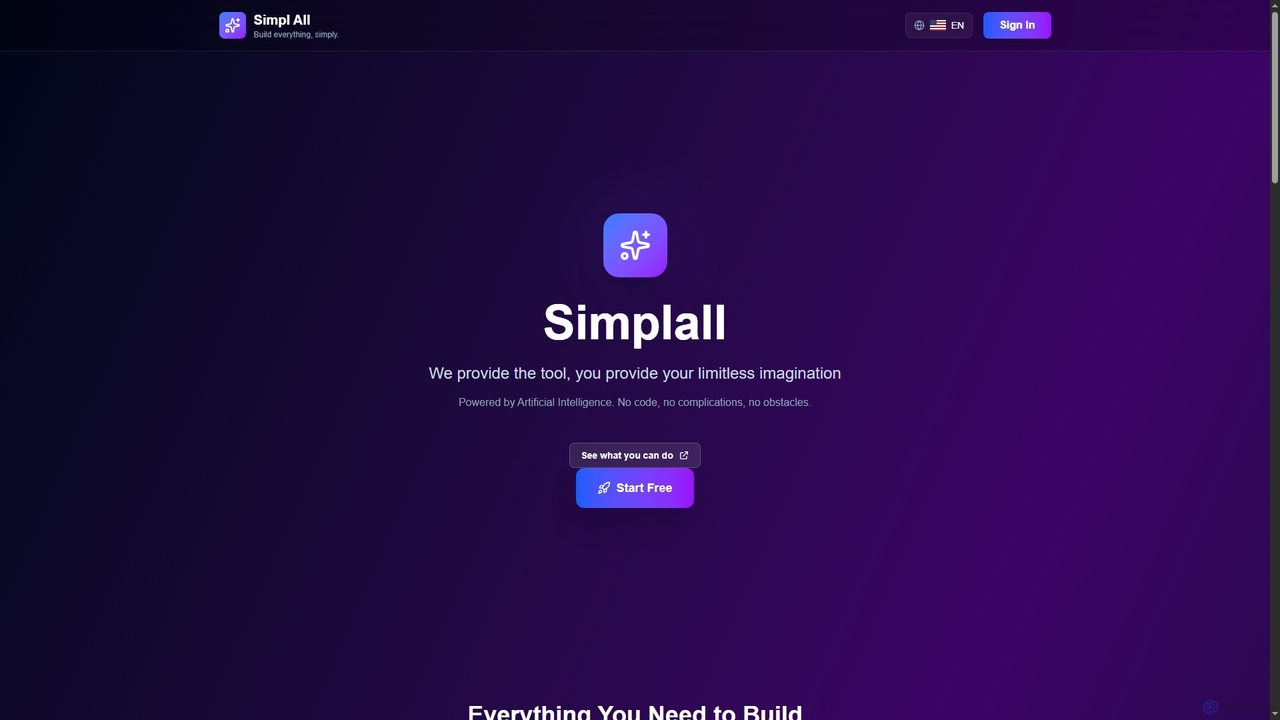
Simplall
Simplall is an AI-powered code generator that transforms natural language descriptions into functional web applications. It enables users, …
Simplall is an AI-powered code generator that transforms natural language descriptions into functional web applications. It enables users, regardless of coding experience, to instantly create professional React apps, HTML websites, and interactive dashboards with live previews, clean code, and easy modification capabilities.
About Web Application Builder
A Web Application Builder is a type of no-code tool that enables users to create functional web applications without writing traditional code. These platforms typically feature visual drag-and-drop interfaces, pre-built components, and intuitive workflows. They empower individuals and businesses to rapidly prototype, develop, and deploy custom web solutions, from internal dashboards to customer-facing portals, significantly reducing development time and costs.
Core Features
- Visual Editor: Drag-and-drop interface for designing UI/UX without coding.
- Database Integration: Connect to internal or external databases to manage and display data.
- User Authentication: Implement secure login, user roles, and access control.
- API Connectivity: Integrate with third-party services and external APIs.
- Deployment & Hosting: Built-in options for publishing and hosting the web application.
Use Cases
Web Application Builders are ideal for creating custom internal tools like CRM systems, project management dashboards, or inventory trackers. They also excel in developing customer-facing applications such as online booking systems, event registration pages, or simple e-commerce storefronts, allowing rapid iteration and deployment for various business needs.
How to Choose
When selecting a Web Application Builder, consider its scalability for future growth, the range of pre-built components and customization options, integration capabilities with existing systems, and the pricing model. Evaluate the learning curve and community support, as well as the platform's security features and data handling policies to ensure it meets your specific requirements.
Web Application BuilderUse Cases
Building Internal Dashboards & Tools
For operations managers or team leads who need to visualize key performance indicators (KPIs) or manage internal workflows. A Web Application Builder allows them to quickly create custom dashboards, data entry forms, or approval systems without relying on IT, streamlining internal processes and improving data accessibility.
Creating Customer Portals
Businesses aiming to offer self-service options to their clients can use these builders to develop secure customer portals. Clients can log in to view order history, manage subscriptions, access support resources, or update their profiles, enhancing customer experience and reducing support load.
Developing Event Registration & Booking Sites
Event organizers or service providers can rapidly build custom registration pages for workshops, webinars, or appointment booking systems. These tools handle user input, payment integration, and confirmation emails, simplifying event management and attendee enrollment.
Launching Minimum Viable Products (MVPs)
Startup founders or product managers can leverage Web Application Builders to quickly develop and test an MVP. This allows them to validate business ideas, gather early user feedback, and iterate on features with minimal upfront investment in development resources, accelerating market entry.
Automating Data Collection Forms & Surveys
Researchers or marketing teams often need to collect specific data from users or customers. Web Application Builders enable them to create sophisticated forms with conditional logic, file uploads, and direct database storage, automating data collection and analysis processes efficiently.
Building Simple E-commerce Frontends
Small businesses or individual sellers can design and deploy custom online storefronts to showcase products and accept payments. While not full-fledged e-commerce platforms, they offer enough flexibility to create unique shopping experiences for niche markets or specific product lines.