
ToolMage
Sign in

Best 1 Advocacy AI tools for Non Profit

Popular Advocacy AI tools in Non Profit include AI for Good Foundation, helping you work more efficiently.

AI for Good Foundation
Free

AI for Good Foundation

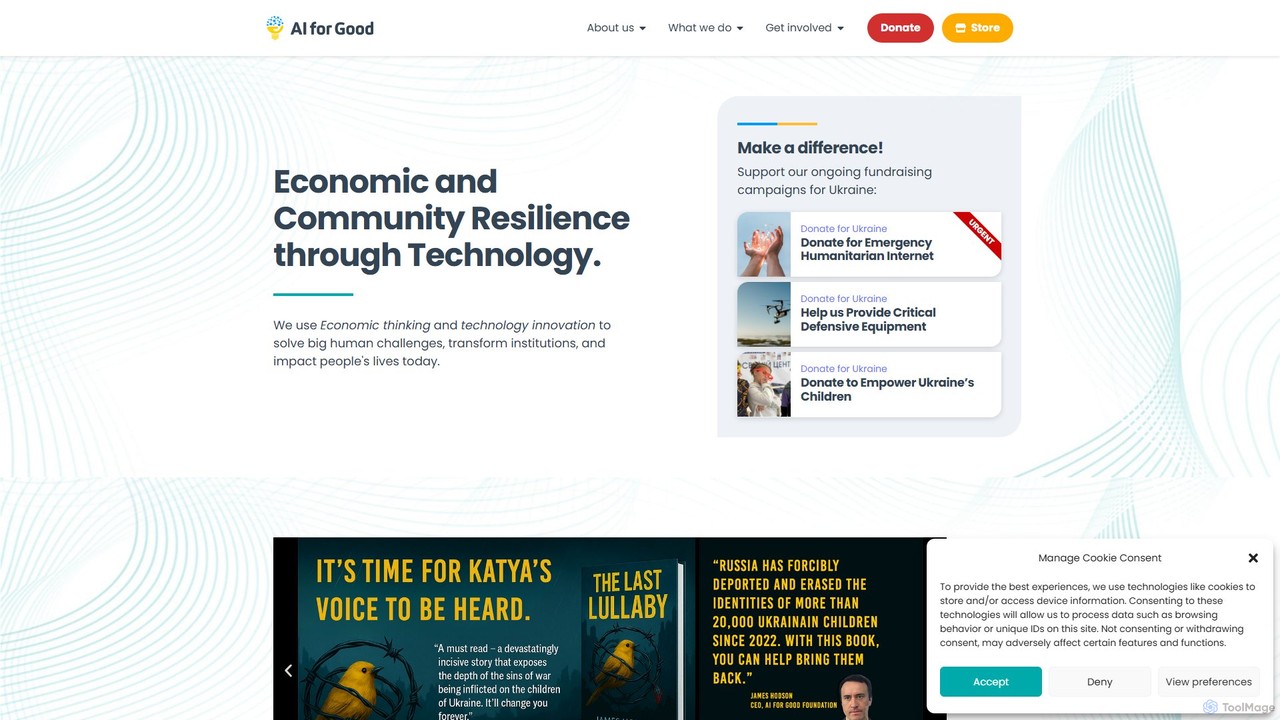
AI for Good Foundation is a global non-profit organization that harnesses the power of artificial intelligence and data science to address pressing humanitarian issues and advance the UN's Sustainable Development Goals. It develops technology, provides open data, and fosters a network of experts to create tangible social impact.

Open Data Platforms
Visits 26.4KFavorites 126Likes 125

About Advocacy

AI Advocacy tools are a specialized class of software designed to enhance the campaigns of non-profit organizations and activist groups. They leverage artificial intelligence to automate communication, analyze supporter data, and track legislative activities, amplifying the impact of a cause. These platforms enable organizations to mobilize supporters more effectively, personalize outreach to lawmakers, and measure campaign performance with data-driven insights. Unlike general marketing tools, they offer specific functionalities for political engagement and social change initiatives.

Core Features

  • Supporter Segmentation: Automatically groups supporters based on their engagement history, location, and interests for highly targeted messaging.
  • Automated Communication Workflows: Creates and deploys multi-channel outreach campaigns (email, SMS) to lawmakers and supporters.
  • Legislative Tracking: Monitors bills, voting records, and government policies relevant to the organization's mission, providing real-time alerts.
  • Digital Petition Management: Facilitates the creation, distribution, and signature tracking of online petitions to demonstrate public support.
  • Performance Analytics: Provides dashboards to measure key metrics like supporter actions, message delivery rates, and overall campaign influence.

Use Cases

These tools are primarily used by campaign managers, policy analysts, and digital organizers within non-profits, NGOs, and grassroots movements. They are crucial for environmental protection campaigns seeking to influence policy, social justice organizations mobilizing communities for reform, and public health initiatives advocating for new legislation. The goal is to streamline advocacy efforts and maximize their political and social impact.

How to Choose

When selecting an AI Advocacy tool, consider its integration capabilities with your existing CRM or donor database. Evaluate the sophistication of its supporter segmentation and automation features. Assess its legislative tracking accuracy and coverage. Also, consider the platform's scalability to support campaigns of varying sizes and its compliance with communication regulations in your region.

Advocacy use cases

1

Automating 'Call Your Representative' Campaigns

A social justice organization launches a campaign to pass a new civil rights bill. Using an AI Advocacy tool, the campaign manager sets up a workflow that targets supporters in key legislative districts. When a supporter visits the campaign page, the tool automatically identifies their local representative and provides a pre-written script and a one-click button to call the representative's office. The AI tracks how many calls are made, which districts are most active, and provides real-time data to the campaign team, allowing them to focus follow-up efforts effectively and demonstrate constituent pressure to lawmakers.

2

Targeted Mobilization for Environmental Petitions

An environmental NGO wants to gather signatures for a petition to protect a local watershed. The AI Advocacy tool analyzes their supporter database, identifying individuals who have previously engaged with water conservation content or signed similar petitions. It then launches a targeted email and social media campaign directed only at this high-potential segment. The personalized messaging highlights the local impact, leading to a significantly higher conversion rate for signatures compared to a generic mass email. The tool's dashboard visualizes signature growth by geographic area, helping the NGO plan local media outreach.

3

Real-Time Legislative Threat Monitoring

A public health non-profit advocates for stricter pollution controls. Their policy analyst uses an AI Advocacy tool to monitor legislative databases across multiple jurisdictions. The AI is trained to flag any new bills, amendments, or regulatory proposals containing keywords like 'emission standards' or 'industrial waste'. When a potentially harmful bill is introduced, the system sends an instant alert to the analyst. This allows the organization to rapidly mobilize a counter-campaign, inform their supporters, and engage with lawmakers before the legislation gains momentum, turning a reactive process into a proactive one.

4

Personalizing Outreach to Key Lawmakers

A non-profit focused on education reform needs to persuade a specific committee of legislators. The AI tool analyzes the public record of each committee member, including voting history, sponsored bills, and public statements. Based on this data, it helps the advocacy team craft personalized email templates for their supporters to send. For a lawmaker who often speaks about fiscal responsibility, the email emphasizes the long-term economic benefits of the reform. For another who champions local control, it highlights how the bill empowers local districts. This tailored approach significantly increases the likelihood of the message resonating with each specific lawmaker.

5

Analyzing Social Media Sentiment on a Policy Issue

A grassroots movement is advocating for renewable energy policies. They use an AI tool to monitor conversations on social media platforms related to their cause. The tool analyzes sentiment to gauge public opinion, identifies key influencers and vocal opponents, and tracks the spread of misinformation. The digital organizer uses these insights to craft counter-messaging, engage with supportive influencers to amplify their message, and report misleading content. This allows the movement to stay ahead of the public narrative and adapt its communication strategy in real-time based on the evolving online discourse.

6

Optimizing Grassroots Volunteer Onboarding

An animal welfare organization relies on a large network of volunteers for its advocacy efforts. To streamline onboarding, they use an AI-powered system. When a new volunteer signs up, an AI chatbot engages them, asks about their interests (e.g., phone banking, event organizing, social media), and automatically adds them to the relevant communication channels and training workflows. The system then sends automated, personalized follow-up messages to keep new volunteers engaged. This reduces the administrative burden on staff, ensures a consistent onboarding experience, and helps new activists become effective advocates more quickly.

Advocacy FAQ

What are AI Advocacy tools?

AI Advocacy tools are specialized software platforms designed for non-profits and campaign organizations to enhance their public influence and policy change efforts. They use artificial intelligence to automate tasks like communicating with supporters and lawmakers, segmenting audiences for targeted messaging, and analyzing campaign data. Key functions include legislative tracking, petition management, and automated outreach, all aimed at making advocacy more efficient and impactful.

How do AI Advocacy tools differ from standard marketing automation tools?

While both tool types automate communication, AI Advocacy tools have specialized features for political and social campaigns that marketing tools lack. Key differences include:

  • Legislative Databases: Advocacy tools often integrate with government databases to track bills and lawmaker voting records.
  • Targeted Actions: They are built to drive specific civic actions, like contacting a representative or signing a petition, not just making a sale.
  • Compliance: They are designed to handle the specific compliance and reporting requirements related to political communication and lobbying.
  • Supporter Focus: The analytics focus on engagement and influence metrics rather than sales funnels and revenue.

What are the key features to look for in an AI Advocacy tool?

When choosing an AI Advocacy tool, prioritize features that align with your campaign goals. Look for:

  • Robust Segmentation: The ability to create detailed supporter segments based on actions, demographics, and location.
  • Multi-Channel Automation: Tools to automate outreach across email, SMS, and social media.
  • Accurate Legislative Tracking: Real-time monitoring of relevant bills and lawmaker activity.
  • Strong Analytics: Clear dashboards to track key performance indicators (KPIs) like actions taken, supporter growth, and campaign reach.
  • CRM Integration: Seamless connection with your existing supporter or donor management system.

Who typically uses AI Advocacy tools?

AI Advocacy tools are used by a range of professionals within the non-profit and political sectors. Common users include:

  • Campaign Managers: To orchestrate and monitor the overall strategy and performance of advocacy campaigns.
  • Digital Organizers: To mobilize supporters online, manage social media, and run digital ad campaigns.
  • Policy Analysts: To track legislation and gather data to support their organization's positions.
  • Communications Staff: To draft and distribute targeted messages to supporters, the media, and lawmakers.
These tools are essential for any organization aiming to influence public opinion and policy in a data-driven way.

How can AI help in a grassroots advocacy campaign?

AI significantly scales the impact of grassroots campaigns, which often have limited resources. It helps by:

  • Identifying Potential Advocates: AI can analyze data to find individuals in a community who are most likely to become active supporters.
  • Automating Onboarding: AI chatbots can welcome new volunteers, answer their questions, and direct them to appropriate tasks, saving staff time.
  • Personalizing at Scale: It allows a small team to send thousands of personalized messages that feel more direct and are more likely to inspire action.
  • Measuring Collective Impact: AI tools can aggregate thousands of individual actions (like calls and emails) into clear data points, demonstrating the power of the collective voice to decision-makers.