
ToolMage
Sign in

Best 1 Diet Planning AI tools for Nutrition

Popular Diet Planning AI tools in Nutrition include Vitality, helping you work more efficiently.

Vitality
Freemium

Vitality

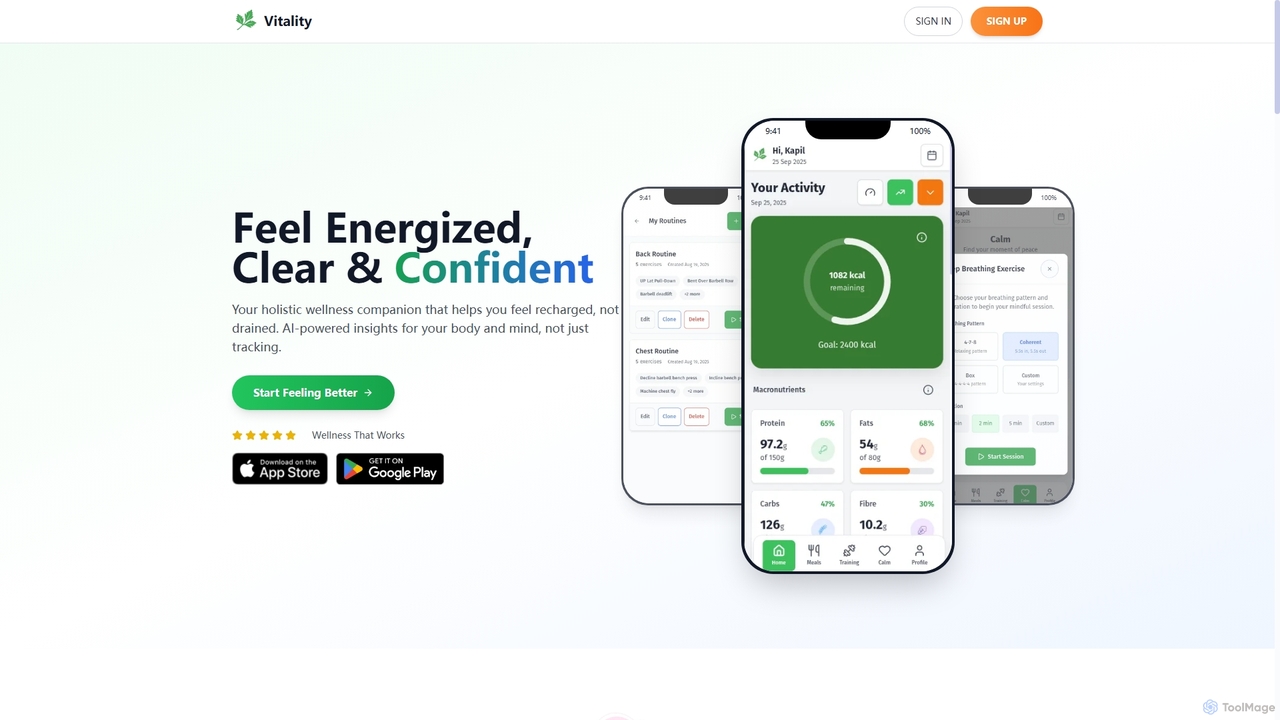
Vitality is an AI-powered holistic wellness companion designed to help users feel energized, clear, and confident. It moves beyond simple tracking by providing personalized insights into nutrition, movement, and mindfulness, fostering sustainable habits without guilt or burnout. Users can easily log meals via photo, track workouts, and monitor various wellness metrics to achieve their health goals.

Workout Tracking
Visits 6.1KFavorites 110Likes 125

About Diet Planning

AI Diet Planning tools are applications that leverage artificial intelligence to create, manage, and optimize personalized meal plans. These tools analyze individual dietary needs, health goals, and food preferences to generate tailored nutritional guidance. They help users streamline healthy eating, support weight management, and address specific dietary restrictions, ultimately improving overall nutritional intake.

Core Features

  • Personalized Meal Generation: AI creates customized meal plans based on user profiles, health goals, and dietary restrictions.
  • Nutritional Tracking & Analysis: Monitor calorie intake, macronutrients, and micronutrients, providing detailed dietary insights.
  • Recipe Recommendation: Suggests healthy recipes aligned with the diet plan, preferences, and available ingredients.
  • Grocery List Automation: Automatically generates shopping lists from planned meals, simplifying grocery trips.
  • Dietary Restriction Management: Accommodates allergies, intolerances, and specific diets like vegan, keto, or gluten-free.

Applicable Scenarios

AI diet planning tools are invaluable for individuals seeking structured nutritional support. They are widely used by those aiming for weight management, athletes optimizing performance, and people managing specific health conditions like diabetes or food allergies. Busy professionals and families also benefit from simplified meal preparation and healthy eating routines.

How to Choose

When selecting an AI diet planning tool, consider its personalization depth and ability to adapt to your unique needs and preferences. Evaluate the accuracy and breadth of its food and recipe database, as well as its integration capabilities with fitness trackers or health apps. User-friendliness and the range of dietary support it offers are also crucial factors for an effective choice.

Diet Planning use cases

1

Personalized Weight Management Plans

Individuals aiming for weight loss or gain can utilize AI diet planning tools to generate daily meal plans with precise calorie and macronutrient targets. The AI dynamically adjusts these plans based on user progress and feedback, ensuring a sustainable and effective path towards their goals. This eliminates guesswork and provides structured nutritional support.

2

Athlete Performance Nutrition

Athletes and fitness enthusiasts leverage AI diet planning tools to create highly optimized nutrition plans tailored for specific training cycles, recovery periods, and competition phases. These tools ensure adequate energy, protein, and micronutrient intake, helping to maximize performance, accelerate recovery, and prevent deficiencies, all based on their activity levels and goals.

3

Managing Chronic Health Conditions

Individuals with chronic health conditions like diabetes, heart disease, or specific food allergies can use AI diet planning tools to design diets that strictly adhere to medical guidelines. The AI monitors specific nutrient levels, carbohydrate counts, or allergen avoidance, providing safe and effective meal suggestions that support their health management without constant manual tracking.

4

Family Meal Planning with Diverse Needs

Parents and caregivers can utilize AI diet planning tools to plan meals that cater to different family members' preferences, allergies, or dietary restrictions while maintaining overall health. The AI can generate a single meal plan with variations for each individual, simplifying grocery shopping and meal preparation for households with diverse nutritional requirements.

5

Streamlining Healthy Meal Prep

Busy professionals and individuals with limited time can leverage AI diet planning tools to generate weekly meal plans and corresponding grocery lists. This automation simplifies the entire process from planning to shopping and cooking, ensuring consistent healthy eating without the extensive manual effort typically required for meal preparation, saving significant time.

6

Exploring New Dietary Lifestyles

Users interested in adopting new dietary lifestyles, such as vegan, keto, or paleo diets, can use AI diet planning tools to discover suitable recipes and build compliant meal plans. The AI helps ensure nutritional balance within the chosen framework, providing guidance on food substitutions and nutrient intake, making the transition smoother and more sustainable.

Diet Planning FAQ

What are AI Diet Planning tools?

AI Diet Planning tools are software applications that use artificial intelligence algorithms to help individuals create, manage, and optimize their dietary intake. They analyze user data such as health goals, dietary preferences, and physical activity levels to generate personalized meal plans and nutritional recommendations. These tools aim to simplify healthy eating, support specific health objectives, and provide data-driven insights into one's diet.

How do AI Diet Planning tools personalize meal plans?

AI Diet Planning tools personalize meal plans by first collecting comprehensive user data, including age, weight, height, activity level, health goals (e.g., weight loss, muscle gain), dietary preferences (e.g., vegan, keto), allergies, and food dislikes. Using advanced algorithms, the AI processes this information to generate a meal plan that meets specific caloric and macronutrient targets while incorporating preferred foods and avoiding restrictions. Many tools also adapt plans based on real-time tracking and user feedback.

What are the benefits of using AI for diet planning compared to traditional methods?

Using AI for diet planning offers several advantages over traditional methods. AI tools provide highly personalized plans that adapt to individual needs and progress, unlike generic diet templates. They offer instant nutritional analysis and tracking, saving time from manual calculations. AI can also suggest diverse recipes, manage complex dietary restrictions more efficiently, and provide data-driven insights, leading to more sustainable and effective dietary changes compared to static, one-size-fits-all approaches.

Can AI Diet Planning tools accommodate specific dietary restrictions or allergies?

Yes, AI Diet Planning tools are specifically designed to accommodate a wide range of dietary restrictions and allergies. Users typically input their specific needs, such as gluten-free, dairy-free, vegan, vegetarian, nut allergies, or other intolerances, during setup. The AI then filters its recipe and food database to exclude problematic ingredients and suggest suitable alternatives, ensuring that all generated meal plans are safe and compliant with the user's health requirements.

How accurate is the nutritional information provided by these tools?

The accuracy of nutritional information in AI Diet Planning tools largely depends on the quality and source of their food databases. Reputable tools typically source data from verified nutritional databases (e.g., USDA) and provide transparent information about their data origins. While AI can process and present this data efficiently, users should be aware that slight variations can occur due to food preparation methods, ingredient brands, and portion size estimations. It's always advisable to cross-reference with professional advice for critical health conditions.