ToolMage
Sign in

Best 2 Process Optimization AI tools for Operations Management

Popular Process Optimization AI tools in Operations Management include BrainPredict and Enqufy, helping you work more efficiently.

Paid

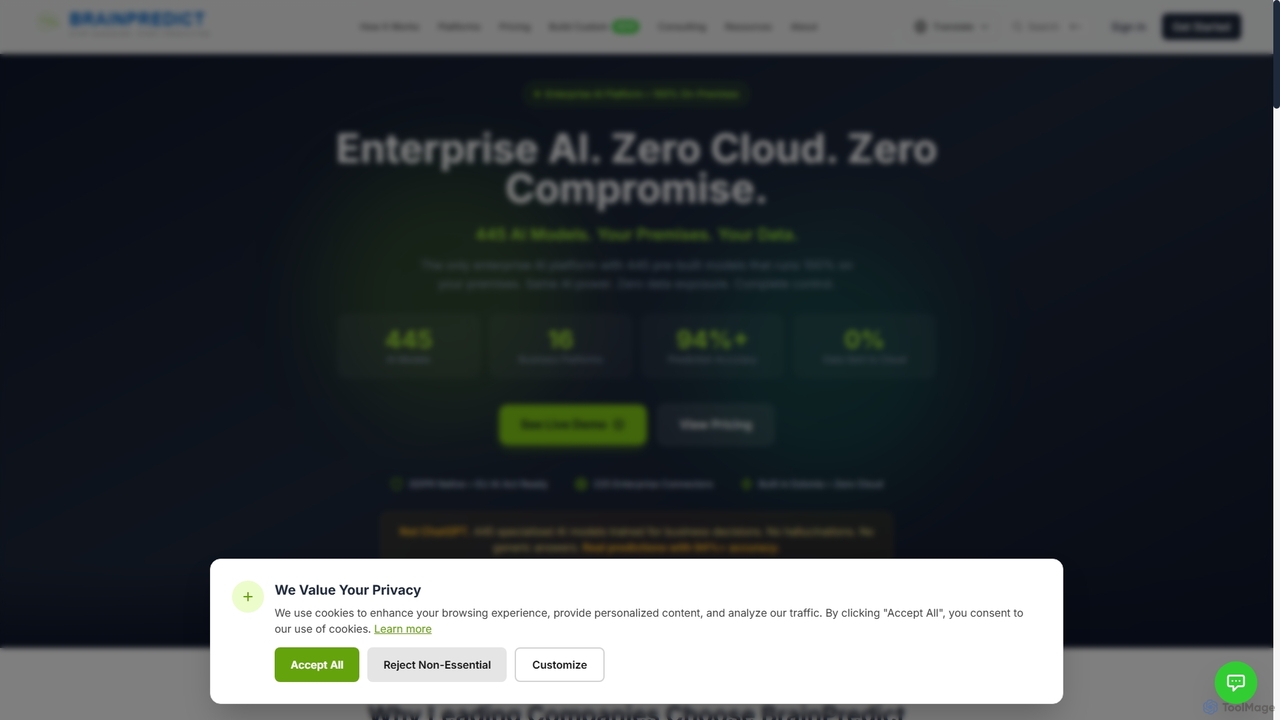
BrainPredict

BrainPredict is an enterprise AI platform offering 445 specialized AI models that run 100% on-premises. It ensures zero cloud exposure and complete data sovereignty, delivering 94%+ prediction accuracy for critical business decisions across 16 functions.

3D
Visits 4.5KFavorites 63Likes 56
Freemium

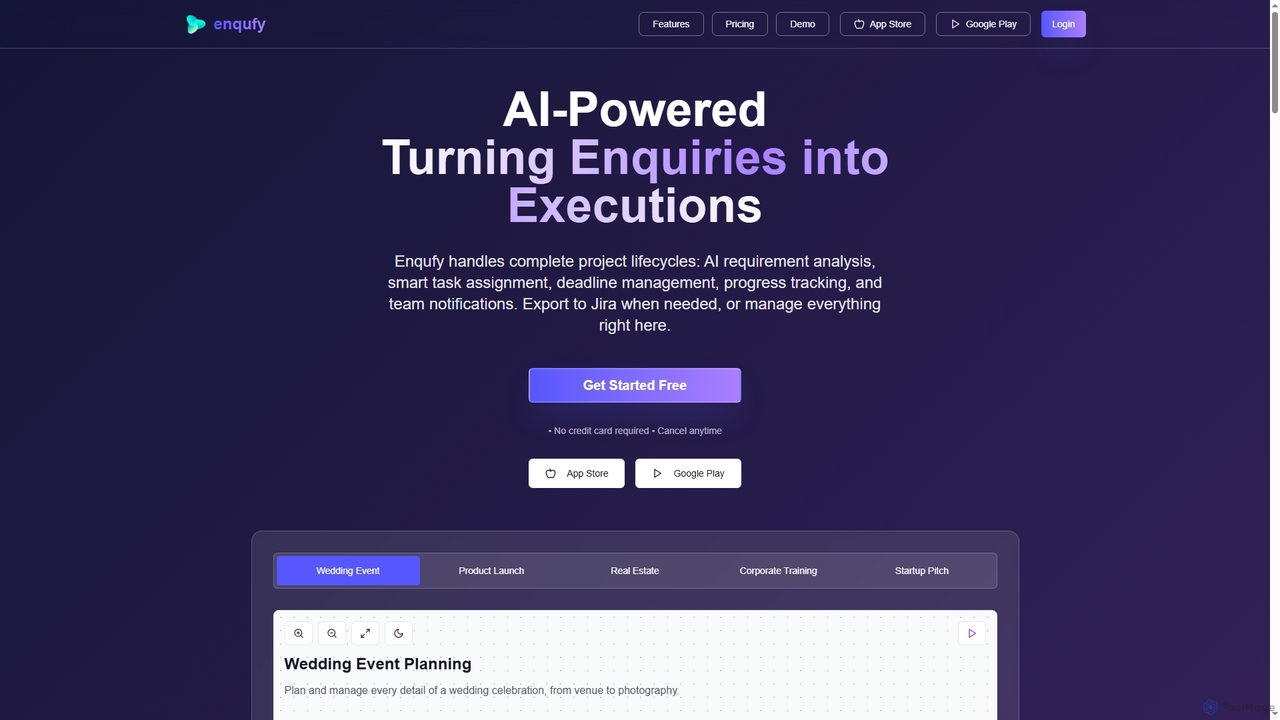
Enqufy

Enqufy is an AI-powered workflow automation platform designed to transform enquiries into structured, actionable project lifecycles. It streamlines task assignment, deadline management, and team collaboration, offering real-time progress tracking and performance analytics for businesses of all sizes. Available on web and mobile, it enhances efficiency and productivity across diverse industries.

Planning
Visits 3.4KFavorites 134Likes 122

About Process Optimization

Process Optimization tools are AI-powered solutions designed to analyze, streamline, and automate business workflows, forming a critical component of effective operations management. These tools leverage machine learning, data analytics, and robotic process automation (RPA) to identify inefficiencies, predict performance, and suggest improvements. By transforming complex, manual tasks into efficient, automated processes, they significantly enhance operational efficiency, reduce costs, and improve overall business agility.

Core Features

  • Workflow Analysis & Mapping: Automatically discovers, maps, and visualizes existing business processes to identify bottlenecks and inefficiencies.
  • Predictive Process Modeling: Uses historical data to simulate future process performance, predict potential issues, and evaluate the impact of changes.
  • Automated Task Execution: Employs RPA and intelligent automation to handle repetitive, rule-based tasks, freeing up human resources.
  • Real-time Performance Monitoring: Continuously tracks key performance indicators (KPIs) and alerts stakeholders to deviations or opportunities for improvement.
  • Intelligent Recommendation Engine: Provides data-driven suggestions for process redesign, resource allocation, and optimization strategies.

Applicable Scenarios

These tools are invaluable across various sectors, from manufacturing and logistics to finance and customer service. They are particularly useful for operations managers, business analysts, and IT professionals seeking to enhance productivity and reduce operational overhead. Specific applications include optimizing supply chain routes, automating financial reconciliation, and streamlining customer support workflows.

How to Choose

When selecting a Process Optimization AI tool, consider its integration capabilities with your existing enterprise systems, the breadth of its automation features (e.g., RPA, intelligent document processing), and its scalability to handle growing data volumes. Evaluate the accuracy of its predictive analytics, the clarity of its process visualization, and the level of customization it offers to align with your unique business rules and objectives.

Featured tool rankings

Process Optimization use cases

1

Automating Invoice Processing for Finance Departments

Finance teams often spend significant time manually processing invoices, leading to delays and errors. AI Process Optimization tools can automate this by using intelligent document processing to extract data from invoices, validate it against purchase orders, and automatically route for approval. This reduces manual effort by up to 80%, accelerates payment cycles, and minimizes human error, allowing finance professionals to focus on strategic tasks.

2

Optimizing Manufacturing Production Schedules

In manufacturing, dynamic production environments require constant adjustments to schedules due to machine breakdowns, material shortages, or fluctuating demand. AI Process Optimization tools can analyze real-time sensor data from machinery, inventory levels, and order forecasts to dynamically adjust production schedules. This minimizes downtime, optimizes resource allocation, and ensures on-time delivery, leading to significant cost savings and increased throughput.

3

Streamlining Customer Service Ticket Routing

Customer service departments often struggle with efficiently routing incoming support tickets to the right agents, leading to longer resolution times. AI Process Optimization tools can analyze ticket content, customer history, and agent expertise to automatically categorize and route tickets. This ensures customers are connected with the most qualified agent faster, improving first-contact resolution rates by 20% and enhancing overall customer satisfaction.

4

Enhancing Supply Chain Logistics and Route Planning

Logistics companies face the challenge of optimizing delivery routes and managing inventory across complex supply chains. AI Process Optimization tools can analyze real-time traffic data, weather conditions, delivery schedules, and warehouse stock levels to dynamically optimize routes and predict potential disruptions. This leads to reduced fuel costs by 15%, faster delivery times, and improved inventory management, ensuring a more resilient and efficient supply chain.

5

Automating Employee Onboarding Workflows

Onboarding new employees can be a time-consuming and inconsistent process, involving multiple departments and manual paperwork. AI Process Optimization tools can automate the entire onboarding workflow, from document generation and signature collection to IT provisioning and training assignment. This ensures a consistent, efficient, and personalized onboarding experience, reducing administrative burden by 30% and accelerating time-to-productivity for new hires.

6

Predictive Maintenance Scheduling for Industrial Equipment

Industrial operations often suffer from unexpected equipment failures, leading to costly downtime. AI Process Optimization tools can analyze data from IoT sensors on machinery (vibration, temperature, pressure) to predict potential failures before they occur. This enables proactive maintenance scheduling, reducing unplanned downtime by up to 50%, extending equipment lifespan, and optimizing maintenance resource allocation, ensuring continuous operational flow.

Process Optimization FAQ

What are AI Process Optimization tools?

AI Process Optimization tools are software solutions that use artificial intelligence, such as machine learning and robotic process automation (RPA), to analyze, improve, and automate business workflows. They identify inefficiencies, predict outcomes, and execute tasks to enhance operational efficiency, reduce costs, and streamline complex processes across an organization.

How do AI tools optimize business processes?

AI tools optimize business processes by first analyzing vast amounts of operational data to identify patterns, bottlenecks, and areas for improvement. They then use predictive analytics to forecast future performance and potential issues. Finally, they can automate repetitive tasks through RPA or suggest data-driven changes to workflows, leading to more efficient resource allocation, reduced errors, and faster execution times.

What's the difference between AI Process Optimization and traditional Business Process Management (BPM)?

Traditional BPM focuses on defining, documenting, and monitoring processes based on predefined rules and human input. AI Process Optimization, however, goes beyond this by using AI to dynamically analyze, learn from data, and autonomously suggest or implement improvements. While BPM provides structure, AI optimization offers adaptive, intelligent automation and predictive capabilities, making processes more agile and responsive to changing conditions without constant manual intervention.

Which industries benefit most from AI Process Optimization?

Virtually any industry with repetitive, data-intensive, or complex workflows can benefit. Key sectors include manufacturing for production line optimization, finance for automated reconciliation and fraud detection, healthcare for patient journey streamlining, logistics for route and inventory management, and customer service for intelligent ticket routing and chatbot integration. These tools are particularly impactful where efficiency gains directly translate to significant cost savings or improved service quality.

What should I consider when implementing AI Process Optimization?

When implementing AI Process Optimization, consider the quality and availability of your data, as AI models rely heavily on accurate input. Evaluate the tool's integration capabilities with your existing IT infrastructure and its scalability to grow with your business needs. Also, assess the vendor's support, security features, and the level of customization offered to ensure it aligns with your specific operational requirements and compliance standards. Change management and employee training are also crucial for successful adoption.