
Other Best in category 1 results Sustainability AI Tool

Popular AI tools in the Sustainability field of Other include aisthetic, etc., helping you quickly improve efficiency.

aisthetic

aisthetic

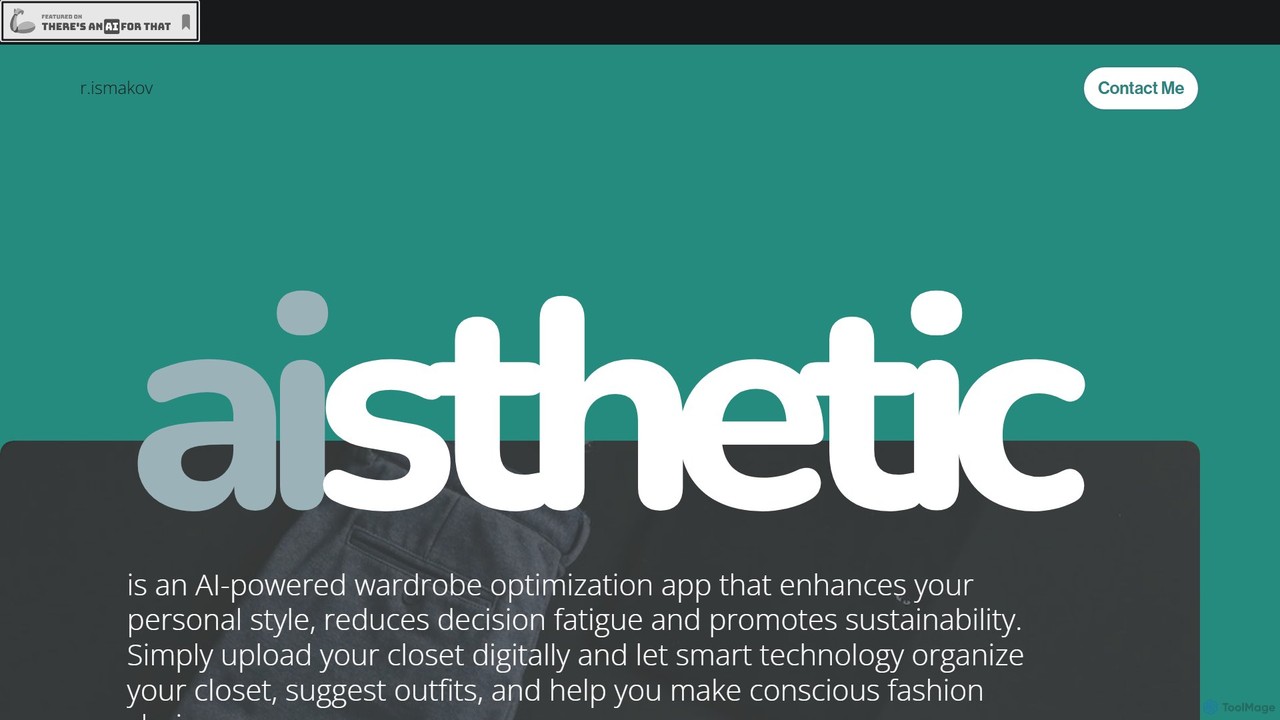
aisthetic is an AI-powered wardrobe optimization app that digitizes your closet, suggests daily outfits, and helps you plan …

3.0K

About Sustainability

AI Sustainability tools are a specialized class of software that leverages machine learning to analyze environmental, social, and governance (ESG) data. These tools process vast and complex datasets to model environmental impacts, track carbon footprints, and optimize resource usage. Their primary value lies in helping organizations automate ESG reporting, mitigate climate-related risks, and build more resilient and ethical supply chains. By providing data-driven insights, they enable businesses to meet regulatory requirements and achieve their sustainability goals more effectively.

Core Features

  • ESG Data Analysis: Automatically collects and analyzes diverse data sources (e.g., energy usage, waste metrics, social data) to calculate key performance indicators.
  • Carbon Accounting: Calculates and monitors greenhouse gas (GHG) emissions across Scope 1, 2, and 3, often aligned with GHG Protocol standards.
  • Predictive Climate Risk Modeling: Simulates the potential financial impact of various climate scenarios on business assets and operations.
  • Supply Chain Transparency: Monitors supplier performance on sustainability metrics, identifying risks like deforestation or unethical labor practices.
  • Automated Reporting: Generates compliance-ready reports for major frameworks such as GRI, SASB, and TCFD.

Applicable Scenarios

These tools are crucial for publicly traded companies needing to comply with mandatory ESG disclosures. In manufacturing, they help optimize production lines to reduce waste and energy consumption. Financial institutions use them to assess the climate risk of their investment portfolios, while the energy sector applies them to manage renewable energy grids and forecast demand.

Selection Criteria

When choosing an AI Sustainability tool, consider its data integration capabilities with your existing systems (ERP, IoT). Evaluate its support for specific regulatory frameworks relevant to your industry and region. Assess the sophistication of its analytical models—whether you need simple tracking or advanced predictive forecasting. Finally, consider the tool's scalability to grow with your company's data volume and reporting needs.

SustainabilityUse Cases

1

Automating Corporate ESG Reporting

A sustainability manager at a multinational corporation is tasked with compiling the annual ESG report. This process involves collecting data from dozens of sources like utility bills, HR systems, and supplier audits. Using an AI Sustainability tool, the manager can automate data ingestion. The platform automatically maps the data to required frameworks like GRI and SASB, calculates key metrics such as Scope 1, 2, and 3 emissions, and generates draft narrative sections for the report. This significantly reduces manual effort, minimizes errors, and ensures consistent, auditable reporting year after year.

2

Assessing Climate Risk in Investment Portfolios

A financial analyst at an investment firm needs to evaluate the long-term climate risk exposure of their portfolio. Manually assessing how physical risks (like floods) and transition risks (like carbon taxes) will impact hundreds of assets is unfeasible. The analyst uses an AI platform that models various climate scenarios based on TCFD recommendations. The tool analyzes each holding, quantifies its financial risk under different warming pathways, and identifies high-risk assets. This provides a data-driven basis for reallocating capital towards more climate-resilient investments and engaging with companies on their transition plans.

3

Optimizing Energy Consumption in Manufacturing

An operations manager at a manufacturing plant aims to reduce both energy costs and the facility's carbon footprint. The plant has numerous machines, HVAC systems, and lighting, all consuming energy variably. An AI sustainability tool connects to IoT sensors on this equipment. It learns the plant's operational patterns and predicts energy demand in real-time. The system then provides recommendations for optimizing machine schedules or automatically adjusts climate controls during non-peak hours. This leads to a significant reduction in energy waste, lowering operational costs and contributing to the company's emission reduction targets.

4

Monitoring for Deforestation-Free Supply Chains

A compliance officer at a global food company must ensure that raw materials like palm oil and soy are sourced ethically, without contributing to deforestation. Manually tracking thousands of suppliers is impossible. The company employs an AI tool that combines satellite imagery analysis with supplier location data. The AI continuously scans for changes in forest cover near sourcing areas and automatically flags high-risk activities. This provides the compliance team with actionable alerts, enabling them to investigate specific suppliers and demonstrate to customers and regulators that their supply chain is verifiably deforestation-free.

5

Enhancing Sustainable Agriculture Practices

An agronomist working for a large agricultural cooperative wants to promote precision farming to reduce environmental impact. They use an AI platform that analyzes data from satellite imagery, weather forecasts, and soil sensors. The AI generates precise recommendations for variable-rate application of water and fertilizers, ensuring resources are used only where needed. It can also predict pest outbreaks, allowing for targeted, minimal pesticide use instead of broad-spectrum spraying. This approach helps farmers increase crop yields while conserving water, reducing chemical runoff into waterways, and improving long-term soil health.

6

Designing Products for a Circular Economy

A product designer is tasked with creating a new electronic device that aligns with circular economy principles—meaning it should be durable, repairable, and recyclable. The designer uses an AI tool for lifecycle assessment. By inputting material choices and design specifications, the AI simulates the product's environmental impact from manufacturing to end-of-life. It suggests alternative materials with higher recyclability rates, identifies design flaws that hinder repair, and calculates a 'circularity score'. This enables the designer to make informed decisions early in the process, creating a more sustainable product that minimizes waste and conserves resources.

SustainabilityFrequently Asked Questions