Payments Best in category 1 results Financial Tools AI Tool

Popular AI tools in the Financial Tools field of Payments include Starbase, etc., helping you quickly improve efficiency.

Starbase

Starbase

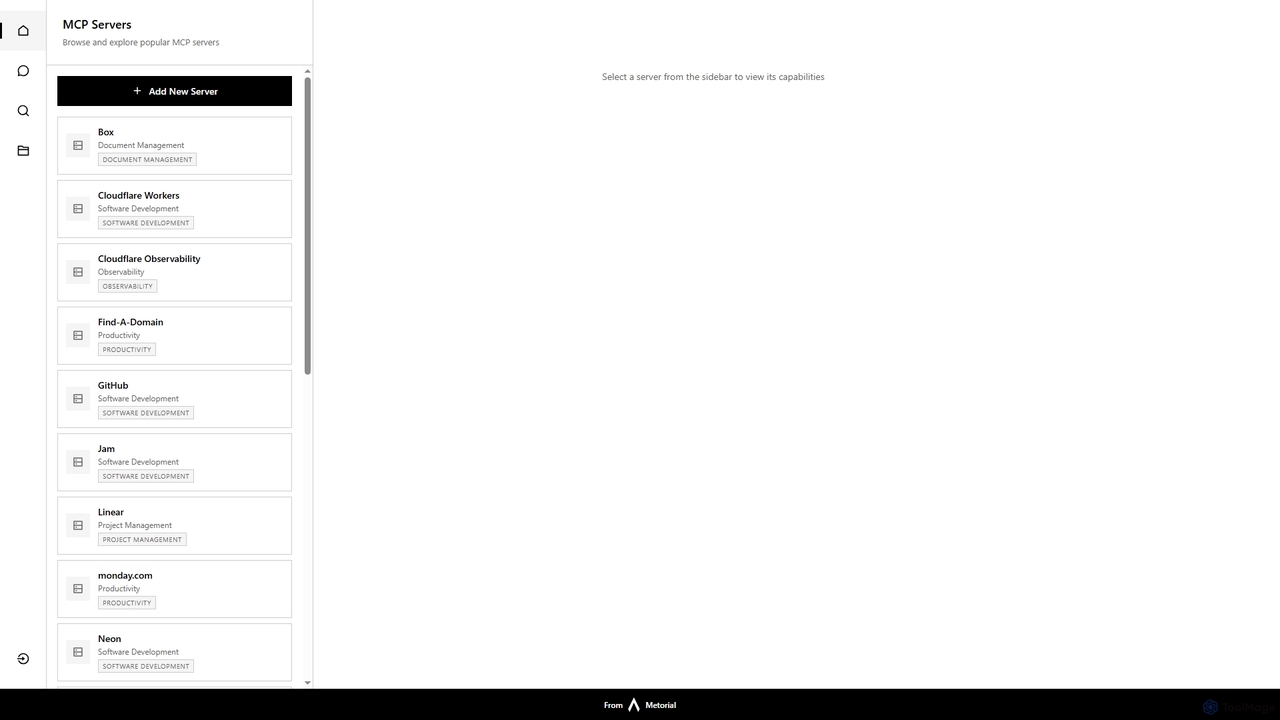
Starbase by Metorial is a comprehensive platform designed to centralize the browsing, exploration, and management of various popular …

3.0K

About Financial Tools

AI Financial Tools are a class of applications that leverage machine learning and data analysis to provide intelligent insights into financial data. These tools go beyond simple transaction processing by analyzing historical data, identifying trends, and making predictions to support decision-making. They are used to automate complex financial tasks, manage risk, and uncover investment opportunities. Their primary value lies in transforming raw financial data into actionable strategies for individuals, traders, and businesses.

Core Features

  • Predictive Forecasting: Utilizes historical data to forecast market trends, stock performance, and business revenue.
  • Risk Assessment: Analyzes variables to quantify credit risk, market volatility, and potential investment downsides.
  • Algorithmic Trading Support: Provides data-driven signals or automates trade execution based on predefined AI models.
  • Automated Financial Reporting: Automatically generates reports like income statements, balance sheets, and cash flow analyses.
  • Fraud Detection: Identifies anomalous patterns in transactions to detect and prevent fraudulent activities in real-time.

Use Cases

These tools are widely adopted by financial analysts for market research, investment firms for portfolio management, and corporate finance departments for budgeting and forecasting. Small businesses also use them for cash flow management, while individual investors leverage them for personal wealth management and stock analysis.

How to Choose

When selecting an AI Financial Tool, consider the accuracy and transparency of its predictive models. Evaluate its integration capabilities with your existing data sources, such as brokerage accounts or accounting software. Also, assess the tool's data security protocols, compliance with financial regulations, and whether its feature set aligns with your specific goals, be it trading, analysis, or business finance management.

Financial ToolsUse Cases

1

Automated Stock Portfolio Analysis for Investors

An individual investor connects their brokerage accounts to an AI Financial Tool. The platform automatically analyzes the entire portfolio, assessing risk exposure based on sector allocation and asset volatility. It identifies over-concentrated positions and suggests diversification options aligned with the investor's stated risk tolerance. The tool also scans market data to highlight potential buying opportunities or flags stocks with deteriorating fundamentals, transforming complex analysis that once took hours into a daily, actionable summary.

2

Cash Flow Forecasting for Small Businesses

A small business owner integrates their accounting software (like QuickBooks or Xero) with an AI Financial Tool. The tool analyzes historical transaction data to create a predictive cash flow model. It forecasts revenue and expenses for the upcoming weeks and months, highlighting potential cash shortfalls. This allows the owner to proactively manage finances, such as delaying a non-essential purchase or securing a line of credit before a crisis occurs, ensuring business continuity.

3

Market Sentiment Analysis for Financial Analysts

A financial analyst uses an AI tool to monitor real-time news, social media, and earnings call transcripts related to a specific company. The AI performs sentiment analysis, classifying the information as positive, negative, or neutral and identifying key emerging themes. Instead of manually reading hundreds of sources, the analyst receives a consolidated sentiment score and a summary of key discussion points. This provides a crucial data layer for their valuation models and helps them react faster to changing market perceptions.

4

Real-Time Transaction Fraud Detection

An e-commerce platform integrates an AI financial tool into its payment gateway. The tool analyzes hundreds of data points for each transaction in real-time, including user location, purchase history, device information, and transaction amount. It compares this data against learned patterns of fraudulent behavior. If a transaction is flagged as high-risk, it can be automatically blocked or sent for manual review, significantly reducing chargeback rates and financial losses without disrupting the experience for legitimate customers.

5

Intelligent Expense Tracking and Budgeting

A user links their bank accounts and credit cards to a personal finance AI tool. The AI automatically categorizes every transaction, learning the user's spending habits over time. It identifies recurring subscriptions that might be forgotten, highlights areas of overspending compared to previous months, and provides personalized budget recommendations. For example, it might suggest a lower-cost mobile plan based on data usage or create a savings goal for an upcoming vacation, making personal financial management proactive and insightful.

6

Automated Financial Statement Generation

An accounting firm uses an AI tool to streamline the creation of monthly reports for its clients. The tool connects to a client's general ledger, bank feeds, and payroll systems. It automatically classifies transactions, identifies discrepancies, and generates draft versions of the income statement, balance sheet, and cash flow statement. This reduces the manual data entry and reconciliation work for accountants by over 70%, allowing them to focus on higher-value advisory services, such as financial strategy and tax planning for their clients.

Financial ToolsFrequently Asked Questions