
Kaisel
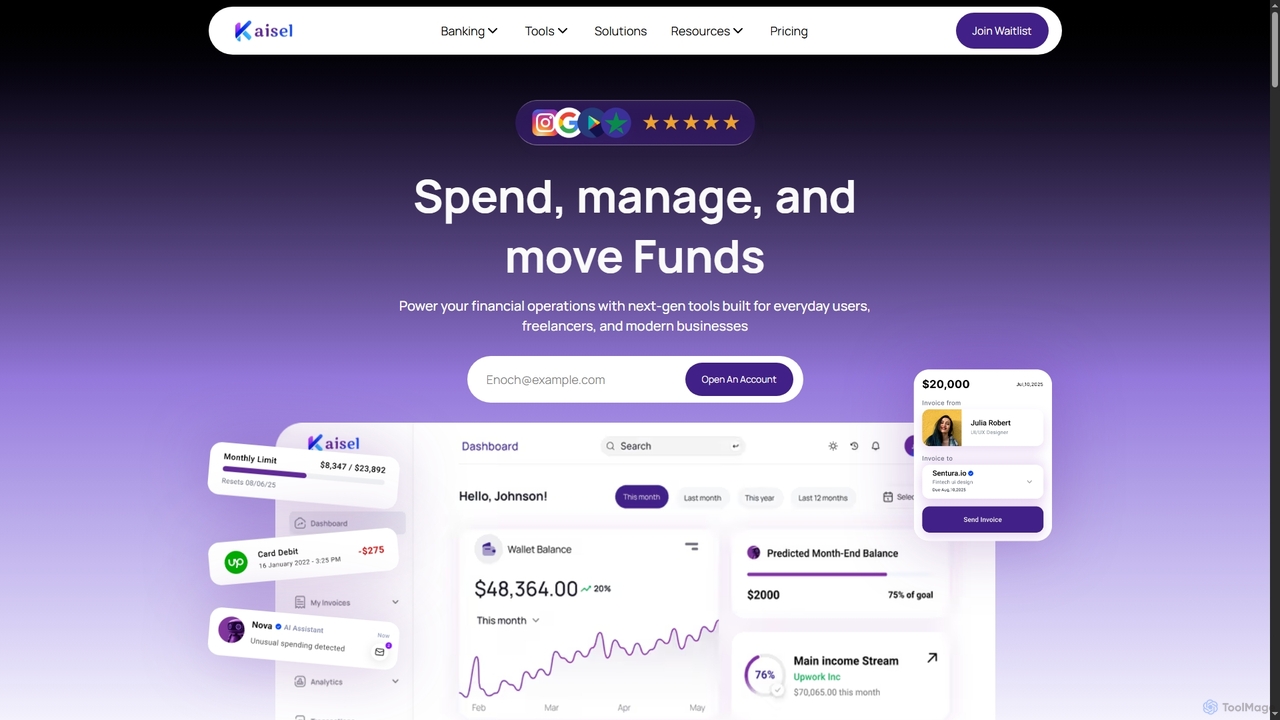
Kaisel is an AI-powered financial platform designed for everyday users, freelancers, and modern businesses to intelligently manage, spend, …
Kaisel is an AI-powered financial platform designed for everyday users, freelancers, and modern businesses to intelligently manage, spend, and move funds globally. It offers smart tools for international payments, virtual cards, expense tracking, invoicing, and AI-driven financial forecasting.
About Virtual Cards
Virtual Cards are digital payment instruments designed for secure and controlled online transactions. Unlike physical cards, they exist purely in digital form, generated with unique card numbers, expiration dates, and CVVs. These tools leverage advanced encryption and tokenization to protect financial data, offering a robust solution for managing online spending, enhancing privacy, and mitigating fraud risks across various digital platforms.
Core Features
- Instant Generation: Create new virtual cards on demand for specific transactions or merchants.
- Spending Limits: Set precise spending caps and expiration dates for each card to control budgets.
- Enhanced Security: Isolate main bank accounts from online merchants, reducing exposure to data breaches.
- Transaction Tracking: Monitor and categorize spending for better financial management and reconciliation.
- Subscription Management: Assign unique cards to subscriptions, making it easy to cancel or manage recurring payments.
Use Cases
Virtual cards are widely adopted by individuals and businesses for their flexibility and security. They are ideal for managing online subscriptions, making one-time purchases from unfamiliar websites, or providing employees with controlled spending allowances for business expenses. Their ability to be instantly generated and deactivated makes them invaluable for temporary projects or secure online shopping.
How to Choose
When selecting a virtual card provider, consider the ease of card generation and management, integration with existing financial systems, and the flexibility of spending controls. Evaluate security features like fraud monitoring and tokenization, as well as fee structures and the availability of detailed transaction reporting. Compatibility with your primary bank or payment platform is also a crucial factor.
Virtual CardsUse Cases
Secure Online Shopping
Individual consumers can generate a unique virtual card for each online purchase, especially on new or less trusted e-commerce sites. This prevents the primary card details from being compromised if a merchant's system is breached, as the virtual card can be instantly frozen or deleted after the transaction, protecting personal finances.
Managing SaaS Subscriptions
Businesses and individuals can assign a dedicated virtual card to each SaaS subscription (e.g., Adobe, Netflix, CRM software). This allows for easy tracking of recurring expenses, prevents unauthorized charges if a service provider's billing system is compromised, and simplifies the cancellation process without updating multiple vendors.
Controlling Employee Expenses
Companies can issue virtual cards to employees for specific project budgets, travel expenses, or marketing campaigns. Each card can have predefined spending limits, merchant restrictions, and expiration dates, providing granular control over corporate spending and simplifying expense reconciliation for finance teams.
Testing New Online Services
Developers or product managers often need to sign up for trials of new online tools or services that require credit card details. Using a virtual card with a low limit or short expiration date allows them to test services without risking their main financial information, ensuring privacy and preventing unwanted auto-renewals.
Protecting Freelancer Payments
Freelancers or gig workers receiving payments from various clients or platforms can use virtual cards to separate business income from personal spending. This helps in managing taxes, tracking business expenses, and adds an extra layer of security against potential fraud from new or less familiar clients.
International Online Advertising
Marketing agencies or e-commerce businesses running international ad campaigns (e.g., Google Ads, Facebook Ads) can use virtual cards tailored for specific regions or currencies. This helps manage ad spend budgets per campaign, avoids foreign transaction fees on primary cards, and provides better oversight of international marketing expenditures.