Health Pocket
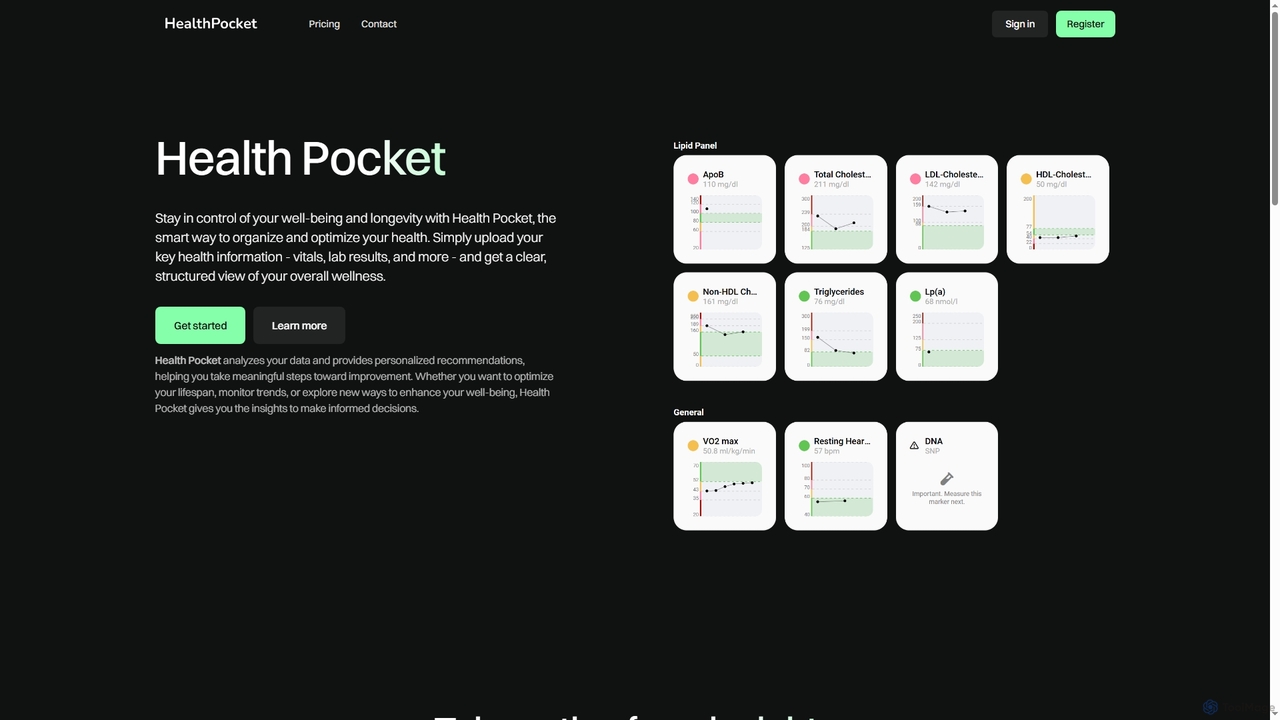
Health Pocket is a smart digital platform designed to help individuals organize, understand, and optimize their health data. …
Health Pocket is a smart digital platform designed to help individuals organize, understand, and optimize their health data. Users can upload vitals, lab results, and medical reports to receive personalized, science-backed recommendations, automated reports, and insights for proactive well-being management. It empowers users to take control of their health journey with an intuitive interface.
About Personal Health Management
Personal Health Management AI tools are AI-powered applications designed to help individuals monitor, analyze, and improve their physical and mental well-being. These tools leverage artificial intelligence to process diverse health data, offering personalized insights, recommendations, and proactive support. They empower users to take control of their health journey, fostering healthier habits and facilitating better disease prevention and management.
Core Features
- Personalized Health Plans: Generates customized exercise routines, diet plans, and wellness goals based on individual data.
- Activity & Sleep Tracking: Monitors physical activity levels, sleep patterns, and provides detailed analysis for improvement.
- Nutrition Analysis & Meal Planning: Analyzes dietary intake, identifies nutritional gaps, and suggests healthy meal options.
- Mental Wellness Support: Offers guided meditations, mood tracking, and stress management techniques.
- Predictive Health Insights: Uses data to identify potential health risks and suggest preventive measures.
Use Cases
These tools are invaluable for individuals seeking to proactively manage their health, from fitness enthusiasts optimizing performance to those managing chronic conditions. They assist busy professionals in maintaining work-life balance and support anyone aiming for a healthier lifestyle by providing data-driven guidance and personalized interventions.
How to Choose
When selecting a Personal Health Management AI tool, consider its data privacy policies, the breadth of features (e.g., activity, sleep, nutrition, mental health), integration capabilities with wearables and other health devices, and the scientific backing of its recommendations. User interface design and the level of personalization offered are also crucial for long-term engagement.
Personal Health ManagementUse Cases
Personalized Fitness & Workout Planning
A fitness enthusiast uses an AI health tool to create a dynamic workout plan tailored to their current fitness level, goals, and recovery needs. The AI analyzes performance data from previous sessions and adjusts future routines, recommending specific exercises, sets, and reps to optimize progress and prevent injury, ensuring continuous improvement.
Optimizing Nutrition & Meal Recommendations
An individual aiming for a balanced diet logs their food intake into an AI health app. The tool analyzes macronutrient and micronutrient consumption, identifies dietary deficiencies or excesses, and provides personalized meal suggestions. It can also generate grocery lists and healthy recipes that align with their health goals and dietary preferences, simplifying healthy eating.
Improving Sleep Quality & Habits
Someone experiencing inconsistent sleep patterns utilizes an AI tool that tracks sleep cycles, duration, and disturbances via a wearable device. The AI provides detailed reports on sleep quality, identifies potential issues like restless sleep or late bedtimes, and offers actionable advice such as personalized bedtime routines, relaxation techniques, or environmental adjustments to foster better sleep hygiene.
Supporting Chronic Disease Management
A patient with diabetes uses an AI health management tool to monitor blood glucose levels, medication adherence, and dietary impact. The AI tracks trends, sends reminders for medication and tests, and provides insights into how lifestyle choices affect their condition. This empowers them to better manage their disease and share comprehensive data with their healthcare provider.
Enhancing Mental Wellness & Stress Reduction
A busy professional seeks to manage daily stress and improve mental well-being. An AI health tool offers guided meditation sessions, mood tracking features, and personalized breathing exercises. It analyzes mood patterns over time, suggests coping strategies for stress triggers, and provides resources for mindfulness, helping users maintain emotional balance and resilience.
Proactive Health Risk Assessment
An individual interested in preventive health inputs their family history, lifestyle data, and biometric information into an AI health platform. The AI analyzes this comprehensive dataset to assess potential long-term health risks, such as cardiovascular disease or certain deficiencies. It then provides personalized recommendations for lifestyle changes, screenings, and preventive measures to mitigate these risks.