FaceHair
FaceHair is an innovative AI-powered online platform that allows users to virtually try on over 200 hairstyles and …
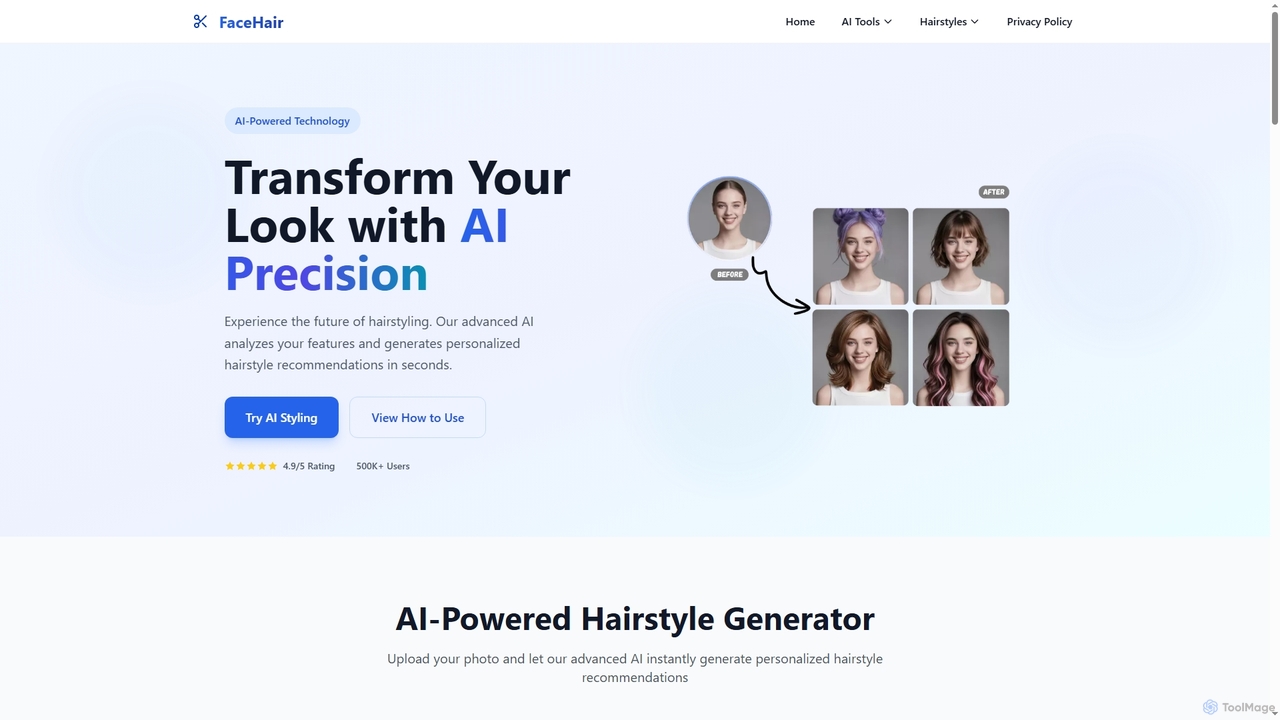
FaceHair is an innovative AI-powered online platform that allows users to virtually try on over 200 hairstyles and receive personalized recommendations. It leverages advanced AI to analyze facial features, suggest suitable haircuts, and provide beauty insights. Ideal for makeovers, event preparation, or simply exploring new looks, FaceHair offers a convenient and private way to visualize style transformations before committing.
About Virtual Try On
Virtual Try On tools are a class of applications that use AI and Augmented Reality (AR) to allow users to digitally see how products look on them. These tools typically work by overlaying a 2D or 3D model of an item, such as clothing, glasses, or makeup, onto a user's live video feed or a static photo. The primary value of Virtual Try On technology is to bridge the gap between online shopping and physical retail, increasing buyer confidence and reducing return rates. They provide an interactive and personalized shopping experience directly from a user's device.
Core Features
- Real-time AR Overlay: Superimposes product models onto a user's live camera feed for a dynamic try-on experience.
- Photo-Based Simulation: Allows users to upload a personal photo and apply products to it for a static visualization.
- Accurate Fit & Size Recommendation: Utilizes body measurement data or advanced algorithms to suggest the best size and simulate the fit of garments.
- Realistic Rendering: Simulates textures, lighting, and shadows to make the virtual product appear as lifelike as possible.
- Multi-Product Comparison: Enables users to try on and compare multiple items or shades side-by-side.
Use Cases
Virtual Try On technology is predominantly used in the e-commerce sector. Key industries include fashion and apparel, cosmetics, eyewear, and jewelry. For example, online clothing stores use it to reduce returns by helping customers visualize fit, while beauty brands allow users to test makeup shades before buying. It's also being adopted in physical stores through smart mirrors to enhance the in-store experience.
How to Choose
When selecting a Virtual Try On tool, consider the following: the accuracy and realism of the simulation, as this directly impacts user trust. Evaluate its ease of integration with your existing e-commerce platform (e.g., Shopify, Magento). Check the range of product categories it supports (e.g., apparel, accessories, makeup). Finally, assess the performance and user experience on both desktop and mobile devices.

Virtual Try OnUse Cases
Enhancing Online Fashion Sales
An e-commerce fashion retailer integrates a virtual try-on tool into their product pages. When a customer browses a dress, they can click a 'Virtual Try-On' button. Using their device's camera, the tool maps the dress onto their body in real-time, adjusting for their movements. The customer can see how the fabric drapes and how the silhouette fits their body shape without ever leaving home. This interactive experience significantly increases their confidence in the purchase, leading to higher conversion rates and a projected 30% reduction in returns due to sizing issues.
Virtual Makeup and Cosmetics Testing
A global cosmetics brand launches a virtual try-on feature on its website and mobile app. Users can select various products like lipstick, eyeshadow, and foundation. The AI uses facial recognition to accurately detect lips, eyes, and skin tone. It then applies the selected makeup shade in real-time through the user's camera, realistically simulating texture and color under different lighting conditions. This allows customers to experiment with dozens of shades risk-free, helping them find the perfect match and driving online sales for products they might have hesitated to buy otherwise.
Choosing Eyewear Frames Online
An online eyewear retailer uses a virtual try-on tool to solve the biggest challenge for their customers: finding frames that fit their face. A user visits the website, enables their camera, and the tool creates a 3D map of their face. They can then browse hundreds of frames, which are accurately scaled and positioned on their virtual reflection. The tool provides key measurements like frame width and lens height, ensuring a proper fit. Users can turn their head to see the glasses from different angles, making the online selection process as reliable as an in-store visit.
Visualizing Jewelry and Accessories
A luxury jewelry brand offers an AR try-on experience for its collection of necklaces, earrings, and bracelets. A potential customer uses their smartphone to access the feature. The AI detects their neck, ears, or wrist and overlays a photorealistic 3D model of the selected jewelry piece. The model realistically reflects light and moves naturally with the user, providing a true-to-life sense of scale and appearance. This immersive experience helps justify the high price point and allows customers to share images with friends for feedback before making a significant purchase.
In-Store Smart Mirror Experience
A large department store installs smart mirrors in its apparel section. A shopper brings an item to the mirror, which scans the item's tag. The mirror then displays the shopper's reflection wearing the item. The shopper can instantly tap the screen to see the same item in different available colors or patterns without needing to go back and find them on the rack. This streamlines the fitting room process, reduces staff workload, and creates a novel, engaging shopping experience that encourages customers to explore more options and potentially increase their purchase size.
AI-Powered Sizing Recommendations
A footwear brand's website incorporates an AI tool that helps customers find the perfect shoe size. Instead of relying on generic size charts, a user takes a few photos of their feet using their smartphone camera, placing a standard-sized object like a credit card next to them for scale. The AI analyzes the images, calculates precise foot measurements, and compares them to the brand's internal product specifications. It then recommends the ideal size for a specific shoe model, even accounting for variations between different styles (e.g., running shoes vs. boots). This reduces size-related returns and builds customer trust in the brand's fit.