
FaceHair
FaceHair is an innovative AI-powered online platform that allows users to virtually try on over 200 hairstyles and …
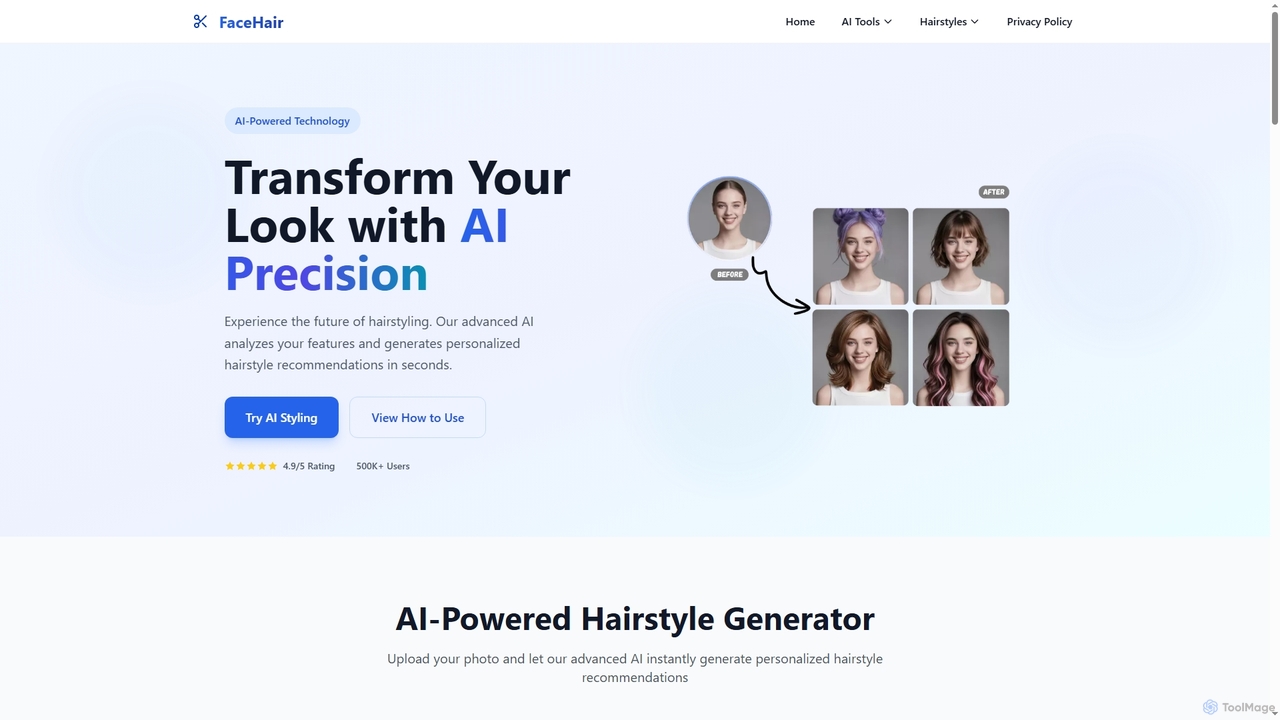
FaceHair is an innovative AI-powered online platform that allows users to virtually try on over 200 hairstyles and receive personalized recommendations. It leverages advanced AI to analyze facial features, suggest suitable haircuts, and provide beauty insights. Ideal for makeovers, event preparation, or simply exploring new looks, FaceHair offers a convenient and private way to visualize style transformations before committing.
About Hairstyle Simulation
Hairstyle Simulation tools are a specialized category of AI beauty applications that allow users to virtually try on different hairstyles and colors. These tools utilize computer vision and generative AI (like GANs) to realistically overlay new styles onto a user's photo or live video feed. They provide a risk-free way to experiment with new looks, helping users make confident decisions before visiting a salon. As a key component of virtual try-on technology, they bridge the gap between imagination and reality in personal grooming.
Core Features
- Realistic Rendering: Uses advanced AI to map hairstyles to the user's head shape, accounting for lighting and hair texture for a natural look.
- Extensive Style Library: Offers a wide variety of haircuts, styles, and colors, often categorized by length, texture, and trend.
- Face Shape Analysis: Automatically detects the user's face shape (e.g., oval, round, square) to recommend flattering hairstyles.
- Real-time & Photo Mode: Supports both uploading a static photo and using a live camera feed for dynamic simulation.
- Color Customization: Allows fine-tuning of hair colors, including highlights, lowlights, and ombre effects.
Use Cases
These tools are primarily used by individuals planning a new haircut or color. They are also increasingly adopted by hair salons and stylists as a consultation tool to help clients visualize outcomes and manage expectations. Additionally, hair care and dye brands integrate this technology into their websites and apps for e-commerce, allowing customers to 'try before they buy'.
How to Choose
When selecting a Hairstyle Simulation tool, consider the realism of the simulation—how well it adapts to your head and lighting. Evaluate the size and diversity of the hairstyle and color library. Check for features like face shape analysis for personalized recommendations. Finally, consider the platform (mobile app vs. web tool) and review its data privacy policy regarding your photos.
Hairstyle SimulationUse Cases
Personal Hairstyle Exploration Before a Salon Visit
An individual feeling uncertain about a drastic hair change uses a hairstyle simulation app. They upload a clear, front-facing photo of themselves. They then browse through hundreds of options, experimenting with a short bob, long layers, curtain bangs, and various colors from platinum blonde to deep auburn. The app's realistic rendering helps them see how each style complements their face shape and skin tone. After finding a look they love, they save the image and show it to their hairstylist, ensuring clear communication and avoiding a potentially regrettable haircut.
Professional In-Salon Client Consultation
A hairstylist uses a tablet with a professional hairstyle simulation tool during a consultation. When a client says they want 'something new but not too short,' the stylist uses the live camera mode to show them various options in real-time. They can instantly adjust the length of a lob, change the color to a warmer balayage, or add bangs. This visual aid helps bridge the communication gap, manages client expectations accurately, and gives the client the confidence to approve a new style, leading to higher satisfaction and trust in the stylist's expertise.
Virtual Try-On for Hair Dye E-commerce
A major hair color brand integrates a virtual try-on feature on its product pages. A customer browsing for a new shade can click a 'Try It On' button, which activates their device's camera. They can then see how 'Cherry Red' or 'Ash Blonde' looks on them instantly, without needing to upload a photo. The simulation is realistic enough to show how the color interacts with their current hair and skin tone. This interactive experience increases engagement, boosts conversion rates by reducing purchase anxiety, and lowers product returns from unsatisfied customers.
Engaging Content Creation for Social Media
A beauty influencer wants to create a viral video series called 'A Week of New Hairstyles'. Instead of actually cutting or dyeing their hair daily, they use a high-quality hairstyle simulation app. Each day, they post a short video showcasing a different look—from a vibrant pink pixie cut on Monday to elegant brunette waves on Friday. They engage their audience by running polls asking which style looks best. This strategy allows for consistent, creative, and low-cost content production, driving high engagement and follower growth without any permanent hair changes.
Character Design for Games and Animation
A concept artist for a video game studio needs to quickly iterate on hairstyle ideas for a new protagonist. Instead of spending hours sketching different options, they use a hairstyle simulation tool on a 3D model of the character's face. They can rapidly test dozens of styles, from rugged ponytails to futuristic updos, and experiment with unnatural colors like electric blue or silver. This process accelerates the ideation phase significantly, providing a strong visual reference for the 3D modeling team and ensuring the final character design is compelling and well-considered.
Virtual Try-On for Online Wig and Extension Retailers
An e-commerce store specializing in wigs and hair extensions implements a virtual try-on feature. Customers can see how a specific wig style or a set of extensions would look on them before making a purchase. They can switch between different lengths, colors, and textures in real-time using their camera. This functionality drastically improves the online shopping experience for a product that is highly dependent on appearance. It helps customers make more informed decisions, significantly reducing return rates and increasing overall sales and customer satisfaction.