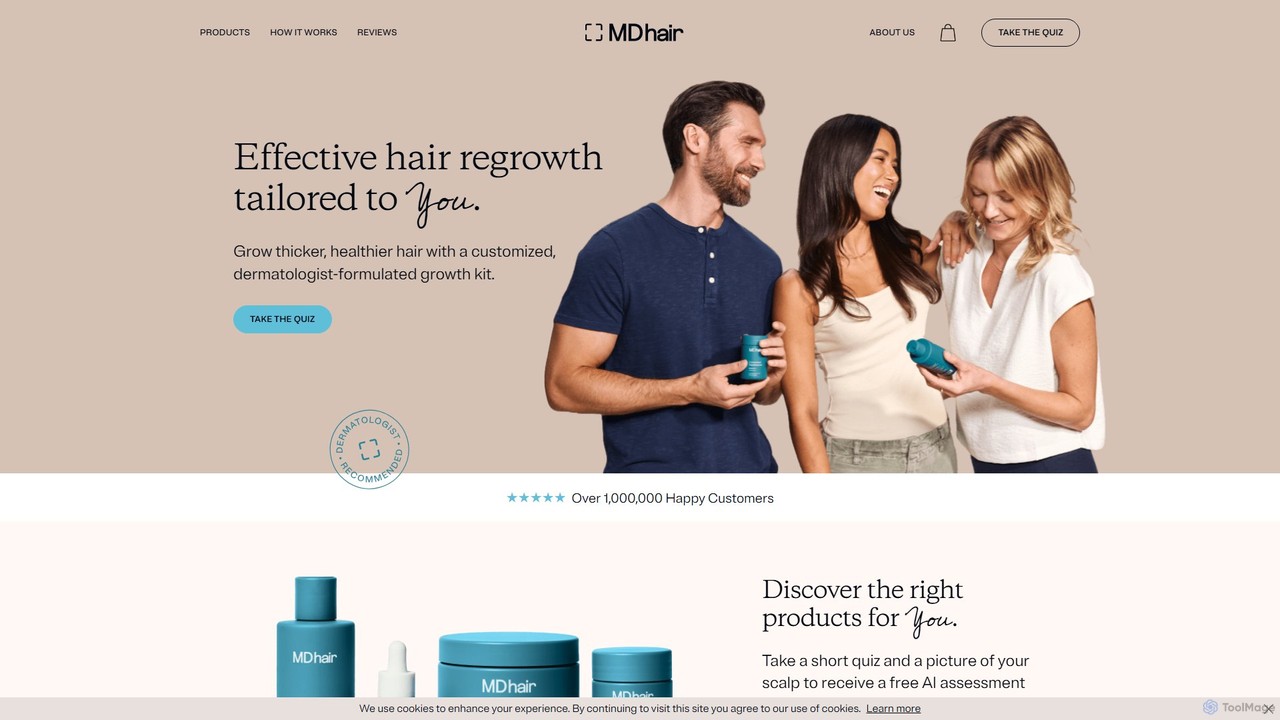
Hair Care AI tools are intelligent applications and platforms that leverage artificial intelligence to analyze hair and scalp conditions, provide personalized recommendations, and offer virtual styling solutions. These tools utilize computer vision, machine learning, and data analytics to interpret user input, such as photos or survey responses, delivering tailored insights for optimal hair health and aesthetics. They empower individuals to understand their unique hair needs, discover suitable products, and experiment with new looks digitally, transforming personal hair care routines and professional salon services.
Core Features
- Hair & Scalp Analysis: AI algorithms assess hair density, scalp health, damage levels, and other characteristics from uploaded images.
- Personalized Product Recommendations: Based on analysis, tools suggest shampoos, conditioners, treatments, and styling products tailored to individual needs.
- Virtual Hairstyle & Color Try-On: Users can virtually experiment with different hairstyles, cuts, and hair colors using augmented reality technology.
- Progress Tracking: Monitor changes in hair health, growth, and condition over time through regular photo uploads and data logging.
- Customized Routine Generation: AI creates step-by-step hair care routines designed for specific hair types and concerns.
Applicable Scenarios
Hair Care AI tools are invaluable for individuals seeking to optimize their personal hair health journey and for beauty professionals enhancing client consultations. They are used by consumers for daily hair management, by those addressing specific hair concerns like thinning or damage, and by stylists to offer advanced, data-driven advice. These tools streamline the process of identifying hair needs and finding effective solutions, making expert-level hair care accessible to a wider audience.
How to Choose
When selecting an AI Hair Care tool, consider the accuracy and depth of its analysis capabilities, ensuring it can precisely identify your hair and scalp concerns. Evaluate the range and quality of its product recommendation database, checking for brand diversity and relevance. Look for intuitive user interfaces and reliable virtual try-on features. Additionally, assess data privacy policies and the availability of expert support or community features to enhance your overall experience.