ToolMage
Sign in

Best 1 Creative AI tools for Personalized Content

Popular Creative AI tools in Personalized Content include GiftSong, helping you work more efficiently.

GiftSong
Freemium

GiftSong

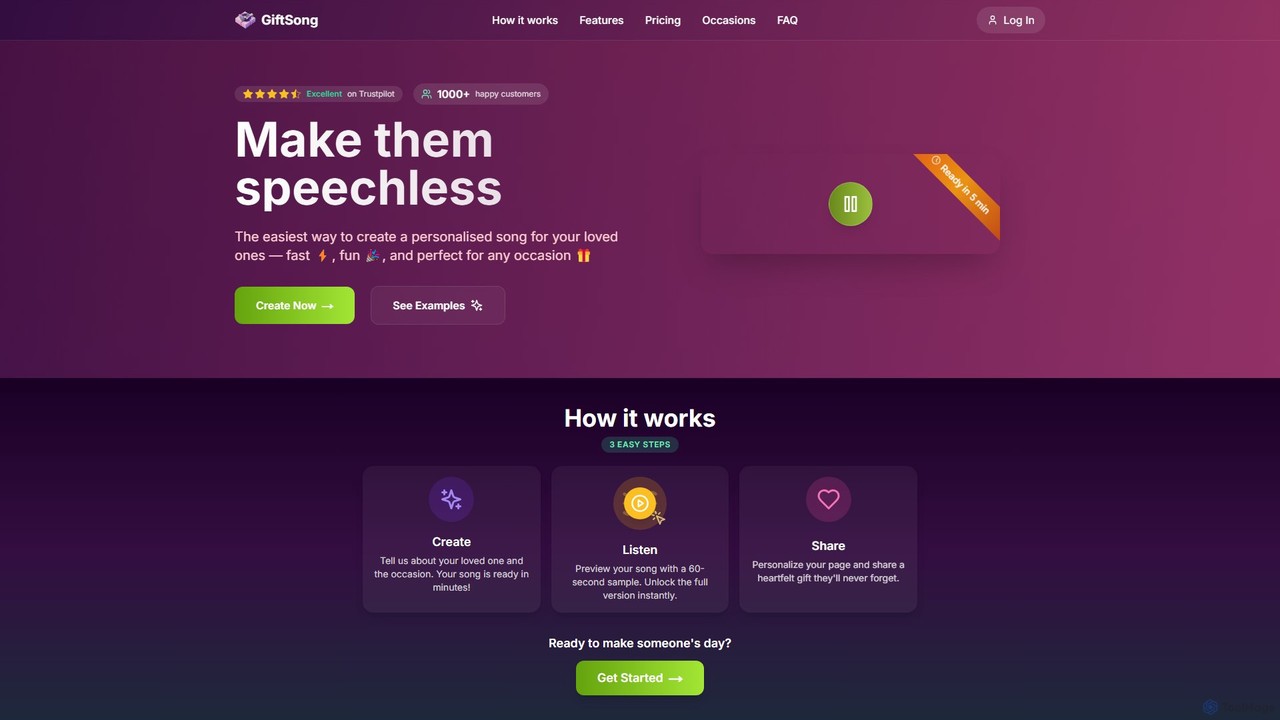
GiftSong is an AI-powered platform that creates personalized songs for any occasion. Simply provide details about your loved one, and in minutes, receive a unique, studio-quality song with custom lyrics. It's a fast, fun, and heartfelt way to make someone feel special and create a lasting memory.

Gifts
Visits 135.1KFavorites 123Likes 127

About Creative

Creative AI tools are a class of artificial intelligence designed to generate novel, artistic, and imaginative content. These tools utilize advanced generative models, such as GANs and Transformers, to transform user prompts into unique outputs like stories, music, poetry, and visual art. They serve as powerful partners in the creative process, helping users overcome creative blocks, explore new ideas, and accelerate content production. Unlike tools that merely personalize existing content, Creative AI focuses on originating entirely new works from a conceptual starting point.

Core Features

  • Multi-Modal Generation: Creates diverse content types, including text, images, and audio, often from a single text-based prompt.
  • Style Emulation: Mimics the styles of famous artists, writers, or musical genres to produce content with a specific aesthetic.
  • Conceptual Brainstorming: Generates a wide array of ideas, plotlines, melodies, or visual concepts from a simple keyword or theme.
  • Iterative Refinement: Allows users to guide the generation process, providing feedback to progressively improve and customize the output.

Use Cases

Creative AI tools are widely used by artists, writers, musicians, and game developers for inspiration and concept creation. Marketers and content creators also leverage them to produce unique social media posts, advertising slogans, and blog post ideas. They are valuable for anyone in a creative field looking to augment their workflow and explore new artistic possibilities.

How to Choose

When selecting a Creative AI tool, consider the primary content type you need (e.g., text, image, music). Evaluate the quality and originality of the generated output and the level of control you have over parameters like style and tone. Also, review the tool's usage rights and licensing terms to ensure the generated content can be used for your intended commercial or personal projects.

Creative use cases

1

Composing Royalty-Free Background Music

A video content creator needs unique background music for their weekly YouTube videos but lacks the budget for custom compositions or the time to search through stock music libraries. Using a Creative AI music generator, they input prompts describing the desired mood, genre, and tempo, such as 'upbeat, lo-fi hip hop, 90 BPM' or 'cinematic, orchestral, suspenseful'. The AI generates several original tracks within minutes. The creator can then select the best option, make minor adjustments to instrumentation, and download a high-quality, royalty-free audio file, ensuring their content has a professional and unique sound without copyright concerns.

2

Generating Concept Art for Game Characters

An indie game development team is in the early stages of designing a new character. Instead of spending days on manual sketches, the lead artist uses a Creative AI image generator. They input a detailed text description: 'female cyborg ninja, sleek black armor with neon blue circuits, holding a plasma katana, in a rainy cyberpunk city'. The AI produces a dozen distinct visual interpretations in various art styles. This allows the team to quickly visualize different directions, select a promising concept, and provide the artist with a strong visual foundation to refine into the final character design, saving significant time in the pre-production phase.

3

Overcoming Writer's Block with Story Ideas

A novelist is struggling to start their next book, facing a classic case of writer's block. They turn to a Creative AI story generator for inspiration. By providing a simple premise, such as 'a detective in ancient Rome who discovers a conspiracy involving the gods', the tool generates multiple plot summaries, character archetypes, and opening paragraphs. While the writer doesn't use the generated text directly, the varied outputs spark new ideas and help them see their premise from different angles. This process breaks the creative stalemate, providing the necessary momentum to begin outlining and writing the first chapter.

4

Brainstorming Marketing Slogans and Taglines

A marketing team for a new eco-friendly startup needs a catchy slogan. Instead of a lengthy brainstorming session, they use a Creative AI tool. They input key product attributes like 'sustainable', 'plant-based', 'plastic-free packaging', and their target audience 'environmentally conscious millennials'. The AI generates hundreds of potential slogans in various tones, from witty to earnest. The team can then filter, combine, and refine the best AI-generated ideas, such as 'Planet-First, People-Always' or 'Naturally Smart Choices'. This approach dramatically shortens the ideation phase and provides a wider range of creative options than a traditional session might yield.

5

Designing Unique Patterns for Textiles and Products

A fashion designer wants to create a unique fabric pattern for their next collection. They use a Creative AI image tool that specializes in generating seamless, tileable patterns. The designer inputs a theme, such as 'Art Deco jungle' or 'geometric floral fusion', along with a color palette. The AI generates a variety of intricate patterns that can be repeated infinitely without visible seams. The designer selects a few favorites, uses the tool to tweak elements like scale and density, and then exports the high-resolution files for digital fabric printing. This allows for the creation of truly original textiles that would be very time-consuming to design manually.

6

Generating Personalized Poetry for Greeting Cards

An online gift shop wants to offer a unique personalization option for its greeting cards. They integrate a Creative AI poetry generator into their website. Customers can input key details for the recipient, such as their name, the occasion (e.g., 'birthday', 'anniversary'), and a few keywords about their relationship (e.g., 'adventure', 'laughter', 'support'). The AI then composes a short, personalized poem in a chosen style (e.g., rhyming, free verse). This provides a deeply personal touch that goes beyond a standard message, creating a memorable keepsake for the recipient and a strong differentiator for the business.

Creative FAQ

What are Creative AI tools?

Creative AI tools are a category of artificial intelligence designed to generate original artistic and imaginative content. Unlike editing software, they create new works from scratch based on user prompts. They can produce a wide range of outputs, including text (stories, poems), images (art, designs), and audio (music, soundscapes). Their primary purpose is to act as a creative partner, assisting with brainstorming, overcoming creative blocks, and rapidly producing novel concepts.

How do I choose the right Creative AI tool?

Choosing the right Creative AI tool depends on your specific needs. Consider the following factors:

  • Output Type: Determine if you need text, images, music, or another format. Some tools specialize in one area, while others are multi-modal.
  • Quality and Style Control: Evaluate the realism, coherence, and artistic quality of the output. Check how much control you have over style, tone, and other specific parameters.
  • Ease of Use: Look for a tool with an intuitive interface that matches your technical skill level. Some are simple prompt-based tools, while others offer advanced settings.
  • Usage Rights: Check the licensing terms. Ensure you can use the generated content for your intended purpose, whether it's for personal projects or commercial use.
What is the difference between Creative AI and AI Writing Assistants?

The main difference lies in their core purpose. Creative AI tools are designed for generation—creating entirely new, often artistic or fictional content from a prompt (e.g., writing a poem, composing a song). They focus on originality and imagination. In contrast, AI Writing Assistants are designed for augmentation—improving existing text. They focus on tasks like grammar correction, rephrasing for clarity, summarizing content, and adjusting tone, rather than creating the initial content from scratch.

Who can benefit from using Creative AI tools?

A wide range of individuals and professionals can benefit from Creative AI tools. This includes:

  • Artists and Designers: For generating concept art, unique patterns, and visual inspiration.
  • Writers and Authors: For overcoming writer's block, brainstorming plot ideas, and creating character concepts.
  • Musicians and Composers: For creating royalty-free background tracks, exploring new melodies, and generating harmonies.
  • Marketers and Content Creators: For producing catchy slogans, social media post ideas, and unique blog content.
  • Hobbyists and Enthusiasts: Anyone looking to explore their creativity without needing deep technical skills in a particular artistic domain.
Is the content generated by Creative AI tools original and copyright-free?

This is a complex and evolving area. Generally, the output from a Creative AI tool is a new combination of patterns learned from its training data, making it statistically unique. However, the legal status of AI-generated content regarding copyright can vary by jurisdiction and the specific tool's terms of service. Many tools grant users commercial rights to the images or text they create, but some may have restrictions. It is crucial to always review the terms of service for any Creative AI tool to understand the ownership and usage rights of the content you generate before using it for commercial purposes.